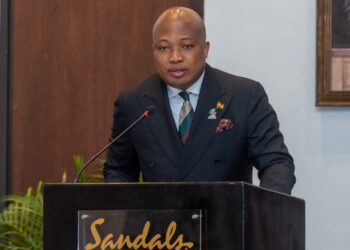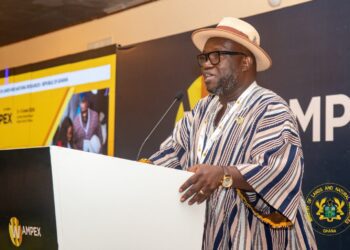

Dr Said Boakye, the Executive Director of the Institute for Fiscal Studies (IFS), has disclosed that Ghana forfeits an estimated $6.56 billion annually in potential revenue from the mining sector due to the government’s restricted state equity and equity participation in mineral extraction operations.
Speaking at a policy briefing on low domestic revenue mobilization in Accra, Dr Boakye explained that the country could have captured these additional billions in 2025 had its revenue collection performance matched Botswana’s active public involvement model.
He observed that this massive shortfall reflects Ghana’s persistent failure to maximize fiscal returns from its vast natural wealth, prompting a direct call for national authorities to use the upcoming 2027 Budget to plug these structural financial leakages.
“The government of Botswana does not only earn large corporate income tax revenue from mining because it has an insider knowledge of mining operations and profitability, it earns even larger revenue from dividend payments and royalties.”
Dr Said Boakye,
Comparative Disparity and Structural Revenue Leakages
A comparative assessment of the two mineral-rich African nations highlights a stark divergence in fiscal strategy and state yield.
In 2025, Botswana generated $13.4 billion in total value added from its mining operations, retaining an impressive 60.9 per cent average rate through deep public-private partnerships.
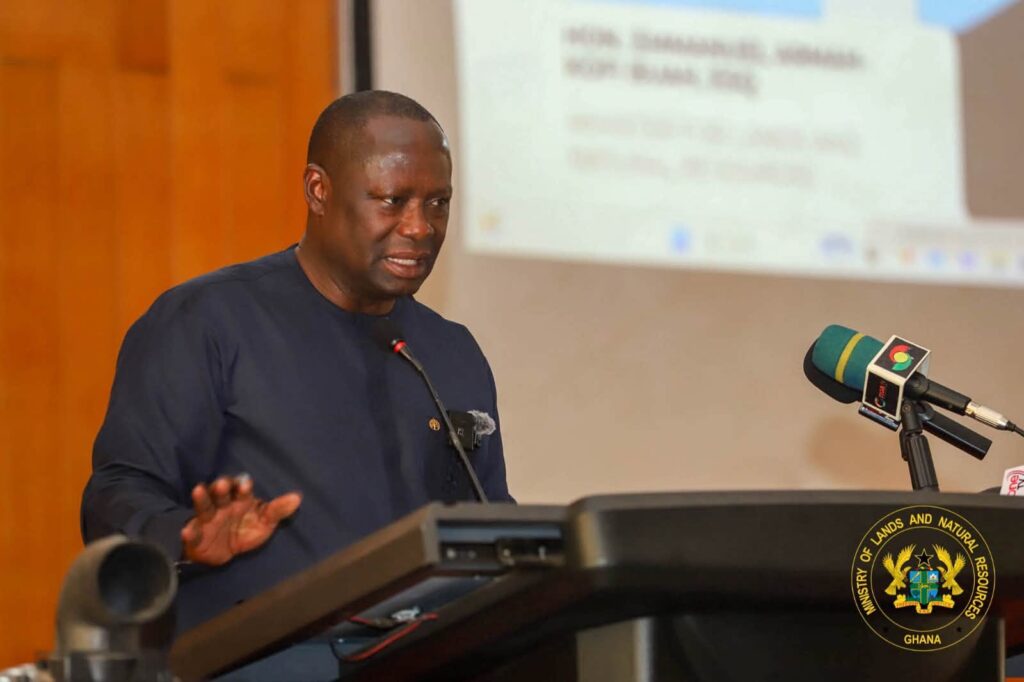
In contrast, Ghana secured a modest $1.6 billion, representing just 11.9 per cent of its mining sector’s total generated value.
Had Ghanaian policy matched Botswana’s average recovery rate, total receipts would have surged to $8.16 billion instead of the $1.6 billion actually collected.
Dr Boakye contrasted Botswana’s hands-on equity arrangement with Ghana’s concession-based framework.
Under Ghana’s model, multinational private corporations handle extraction almost entirely, leaving public authorities with minimal visibility into actual operational costs and true corporate profitability.
Beyond structural equity limits, he identified pervasive systemic leakages including tax evasion, transfer mispricing, underreporting, deliberate tax avoidance, and internal collusion with tax administrators that relentlessly undermine domestic fiscal stability.
These structural weaknesses mirror wider systemic leakages across state revenue hubs; notably, Commissioner-General of the Ghana Revenue Authority, Anthony Sarpong, revealed in April 2026 that incorrect customs declarations involving product origin, valuation, and classification cost the nation over GH¢11 billion at its ports alone.
Comprehensive Case for State Participation Reform
The urgent necessity to transition Ghana away from passive concession arrangements toward active equity participation is underscored by the country’s chronic fiscal constraints.
Low domestic revenue generation directly undermines the state’s capacity to build critical infrastructure, fund essential public services, and drive sustainable economic development.
Ghana’s overall total revenue and grants-to-GDP ratio recorded a low 15.7 per cent in 2022, lagging significantly behind the 20.1 per cent average registered across 25 peer Sub-Saharan African economies evaluated by the IFS.
When national expenditure commitments outpace constrained domestic revenue collections, governments are inevitably forced to bridge the widening gap through heavy commercial and bilateral borrowing.
As Dr Boakye warned, this perpetual reliance on debt financing leads to rapid debt accumulation, unsustainable debt service burdens, and severe macroeconomic instability.
Establishing state-owned mining entities, acquiring direct equity stakes, and securing real-time operational transparency will allow the state to capture crucial dividend payments and royalties alongside standard corporate income taxes.
Implementing these structural extractive reforms within the 2027 Budget offers a reliable pathway to restore fiscal sovereign self-reliance, reduce structural budget deficits, and ensure natural resource wealth directly benefits the national economy.
READ ALSO: Ato Forson Urges Chiefs to Back Mahama’s New Economy Agenda