Malawi’s decision to allow eligible households and businesses to sell surplus solar electricity into the national grid has reopened an important question for Ghana: how effectively are existing net-metering rules translating into actual electricity generation from consumers?
The Malawian government launched its Net-Metering Rules, alongside an Electric Mobility Regulatory Framework, creating a formal route for customers with renewable energy systems to export excess electricity through bi-directional meters connected to the national grid.
The development is relevant to Ghana because the country already has a regulatory framework for net metering.
The Energy Commission published its Net Metering Code in 2023 under the Renewable Energy Act, 2011 (Act 832), allowing customers who generate renewable electricity to receive credits for power supplied to distribution networks.
The difference between the two developments is therefore not simply that Malawi has introduced a new policy. It is the opportunity to examine how regulatory provisions are being translated into customer participation, grid connections and measurable additional electricity supply.
For Ghana, the question is increasingly about implementation: how many consumers are using the existing framework, how much electricity are they exporting, and what obstacles continue to prevent more households and businesses from participating?
Malawi Moves From Policy To Pilot Connections
At the launch in Lilongwe, Malawi’s Energy Minister, Dr Jean Chifuniro Mathanga, disclosed that 34 customers had been identified as eligible to connect to the national grid under the pilot programme, with nine already connected.
The 34 prospective participants have the potential to contribute 3.9 megawatts to the grid, according to the Minister.
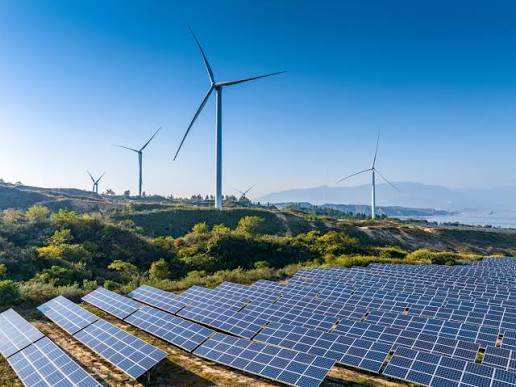
The framework allows eligible customers with renewable energy installations, particularly solar systems, to generate electricity for their own consumption and export surplus power to the Electricity Supply Corporation of Malawi (ESCOM).
The arrangement relies on bi-directional meters capable of measuring electricity flowing from the grid to the customer and from the customer back into the network.
Mathanga acknowledged that expanding generation capacity alone had not resolved Malawi’s electricity supply challenges.
“Despite the progress made in expanding our generation capacity, electricity supply remains inadequate to meet the country’s growing demand. We must, therefore, explore innovative and complementary approaches to increase electricity generation and improve access to reliable power,”
Her remarks capture the central policy argument behind net metering: electricity supply does not have to depend exclusively on large power stations and conventional independent power producers.
Businesses, institutions and households with suitable renewable energy systems can also contribute to the supply available on the network.
The Malawian Energy Secretary, Elvis Thodi, described the initiative as an opportunity for customers to become participants in electricity generation.
“The Net-Metering framework provides a window of opportunity for every Malawian to inject their excess power into the grid and contribute to availability of power into the grid which will power schools, hospitals, businesses and homes, among others,”
The programme is, however, still at an early stage. Nine connections out of 34 identified eligible customers represent progress, but the potential 3.9MW should not be confused with electricity already being delivered to the grid.
That distinction will matter as Malawi evaluates whether the framework can move beyond a pilot and attract wider participation.
Ghana Already Has A Regulatory Foundation
Ghana does not need to start from the same policy position as Malawi.
The Energy Commission’s Net Metering Code, published in 2023, provides for renewable energy generating systems to connect to distribution networks and allows customers to receive credits for electricity supplied to the network.
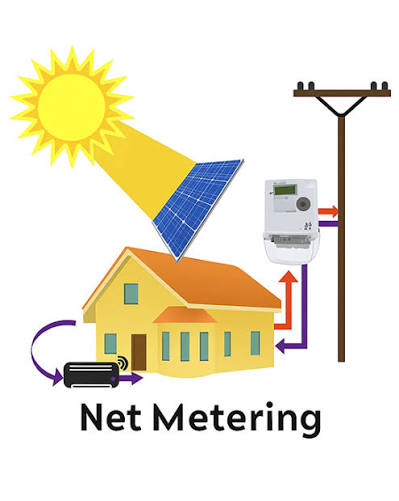
Under the mechanism, electricity exported by a customer-generator is credited against electricity purchased from the distribution utility.
The framework is intended to encourage consumers to supplement electricity purchased from the grid with renewable self-generation. It also provides a regulatory basis for households, commercial facilities and institutions to participate in distributed electricity production.
This makes the Malawian announcement a useful point of comparison rather than a model Ghana must simply copy.
Ghana’s next challenge is to establish how widely its existing provisions are being used. Publicly accessible information on the number of active net-metered customers, installed capacity connected under the code and electricity exported through the arrangement would help determine whether the policy is delivering beyond its regulatory purpose.
Without those figures, it is difficult to assess the scale of the programme or identify where implementation is falling short.
The Energy Commission and electricity distribution utilities have an important role in providing that clarity.
Potential participants also need to understand the technical requirements, application process, metering arrangements and crediting mechanism before investing in systems intended to supply electricity to the grid.
The Economics Must Work For Consumers
Net metering can make rooftop solar investment more attractive, but the existence of a credit mechanism does not automatically make every installation commercially viable.
The cost of solar panels, inverters, batteries where required, installation, maintenance and grid-compliant equipment can be significant.
Customers also need clarity on how exported electricity is valued and how credits are applied to their bills.
These details influence whether households and businesses see net metering as a worthwhile investment or simply another technical requirement attached to solar installation.
The distribution network must also be capable of accommodating electricity supplied from multiple locations.
Utilities need procedures for approving connections, ensuring safety, managing voltage and protecting equipment as more customers begin exporting power.
Malawi’s regulator, the Malawi Energy Regulatory Authority, has indicated that safety will be a priority in implementing the rules.
That is an important consideration for Ghana as well: distributed generation must be integrated without compromising network stability or putting consumers and utility workers at risk.
The UN Development Programme’s Malawi office offered a practical demonstration of the concept during the launch.
Its solar installation in Lilongwe had exported approximately 178 kilowatt-hours to the grid since the previous week, according to the organisation’s monitoring system.
The demonstration showed how an institution can use renewable electricity for its own needs while supplying surplus power to the national network.
It also illustrates why net metering should be assessed through actual energy flows rather than the number of policies or solar installations announced.
A Wider Role For Consumers In Ghana’s Energy Mix
For Ghana, greater participation by distributed solar generators could complement utility-scale renewable projects and reduce the amount of electricity some customers need to purchase from the grid.
Commercial buildings, industrial facilities, universities, hospitals and public institutions with suitable roof space could potentially contribute to this model, subject to the applicable technical and regulatory requirements.
However, exported electricity should not be presented as a substitute for investment in transmission, distribution and large-scale generation.
Net metering is a complementary source of supply, not a complete solution to the electricity sector’s structural challenges.
It is also important to distinguish between a customer generating electricity for personal use and one exporting surplus electricity. A rooftop solar installation does not automatically mean that power is being supplied to the national grid.
Malawi’s pilot offers Ghana an opportunity to examine the practical steps involved in moving from regulatory approval to functioning grid connections.
Its early figures also provide a reminder that announced potential capacity is different from capacity already connected and operating.
Ghana has had a net-metering framework for three years. The next assessment should therefore focus on participation, connection times, exported electricity and the financial value of credits received by customers.
The policy objective is not simply to encourage more people to install solar panels. It is to make distributed renewable generation a practical, safe and financially credible part of the electricity system.
Malawi has begun putting numbers against that ambition. Ghana now needs to show what its own framework has delivered.
READ ALSO: Authorities Decry Global Indifference To Gaza’s Woes