Ghana’s push to add renewable energy to its electricity mix is increasingly becoming a test of whether the country can store, distribute and deliver power reliably—not simply generate more of it.
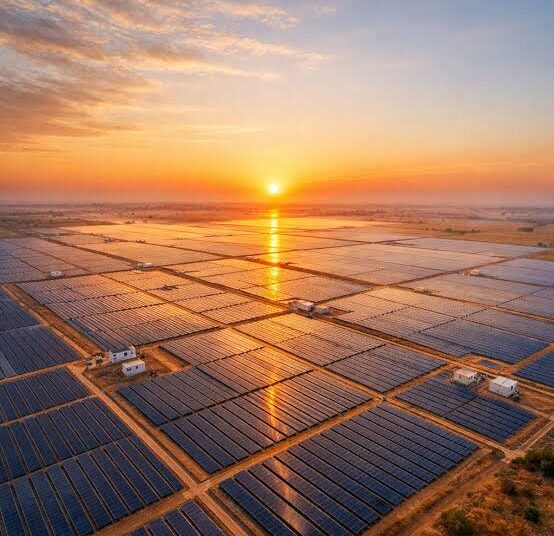
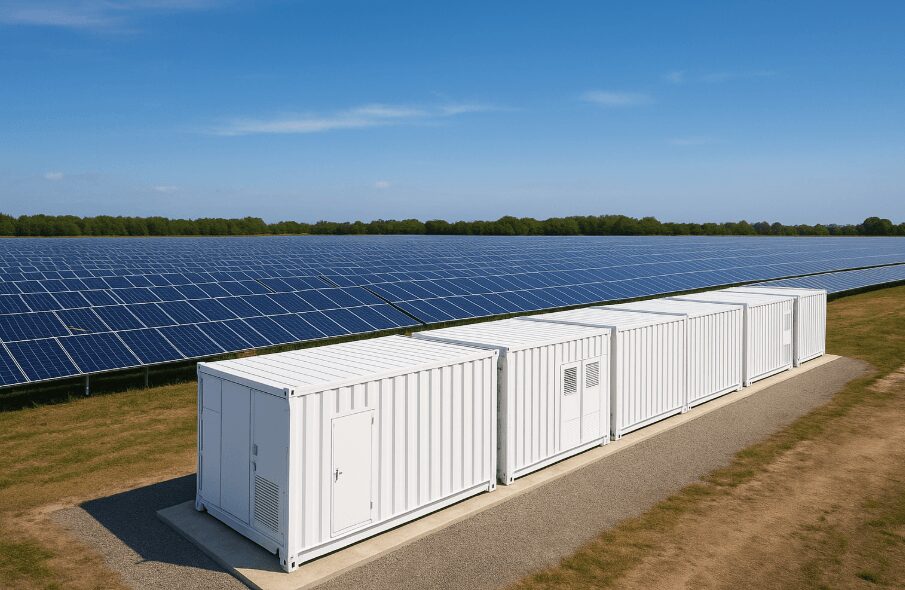
The government’s announcement that it is procuring a 200-megawatt (MW) battery energy storage system alongside a 200-megawatt-peak (MWp) solar photovoltaic facility has brought that challenge into sharper focus.
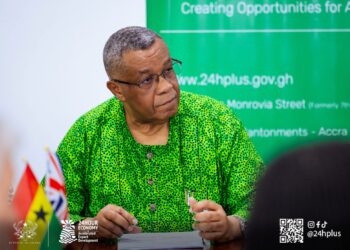
The project, announced by Energy and Green Transition Minister Dr John Abdulai Jinapor on October 22, is intended to improve electricity supply and support the integration of renewable power into the national grid.
The battery system is expected to provide more than 1,500 megawatt-hours of storage, allowing electricity generated when solar resources are available to be retained and used later.
“Battery Energy Storage Systems have become increasingly important to modern electricity systems. They enable us to store electricity when it is available and deploy it when it is needed, while providing essential services that strengthen the reliability and flexibility of our grids,”
Dr Abdulai Jinapor
For Ghana, where electricity interruptions, distribution losses and the financial pressures confronting the power sector remain important public concerns, the significance of the investment extends beyond renewable energy targets.
It raises a more fundamental question: can the country develop a power system that supplies electricity when households and businesses need it, at a cost the economy can sustain?
Solar and battery storage are part of the answer. But emerging technologies in waste-to-energy, geothermal generation, long-duration energy storage and even space-based solar power could eventually offer additional options for Ghana and other African countries seeking more resilient electricity systems.
Beyond generating more solar power
Solar energy has become an increasingly attractive option for African countries because of the continent’s abundant sunshine and the declining cost of photovoltaic technology.
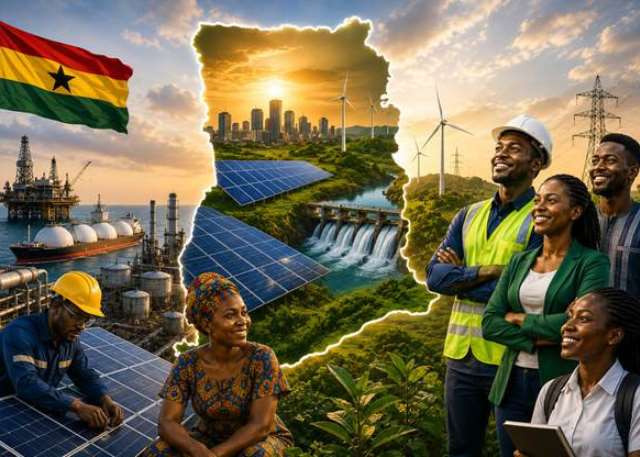
Ghana has already established utility-scale solar facilities, including projects at Bui and in the Upper West Region, while rooftop and commercial installations offer additional opportunities to reduce reliance on grid electricity.

Yet solar power has a basic limitation: generation fluctuates with sunlight. Electricity produced during the day may not be available in sufficient quantities during the evening peak, when households return home, businesses remain operational and demand rises.
Battery storage can help close that gap, but the scale and duration of storage matter. A battery system capable of supplying electricity for several hours does not automatically solve a prolonged supply shortage or eliminate the need for dependable generation.
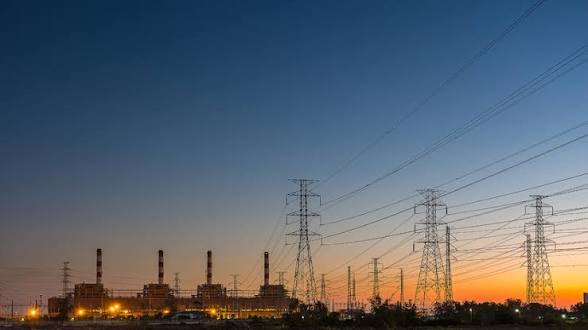
This distinction is particularly important for Ghana, where new generation capacity must work alongside transmission and distribution infrastructure capable of moving electricity to consumers.
If grid bottlenecks, technical losses, commercial losses and weak revenue collection remain unresolved, additional generation alone may not deliver the full benefits expected.
The government’s proposed solar-and-storage project therefore needs to be assessed not only by its installed capacity but also by how effectively it integrates with the grid, reduces avoidable costs and improves the reliability of electricity delivered to consumers.
Ghana’s renewable energy ambitions also point to a wider investment requirement. The country’s updated Renewable Energy Master Plan for 2026–2030 sets out substantial additions to solar capacity and a battery storage target of 1,970 megawatt-hours over the period.
Achieving those ambitions will require financing, grid upgrades, clear commercial arrangements and policies that encourage investment without creating new financial burdens for the energy sector.
Turning waste into an energy resource
Another technology with potential relevance to Ghana is biomass-based power generation.
Agricultural activity produces significant quantities of organic residues, including crop waste and by-products from food processing. Rather than treating all such material as waste, appropriately designed facilities could convert some of it into electricity, heat or biogas.
The opportunity is particularly relevant to an economy with substantial agricultural activity and continuing waste-management challenges.
In principle, processing residues from palm oil production, for example, could create an additional revenue stream for producers while supplying electricity to nearby communities or industrial facilities.
Côte d’Ivoire offers a regional example. Its 46MW Biovea Energie plant uses waste from palm oil production to generate electricity for the grid.
The project demonstrates how an agricultural by-product can support power generation while creating potential commercial benefits for the surrounding value chain.
Anaerobic digestion offers another route. The process breaks down organic material in an oxygen-free environment to produce biogas, which can be used for cooking, heating or electricity generation. The remaining material may also be suitable for use as organic fertiliser.
For Ghana, the attraction would be twofold: extracting value from suitable waste streams and diversifying supply beyond conventional power plants.
Farms, agro-processing businesses and selected municipal facilities could provide opportunities for projects scaled to local feedstock availability.
However, the economics cannot be taken for granted. Facilities require a consistent supply of suitable material, reliable collection systems, maintenance expertise and dependable buyers for the electricity produced.
Municipal waste incineration also raises concerns about air pollution, particularly where waste contains a high proportion of organic material or facilities lack effective emissions controls.
The policy challenge is therefore to distinguish commercially and environmentally viable projects from proposals that promise electricity without adequately accounting for feedstock, operating costs and pollution.
Could Ghana look beneath the surface?
Geothermal energy is another potential source of dependable, low-carbon electricity, although its suitability varies considerably by location.
Kenya has developed a substantial geothermal sector because of its position along the East African Rift Valley, where geological conditions allow heat from beneath the Earth’s surface to be accessed comparatively efficiently. Geothermal generation now supplies a significant share of Kenya’s electricity.
Ghana does not share the same obvious geological advantages. That makes a direct comparison with Kenya inappropriate. Nevertheless, advances in enhanced geothermal systems could eventually expand the range of locations where geothermal power is technically possible.
These systems involve drilling deep into hot rock and circulating water through engineered pathways to bring heat to the surface. In theory, this could allow geothermal energy to be developed beyond regions with the most favourable natural conditions.
The major obstacle remains cost and technical risk. Deep drilling is expensive, and developers must establish that underground conditions can sustain commercially useful heat extraction.
Ghana would therefore need credible geological assessments and feasibility studies before treating geothermal energy as a practical addition to its generation mix.
For now, it is better understood as a longer-term research and diversification opportunity than an immediate solution to electricity supply concerns.
Storage beyond conventional batteries
Ghana’s planned battery system also highlights a broader question facing electricity planners: what happens when the power system needs storage for longer than conventional batteries can economically provide?
Researchers and developers are exploring alternatives, including compressed-air systems and gravity-based storage. Compressed-air technology uses electricity to pressurise air, which can later be released through equipment that drives a turbine.
Gravity-based systems store energy by lifting heavy materials and recover it when those materials descend and drive generators.
These technologies are at different stages of development and are not automatically cheaper or more suitable than batteries.
Their value depends on factors such as site conditions, efficiency, construction costs, operating requirements and the duration for which electricity must be stored.
South Africa is testing a gravity-based system that uses heavy blocks made from recycled coal ash. Such technology could potentially make use of suitable former mining sites, although each location would require a detailed engineering and commercial assessment.
For Ghana, the lesson is not that the country should immediately invest in every emerging storage technology.
It is that energy planning should compare different options against the actual needs of the grid, including the duration of supply interruptions, peak demand, renewable generation patterns and the cost of maintaining reserve capacity.
Space-based solar power: opportunity or distant prospect?
One of the more unconventional technologies under development is space-based solar power, which aims to collect solar energy in space and transmit it to receiving infrastructure on Earth.
Unlike terrestrial solar panels, systems positioned in space could potentially collect sunlight for longer periods without being affected by ordinary night-time conditions or local weather.
Supporters argue that the technology could eventually supply electricity to remote communities and industrial operations where extending conventional transmission infrastructure is costly.
Kobina Hughes, an ambassador for space-based solar power company TerraSpark, has argued that the approach could change how electricity reaches isolated locations.
“You invert the infrastructure problem by taking power to the people where they need it,” he said.
The concept remains far from a routine electricity supply option. Commercial viability, launch costs, transmission efficiency, safety, regulation and the construction of receiving infrastructure all need to be resolved.
Ghana should therefore treat space-based solar power as an emerging international development to monitor, rather than a near-term substitute for investments in its own generation and grid.
The real test is implementation
The technologies differ in maturity, cost and suitability, but they point towards the same conclusion: Ghana’s energy transition cannot be measured solely by the number of solar panels installed or megawatts announced.
The immediate priority is to ensure that the proposed solar and battery project is delivered effectively, integrated into the national grid and operated under arrangements that support reliable service.
Alongside that, Ghana needs stronger distribution infrastructure, improved utility performance and a credible approach to financing new investments.
Waste-to-energy could create opportunities where sustainable feedstock is available. New storage technologies may eventually improve the management of renewable electricity.
Geothermal research could broaden the range of future generation options, while space-based solar power remains a longer-term possibility.
But technology alone will not resolve the institutional and financial weaknesses that can prevent electricity investments from delivering their intended benefits.
For households, the measure of success is dependable electricity. For businesses, it is the ability to plan production without excessive uncertainty over power supply and costs. For government, it is a power system that supports industrial growth without accumulating unsustainable financial obligations.
Ghana’s next energy breakthrough may therefore depend less on selecting a single winning technology than on building a system capable of integrating several options, funding them responsibly and translating investment into reliable electricity.
READ ALSO: Paga Launches Africa’s First Jamaican Tourism Pilot