Ghana is taking another step towards expanding distributed solar power by opening a prequalification process for private photovoltaic installers under the country’s Mini-Grid and Net-Metering Project.
The Ministry of Energy and Green Transition has invited private solar companies to qualify for contracts under the Solar Photovoltaic-Based Net-Metered Component of the project, signalling a push to expand the number of technically capable firms able to deploy solar systems for electricity consumers.
The procurement notice, issued on October 6, 2026, sets October 26 as the deadline for applications.
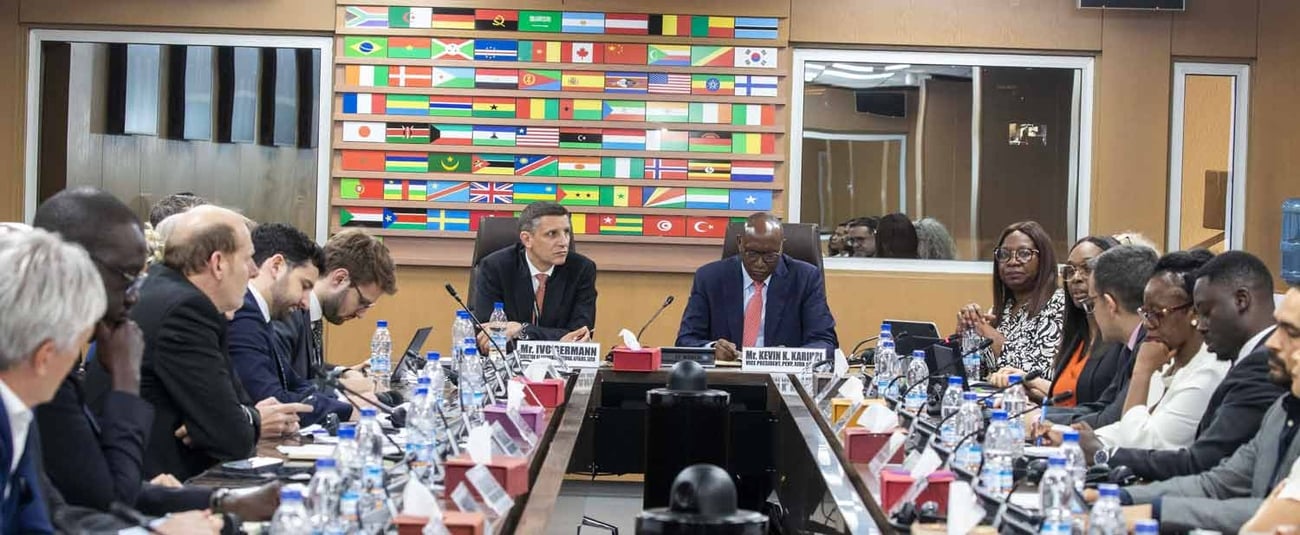
The initiative is being financed through a combination of support from the Government of Switzerland, represented by the Swiss State Secretariat for Economic Affairs (SECO), the African Development Bank and the Climate Investment Fund (CIF).
The financing structure is significant because it places Ghana’s net-metering ambitions within a broader effort to mobilise international climate and development finance for decentralised renewable energy.
Private Installers At The Centre Of Solar Expansion
The prequalification exercise could become an important mechanism for expanding Ghana’s solar market beyond individual government-led installations.
Under a net-metering arrangement, consumers with eligible renewable-energy systems can generate electricity for their own use while electricity produced in excess of their immediate requirements can be accounted for within the applicable electricity framework.
That makes the availability of competent installers particularly important. Solar expansion depends not only on financing and equipment but also on companies capable of designing, installing and maintaining systems that meet the required technical standards.
The Ministry’s procurement notice identifies the contract as being for “Net-Metering Photovoltaic (NMPV) Private Solar Photovoltaic Installers.”
The decision to use a prequalification process therefore suggests an attempt to establish a pool of private firms that can participate in delivering the project rather than treating solar deployment as a one-off procurement exercise.
The commercial opportunity could also have implications for Ghana’s domestic renewable-energy industry.
As more households, businesses and other electricity users consider distributed solar, demand for installation, maintenance, electrical engineering and related services could expand alongside the physical growth of photovoltaic capacity.
Financing Links Solar Policy To Climate Investment
The project is being supported by three international financing sources: SECO, the African Development Bank and CIF.
That combination highlights the extent to which Ghana’s transition towards decentralised renewable energy is increasingly linked to international climate finance.
For Ghana, the importance of such financing goes beyond the installation of individual solar systems.

The country continues to face the challenge of balancing rising electricity demand, the cost of power supply and the need to diversify its generation mix.
Distributed solar can potentially contribute to that diversification by allowing electricity consumers to generate part of their own power rather than relying entirely on centrally generated electricity.
However, the effectiveness of the programme will ultimately depend on how quickly qualified installers can translate financing and policy into functioning systems.
The prequalification exercise therefore represents the supply-side foundation of the programme.
The Ministry stated that it intends to apply part of the project proceeds towards payments under contracts for private solar photovoltaic installers.
That creates a direct link between international development financing and private-sector participation in Ghana’s renewable-energy market.
Net-Metering Requires More Than Solar Panels
The project also exposes a broader issue in Ghana’s renewable-energy transition: increasing solar deployment requires an ecosystem around the technology.
Panels alone do not create a functioning distributed-energy market.
Installers need technical competence, consumers need confidence in the systems being deployed, and the electricity sector needs appropriate mechanisms for integrating distributed generation into the wider power system.
This makes the quality of the prequalification process particularly important.
If Ghana succeeds in developing a reliable pool of private installers, the programme could help strengthen the country’s renewable-energy supply chain while giving consumers greater access to solar solutions.
If standards, monitoring and installation quality are weak, however, rapid deployment could create new technical and consumer-protection challenges.
The Ministry’s decision to begin with prequalification therefore has an important regulatory dimension alongside its procurement purpose.
Ghana’s Renewable Push Needs Scale
The latest procurement initiative comes as Ghana continues to seek greater diversification of its electricity system.
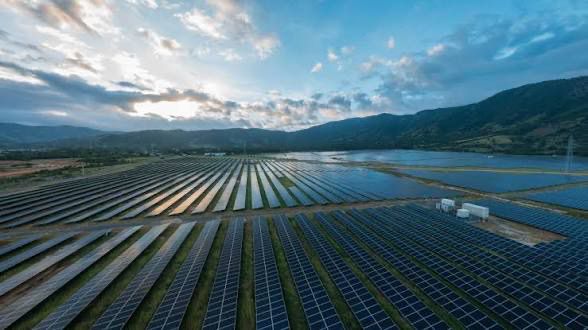
Solar has an obvious role in that effort because photovoltaic systems can be deployed at different scales, from individual consumer installations to larger distributed systems.

The net-metering component is particularly relevant because it shifts some of the renewable-energy investment burden towards electricity users and private-sector providers while creating a framework for connecting distributed generation to the power system.
That could become increasingly important as Ghana looks for ways to expand renewable energy without relying exclusively on large-scale generation projects.
But the success of the programme will ultimately be measured by what happens after the prequalification exercise.
The immediate task is to identify capable private installers. The more consequential challenge will be ensuring that those companies can deliver systems at scale, meet technical requirements and provide reliable service to consumers.
For Ghana, the solar opportunity is therefore no longer simply about adding photovoltaic panels.
It is about building the market, technical capacity and private-sector infrastructure required to make distributed renewable energy a durable part of the country’s electricity system.
And this prequalification process could be one of the mechanisms through which that market begins to take shape.
READ ALSO: Local Government Minister Seeks World Bank Support for Sustainable Cities