Fidelity Bank has emerged as one of the major players in Ghana’s financial inclusion drive, with its agency banking network expanding to approximately 7,000 agents nationwide, more than a decade after the bank pioneered the model in the country.
The bank’s founder, Edward Effah, has revealed that Fidelity Bank introduced agency banking in 2012 as part of efforts to extend financial services beyond conventional banking halls and bring essential transactions closer to communities that were underserved by traditional banking infrastructure.
The initiative, which allows customers to access basic banking services through agents operating from locations such as pharmacies and small retail shops, has become an important part of the bank’s strategy to deepen financial inclusion.
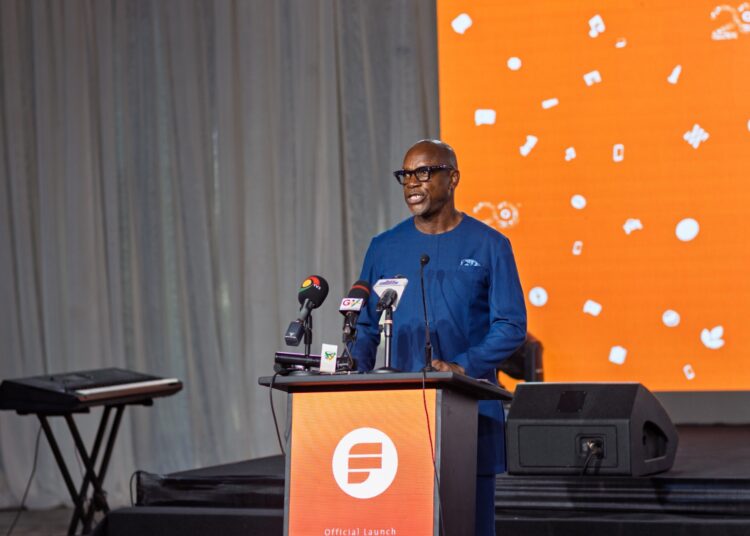
Speaking about the bank’s two-decade contribution to Ghana’s economic development, Mr Effah highlighted agency banking as one of the significant initiatives through which Fidelity Bank has sought to transform access to financial services. “We started agency banking in about 2012, and today we have 7,000 agents across the country,” he said.
The expansion represents a significant development in Ghana’s banking industry, where geographical access, particularly in rural and underserved communities, remains an important consideration in efforts to increase financial participation.
7,000 Agents Take Banking Beyond Traditional Branches
The growth of Fidelity Bank’s agency banking network demonstrates how technology and alternative banking channels are changing the way financial institutions reach customers.
Traditionally, accessing banking services required customers to travel to established branches, a situation that often created difficulties for people living in communities far from commercial banking centres.
However, the agency banking model provides an alternative by allowing customers to access basic banking services through designated agents within their local communities.
These agents operate from accessible locations, including pharmacies and small shops, reducing the need for customers to travel long distances to complete routine banking transactions.
According to Mr Effah, the initiative has helped Fidelity Bank extend its reach to communities where establishing conventional branches may not be commercially viable.
This approach also offers an opportunity to expand banking access without relying exclusively on the costly process of building and maintaining physical branches.
With approximately 7,000 agents spread across the country, Fidelity Bank has established an extensive distribution network that places banking services closer to individuals and businesses.
The development is particularly relevant to Ghana’s financial inclusion ambitions, as expanding access requires more than simply increasing the number of bank branches in major commercial centres.
Effah Reveals Fidelity Bank’s Bigger Development Ambitions
Beyond agency banking, Mr Effah disclosed that Fidelity Bank’s founding ambitions were firmly rooted in supporting Ghana’s socio-economic development.
He explained that the institution was established with a clear purpose of contributing to national development while creating opportunities that could improve people’s lives.
“When we set up Fidelity, we set out clearly that we wanted to have a purpose, and that purpose was to contribute towards Ghana’s socio-economic development, to inspire and transform lives.”
Edward Effah
The bank’s development contributions, according to its founder, extend beyond conventional lending and deposit-taking activities to include financing critical infrastructure, supporting housing developments and widening access to financial services.
His remarks highlight the broader role locally owned financial institutions can play in mobilising capital for projects that support economic activity and improve living standards.
Five Power Projects Put Fidelity Bank in the Infrastructure Spotlight
One of the most striking revelations from Mr Effah was Fidelity Bank’s involvement in financing major power projects in Ghana.
He disclosed that the bank had financed five power projects, serving as the lead bank in the transactions and arranging syndicated facilities to support the developments.
“We have financed more power than any other bank or maybe even the rest of the banking sector put together. We finance five power projects.”
Edward Effah
The claim underscores the bank’s involvement in Ghana’s energy infrastructure financing, a sector that requires substantial long-term capital to support electricity generation and economic expansion.
By arranging syndicated facilities and taking leadership positions in these transactions, Fidelity Bank has positioned itself as an important participant in financing large-scale infrastructure projects.
Housing Sector Also Benefits From Fidelity Bank’s Financing
Fidelity Bank’s contribution to Ghana’s development has also extended into the housing market, where it has supported major residential developments.
Mr Effah identified Manet Village, Manet Cottage on the Spintex Road and Villagio Vista among the projects financed by the bank, with Fidelity Bank serving as the lead bank for Villagio Vista.
He further disclosed that the institution had introduced mortgage products designed to help individuals acquire homes and spread payments over time.
The housing interventions are significant in a market where the high cost of property acquisition continues to make homeownership difficult for many households.
Mortgage financing provides an alternative to outright property purchases, allowing qualified buyers to access homes while repaying their obligations over an agreed period.
A Two-Decade Banking Legacy
Fidelity Bank’s 7,000-agent network, financing of five power projects and involvement in major housing developments provide an indication of how the institution has pursued its founding development ambitions.
Mr Effah’s revelations also bring attention to the changing responsibilities of Ghanaian banks, particularly the need to support economic infrastructure while making financial services more accessible.
As competition intensifies and the banking industry embraces new delivery channels, agency banking could remain an important instrument for reaching communities beyond traditional banking centres.
READ ALSO: GSE Opens Week on Weak Trading as Share Volume Crashes 51%