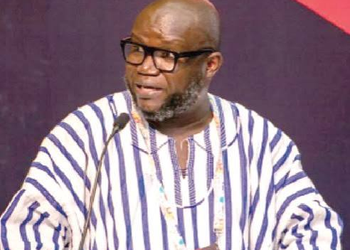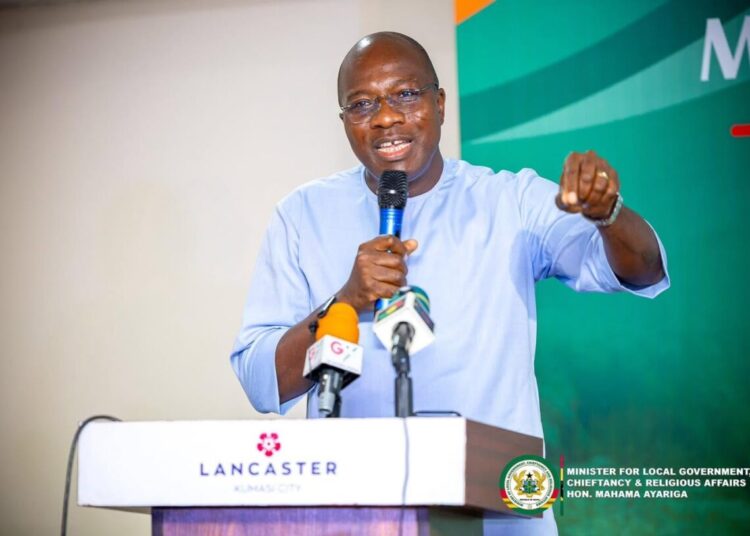
The Minister for Local Government, Chieftaincy and Religious Affairs and Member of Parliament for Bawku Central, Honourable Mahama Ayariga has directed Metropolitan, Municipal and District Chief Executives (MMDCEs) to intensify enforcement against traders occupying roads, pavements and other public spaces for commercial activities.
He indicated that the assemblies must clear the affected areas and “enforce existing bye-laws that clearly prohibit these practices” to restore access for pedestrians and motorists.
“It has become very blatant in some cases where you find people who just go and put a table in the middle a road for their commercial use and then they are trading there.”
Honourable Mahama Ayariga
The Minister also called for closer cooperation between citizens and local authorities to identify violations and ensure that complaints receive prompt attention.
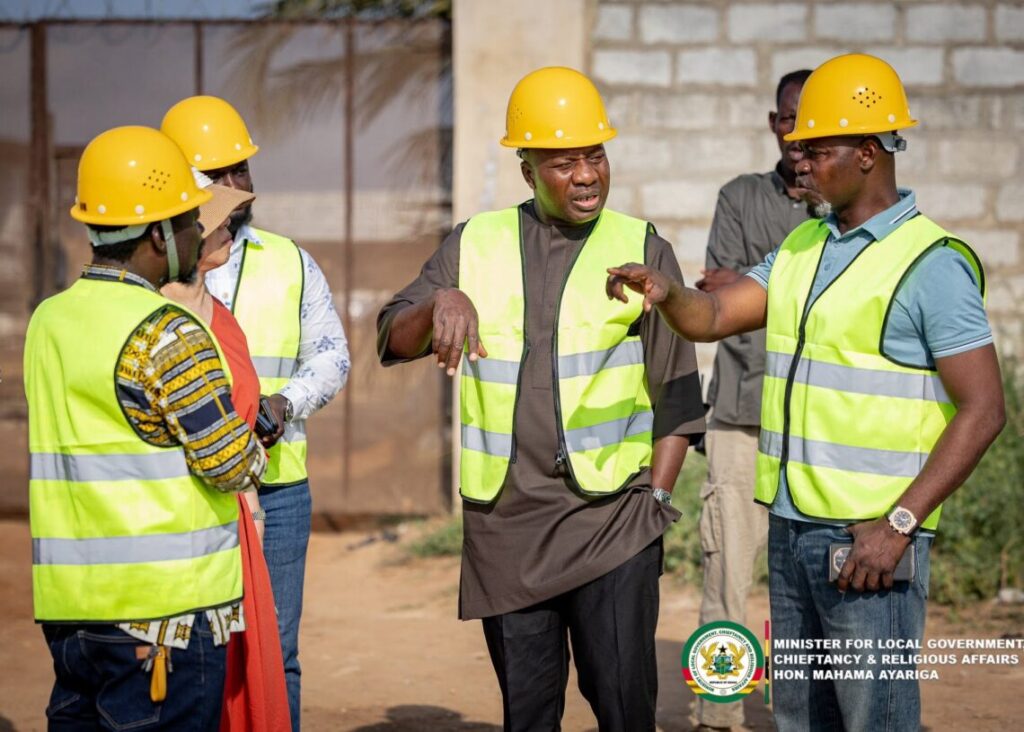
Honourable Ayariga explained that he has already engaged some MMDCEs and instructed them to prevent traders from occupying spaces intended for public use. He observed that enforcement operations are underway in several locations, although he acknowledged that assemblies still have considerable work to undertake.
In addition, the Minister encouraged members of the public to “report specific locations where traders have obstructed roads and walkways.” He explained that complaints received through the media or directly from citizens are being forwarded to the relevant MMDCEs, with instructions to take corrective action.
The Local Government Minister also proposed a monitoring arrangement through which media organisations and citizens could submit photographs and complaints to his office. Such reports, he explained, would help the ministry identify the responsible assembly, direct the appropriate officials to intervene and monitor whether the necessary measures had been implemented.
He further cautioned that MMDCEs who neglected their responsibilities would face his displeasure. “I will not be kind to an MMDCE that refuses to do his or her work,” he remarked, underscoring the accountability he expects from local government officials.
Addressing the practical concerns surrounding the proposed reporting arrangement, Honourable Ayariga explained that complaints would be directed to the relevant officers for verification and action. He noted that his office could establish the appropriate district, municipality or metropolis before referring the matter to the responsible chief executive.
The Minister also identified media coverage as an important source of information for government officials, noting that reports aired by radio and television stations frequently draw his attention to problems that may not yet have reached his office through official channels.
He therefore encouraged journalists and members of the public to continue forwarding evidence of obstruction to his office.
Contraflow Buses Set For More Trips Ahead Of Christmas
In highlighting the current work of the contraflow system, the Minister for Local Government, Chieftaincy and Religious Affairs and Member of Parliament for Bawku Central, Honourable Mahama Ayariga also outlined plans to increase the number of trips undertaken by buses operating under the government’s contraflow initiative as the Christmas season approaches.
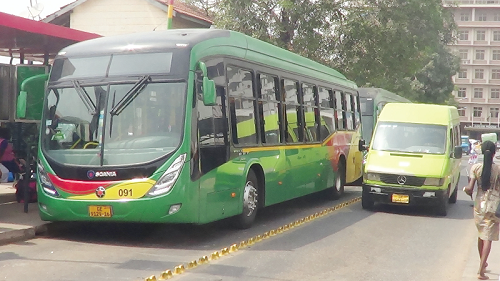
“Now, when we say that we’re going to increase, it doesn’t mean that we are adding additional buses. If you were doing three trips in the morning from Adenta, increase to four. As the pressure increases, increase to five. And as the pressure increases, increase to six.”
Honourable Mahama Ayariga
The Local Government Minister indicated that the adjustment would enable operators to transport more commuters into Accra during peak morning hours, particularly as passenger demand rises towards the festive season. He further identified a shortage of dispatch riders as an operational difficulty that previously prevented buses from returning quickly to their starting points for additional trips.
Explaining the arrangement, Honourable Ayariga noted that the contraflow service currently operates across several routes, with the number of buses varying according to passenger demand and operational requirements. The Kasoa to Tudu route, for instance, typically deploys between 13 and 14 buses, while Amasaman operates approximately 10 or 11.
The Madina route, meanwhile, records about nine buses, while the Tema service operates differently because of ongoing motorway construction. Buses travelling from Tudu use the contraflow arrangement before joining normal traffic at Tetteh Quarshie to continue towards Tema.
According to the Minister, operators generally dispatch their buses in three batches during the morning service. Once the vehicles complete those trips into Accra, they remain there for regular transport operations until the afternoon service begins.
However, the proposed adjustment will “require each batch to return to its original loading point after dropping passengers in Accra.” This will allow the same vehicles to rejoin the queue and undertake additional journeys without requiring an increase in the fleet.
Honourable Ayariga explained that the government has procured additional motorbikes for dispatch riders to facilitate the arrangement. Their responsibilities will extend beyond leading buses to their destinations, as they will also guide the vehicles back to their respective loading points.
He indicated that an operator previously completing three morning trips could progressively increase the number to four, five and eventually six, depending on passenger demand. The approach, he explained, could double the number of trips using the existing buses.
READ ALSO: Ewoyaa Lithium: Atlantic Lithium to Vote on December 14 for Huayou takeover