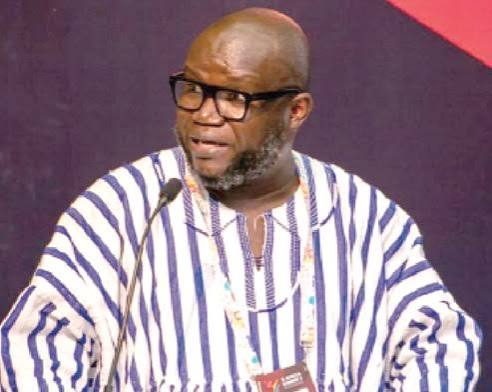
Former Graphic Communications Group boss Dr Ken Ashigbey has cautioned that the reactivated Media Development Fund and proposed legislation will not secure the future of Ghana’s media industry.
Speaking in an interview, he called for wider reforms to strengthen media businesses, improve journalists’ welfare, promote professional standards and create sustainable sources of income. His comments follow President John Mahama’s announcement of GH¢10 million in seed funding for the fund in the 2027 budget.
“This is not a silver bullet that solves all the problems. But definitely, this bill alone is not going to solve the problem of a responsible, sustainable media entity,”
Former Graphic Communications Group boss Dr Ken Ashigbey
Dr Ashigbey made the remarks while responding to a question about a proposed bill intended to protect job security, fair remuneration, decent working conditions and the welfare of media practitioners.
He argued that although the legislation could help address longstanding concerns about working conditions, it would not automatically make media organisations financially stable or professionally responsible.
Media Fund Must Form Part of Wider Industry Reforms
The former media executive maintained that the industry needed a broader approach that recognised the different roles of commercial media businesses and public-interest journalism. He stressed that support for journalism should not undermine the viability of private media enterprises, which must be able to generate revenue and sustain their operations.
The GH¢10 million seed funding announced by President Mahama at the 30th Ghana Journalists Association (GJA) Media Awards is intended to support journalists’ welfare, training, investigative journalism, digital literacy and safety.
However, Dr Ashigbey indicated that the allocation would meet only part of the sector’s financing needs. Media organisations, he argued, must develop additional income streams rather than depend on grants as their principal source of support.
Professional Standards Must Accompany Financial Support
He backed National Media Commission (NMC) Executive Secretary George Sarpong’s proposal for an index to assess journalism and help distinguish professional practitioners from individuals who merely present themselves as journalists.
The proposed measure, he suggested, could support a clearer understanding of the work media organisations undertake and the standards they uphold. He also advocated stronger self-regulation to address unprofessional conduct and reinforce public confidence in journalism.
For Dr Ashigbey, improving standards must go hand in hand with creating an environment in which legitimate media businesses can operate and grow. He maintained that people with experience and an understanding of media management should take the lead in shaping those reforms.
He also raised concerns about the number of television licences being issued, arguing that the expansion of outlets without sufficient attention to the strength of existing businesses could deepen the industry’s challenges.
Former Graphic Communications Group boss Dr Ken Ashigbey
“We need to address the indiscriminate issuance of television licences, which risks creating further challenges for the media industry.”
He warned that decisions which reduce the reach of media houses could weaken their capacity to fulfil their responsibilities. In his view, organisations require adequate scale and resources to maintain operations and deliver meaningful journalism.
Small Fund Management Team Should Attract More Support
On the administration of the Media Development Fund, Dr Ashigbey supported a lean management structure backed by technology and supervised by a broadly constituted board.
He argued that the team should not be limited to processing grant applications and distributing money. It should also be equipped to mobilise additional resources, maintain transparent procedures and ensure that funding reaches deserving beneficiaries.
The selection process, he indicated, should reward organisations that demonstrate responsible journalism and sustained attention to issues that matter to the country’s development.
“They have demonstrated that they are dealing with issues that are of concern to our national development.”
Former Graphic Communications Group boss Dr Ken Ashigbey
Media Entrepreneurs Needed to Sustain Jobs and Wages
Dr Ashigbey further urged stakeholders to protect opportunities for media entrepreneurs, stressing that commercial media businesses remain important to the industry’s long-term prospects.
He argued that viable enterprises could create employment, pay decent wages and contribute taxes, making their sustainability a matter that extends beyond the interests of individual owners.
His position places the proposed legislation and the GH¢10 million fund within a wider reform agenda. While both measures could provide support, he maintained that the industry’s future would also depend on stronger business models, professional discipline, responsible licensing and transparent funding arrangements.
The challenge, therefore, is to build a media environment in which public-interest journalism and commercially sustainable businesses can coexist. Dr Ashigbey’s intervention underscores that financial assistance must be matched by institutional accountability and the capacity of media organisations to support their workers and serve the public.
READ MORE: NMC Urges Transparent Media Development Fund Allocation