Ghana is set to pursue an ambitious agricultural industrialisation programme targeting eight strategic value chains as part of efforts to reduce food imports, strengthen domestic production, conserve foreign exchange and create employment opportunities across the country.
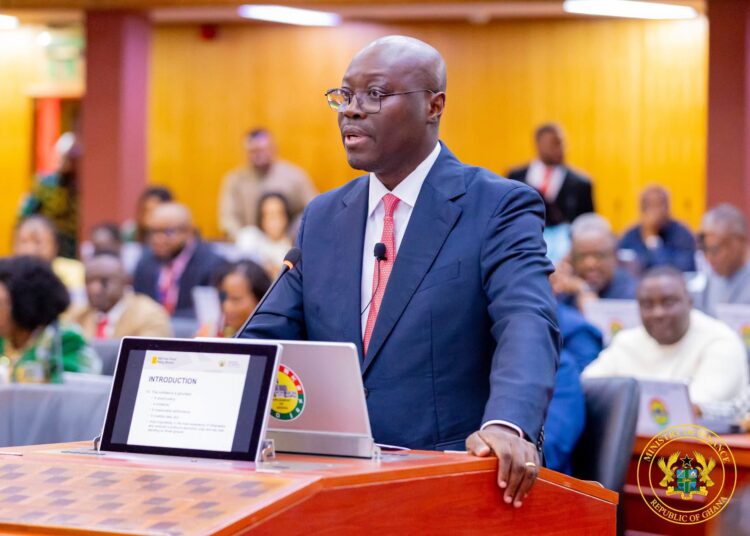
The initiative, announced by Finance Minister Dr. Cassiel Ato Baah Forson during the presentation of the 2027 Budget Statement and Economic Policy to Parliament on Thursday, November 12, 2026, will focus on rice, sugar, poultry, soya feed production, aquaculture, oil palm, vegetables and cocoa value addition.
The programme forms part of the Government’s broader economic transformation agenda, which seeks to reposition agriculture from predominantly primary production into a commercially integrated sector capable of supplying local industries, meeting domestic demand and expanding export opportunities.
Dr. Forson identified Ghana’s dependence on imported food as a significant economic vulnerability, noting that the import bill puts pressure on the cedi, exposes consumers to international price fluctuations and limits the economic benefits that domestic producers and communities should derive from national demand.
“Import bill weakens the cedi, transmits external price shocks and denies Ghanaian communities a fair share of national demand.”
Minister for Finance, Dr. Cassiel Ato Forson
Eight Value Chains to Drive Agricultural Industrialisation
Under the proposed intervention, Government intends to develop eight integrated agricultural industries, each supported by a dedicated commercial plan, financing structure, production targets, processing capacity, market regulations and implementation unit.
The approach is designed to ensure that investments in agriculture are commercially viable and supported by the infrastructure and market arrangements required to sustain production.
Dr Forson explained that the programme would operate through a national farm-to-market system, connecting agricultural land and water resources to improved seeds and animal breeds, irrigation, mechanisation, extension services, anchor farms and organised outgrower schemes.
The system will subsequently link farmers to storage facilities, processing plants, packaging services, transportation networks, institutional procurement, retail markets and export opportunities.
This integrated arrangement is expected to address longstanding challenges within Ghana’s agricultural sector, particularly the disconnect between production, processing and market access.
For many farmers, inadequate storage facilities, limited processing capacity and uncertain markets have contributed to post-harvest losses, unstable incomes and difficulties in accessing sustainable financing.
The Finance Minister indicated that the Government intended to address these structural weaknesses by ensuring that every stage of agricultural production is connected to a functioning commercial market.
“Production without storage creates gluts and losses. Processing without reliable supply creates idle factories. Credit without market leaves farmers in debt.”
Minister for Finance, Hon. Cassiel Ato Forson
The proposed framework is therefore expected to improve coordination between farmers, agribusinesses, processors, financial institutions and distributors while creating opportunities for private sector investment across the agricultural value chain.
Rice Development Hubs to Create 125,000 Jobs
Rice production will receive particular attention under the programme, with Government planning to establish dedicated rice development hubs across the Volta Basin, Western Ghana and Northern Ghana.
The hubs will organise production around irrigation infrastructure, mechanisation, modern silos, milling facilities, packaging and logistics to improve productivity and strengthen the competitiveness of locally produced rice.
According to Dr Forson, the initiative will expand the area under rice cultivation, with production targets of between five and six metric tonnes per hectare. The intervention is also expected to support approximately 125,000 jobs, creating employment opportunities across farming, processing, transportation, packaging and distribution.
To attract investment and reduce production costs, the rice development hubs will benefit from targeted tax incentives. These measures are intended to encourage investment in agricultural infrastructure, modern milling facilities, irrigation systems and other essential components of the rice industry.
The emphasis on rice production reflects Ghana’s continuing dependence on imported supplies despite the country’s considerable agricultural potential.
Ghana’s domestic rice industry faces challenges relating to production capacity, mechanisation, irrigation, post harvest management and processing efficiency. Addressing these constraints is important to reducing the country’s import requirements and improving the competitiveness of local rice.
The proposed development hubs are expected to provide a coordinated production and processing environment where farmers can access essential services while processors benefit from more reliable supplies of locally cultivated paddy rice.
Public Procurement to Guarantee Markets for Farmers
A significant component of the agricultural industrialisation strategy will be the use of public procurement to create a dependable market for locally produced food.
Dr. Forson announced that Government would amend public procurement laws to require schools, hospitals and other public institutions to purchase locally grown foodstuffs, including rice and other staple commodities, with public funds.
The proposed legislative reform is intended to ensure that institutional food purchases support domestic agricultural production rather than creating additional demand for imported alternatives.
Public institutions represent an important market for agricultural commodities because their regular food requirements can provide predictable demand for farmers and local processors.
By directing this demand towards Ghanaian producers, the policy could strengthen the commercial viability of domestic agriculture, encourage investment in production and processing, and create opportunities for businesses involved in storage, packaging and transportation.
The measure is also expected to support local employment by retaining more economic activity within the country’s agricultural and industrial sectors.
The Finance Minister maintained that public expenditure must deliver economic benefits to Ghanaian businesses, farmers and communities.
“The money of the Ghanaian people must create opportunities for the Ghanaian people. If you spend their money to put rice on the table, that rice must come from their farms.”
Minister for Finance, Hon. Cassiel Ato Forson
The proposed reforms will therefore make public procurement an important instrument for strengthening local agricultural markets and supporting the Government’s import-substitution ambitions.
The success of the eight value chains will depend on effective implementation, adequate financing, reliable infrastructure, private-sector participation and the ability of local producers to consistently meet market requirements.
The integrated farm-to-market system, Government intends to address the structural weaknesses that have limited agricultural productivity while transforming domestic demand into opportunities for industrial growth, rural incomes, foreign exchange conservation and decent employment.
READ ALSO:Accra Reset Seeks to Overhaul Rigged Global Financial Architecture – Mahama