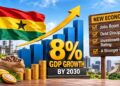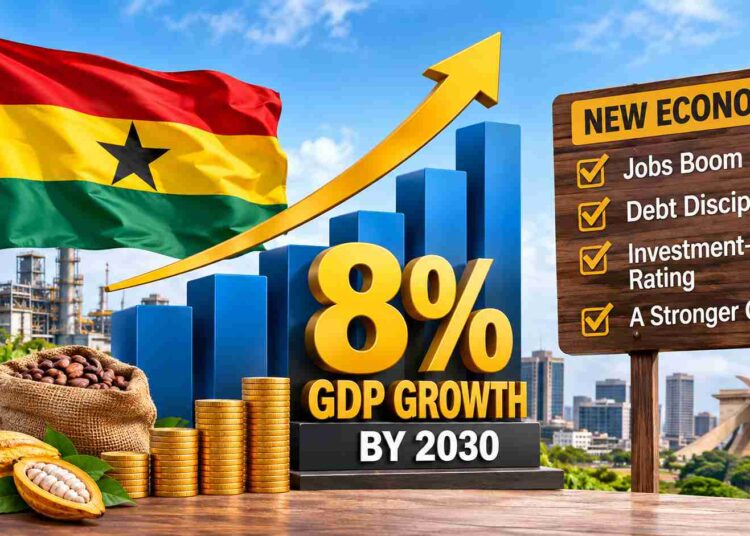
Ghana has set its sights on an ambitious economic transformation, targeting real gross domestic product (GDP) growth of about 8 per cent and an unemployment rate below 8 per cent by 2030 as the government rolls out its New Economy programme.
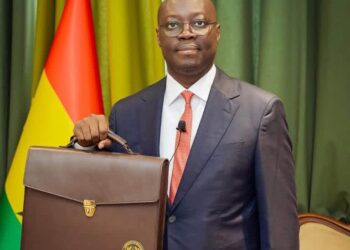
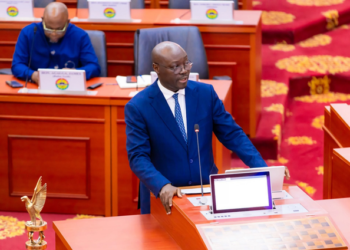
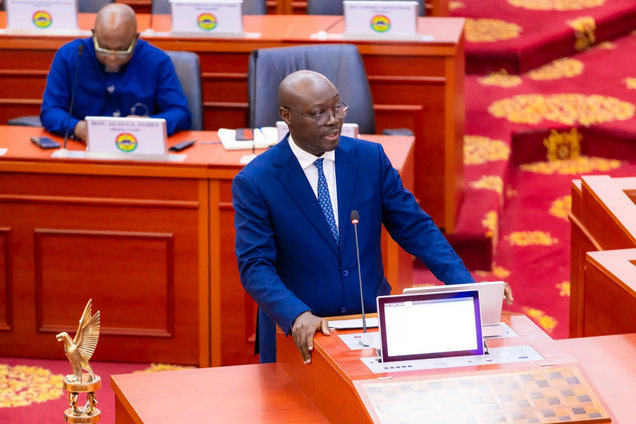
The targets, announced by Finance Minister Dr Cassiel Ato Forson during the presentation of the 2027 Budget Statement and Economic Policy to Parliament on Thursday, November 12, 2026, signal the government’s intention to move beyond economic stabilisation towards a more aggressive growth and job creation agenda.
The ambition is significant. After completing its International Monetary Fund (IMF) programme, Ghana is now seeking to build an economy capable of generating stronger growth, creating sustainable employment and attracting cheaper long-term financing.
But achieving these objectives will require more than favourable economic projections. It will demand sustained investment, stronger industries and an environment in which businesses can expand and create jobs.
Ghana Sets Ambitious 2030 Economic Targets
Dr Forson said the government was determined to deliver stronger economic performance while improving Ghana’s standing in international financial markets.
“By 2030, we are targeting real GDP growth of about 8%, unemployment below 8%, and a credible path to an investment-grade sovereign credit rating,” he said.
The targets place employment creation alongside economic expansion, reflecting the need to ensure that stronger GDP growth translates into better opportunities for ordinary Ghanaians.
Youth unemployment, limited industrial capacity and the difficulty many businesses face in expanding operations remain important challenges. Achieving unemployment below 8 per cent would therefore require significant job creation across agriculture, manufacturing, services and other productive sectors.
The government is betting on its New Economy programme to provide the foundation for this transformation.
Investment-Grade Rating Becomes a Major Priority
Beyond growth and employment, the government is pursuing a credible pathway towards an investment-grade sovereign credit rating.
Such a rating could improve Ghana’s access to international capital markets and potentially reduce the cost of borrowing. However, Dr Forson cautioned that the country must demonstrate sustained economic discipline before earning that recognition. “Investment grade sovereign rating cannot be conferred in a speech. It must be earned through sustained performance,” he said.
To strengthen accountability, the government intends to publish an annual investment-grade readiness report.
The report will assess Ghana’s progress across fiscal performance, debt affordability, reserve accumulation, monetary credibility, financial sector strength, institutional quality and economic diversification.
This approach could provide investors and credit rating agencies with a clearer picture of the country’s economic progress and its ability to maintain stability over time.
Debt Discipline and Economic Stability Underpin Growth
The government has identified macroeconomic stability and access to affordable financing as the first pillar of its New Economy programme.
Dr Forson said Ghana would maintain a positive primary budget surplus of at least 0.5 per cent of GDP from 2027 while keeping public debt consistent with a 45 per cent of GDP target.
“From 2027, we will maintain a positive primary surplus of at least 0.5% of GDP. We will keep public debt consistent with 45% of GDP. We will preserve single-digit inflation and strengthen our external buffers.”
Dr Ato Forson
These commitments are particularly important given Ghana’s recent debt difficulties and the financial pressures that forced the country into an IMF-supported programme.
Maintaining fiscal discipline while financing infrastructure and productive investments will be one of the government’s biggest challenges.
Agriculture, Energy and Industry Expected to Drive Transformation
The New Economy programme identifies commercial agriculture, energy, critical minerals, textiles and garments, tourism, and pharmaceuticals as priority sectors.
These industries are expected to support economic diversification, strengthen domestic production and create employment opportunities.
Commercial agriculture could expand food production and agro-processing, while investments in textiles and garments could help rebuild Ghana’s manufacturing capacity. Critical minerals and pharmaceuticals also offer opportunities to move beyond traditional exports and develop higher-value industries.
Ultimately, Ghana’s ambition to achieve 8 per cent economic growth and unemployment below 8 per cent by 2030 will depend on how effectively these priorities translate into investment, production and jobs.
The government has established its targets. The difficult task now is delivering results that Ghanaians can feel in their businesses, incomes and everyday lives.
READ ALSO: NPA Chief Urges Clearer Rules To Attract Gas Investment