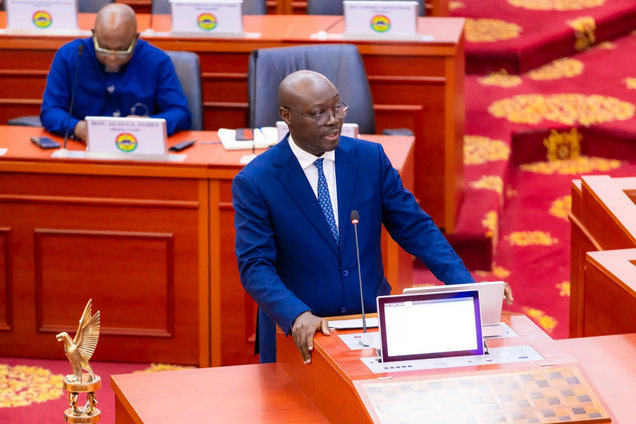
Ghana has emerged from one of the darkest chapters in its economic history, Finance Minister Dr Cassiel Ato Forson has declared, as the government shifts its attention from economic recovery to an ambitious programme aimed at transforming the country’s productive capacity.
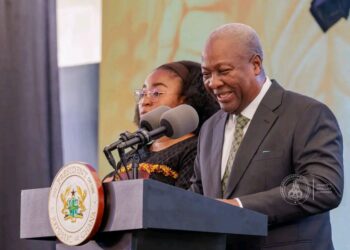
Presenting the 2027 Budget Statement and Economic Policy in Parliament on Thursday, November 12, 2026, Dr Forson said the country had overcome what he described as the worst and most painful economic crisis in its history, insisting that stability had been restored and confidence was returning.
“Ghana has made significant gains and has emerged from the worst and the most painful economic crisis in our history. Stability has been achieved, and confidence is back.”
Dr Cassiel Ato Forson
The declaration represents a significant political and economic statement from the Finance Minister, particularly after years of financial difficulties that left households struggling with rising living costs, businesses battling high operating expenses and investors questioning the country’s economic direction.
But beyond declaring victory over the crisis, the government is now setting its sights on a much bigger ambition: building an economy capable of generating sustainable growth, expanding domestic production and creating jobs.
A $10 Billion Gamble on Ghana’s Economic Future
The centrepiece of the government’s next economic chapter is the US$10 billion New Economy programme, a four-year investment initiative expected to run from 2027 to 2030.
The programme is designed to move Ghana beyond the immediate task of stabilising its finances and towards building an economy that produces more, processes more of its raw materials locally and creates sustainable employment.
The government intends to mobilise approximately US$2.5 billion annually to support investments in agriculture and agro-processing, manufacturing, infrastructure, energy, critical minerals, textiles and garments, tourism, the creative economy and pharmaceutical manufacturing.
The ambition is to reduce the country’s dependence on exporting raw materials while importing finished products at significantly higher costs.
Ghana has long struggled with this structural weakness. Despite possessing considerable agricultural and mineral resources, much of the country’s economic value remains trapped in the export of unprocessed commodities.
The New Economy programme seeks to change that equation by encouraging local processing, expanding industrial capacity and strengthening Ghanaian businesses to compete in international markets.
If successfully implemented, the initiative could create opportunities across several industries, particularly agriculture, manufacturing and mineral processing, where local production and value addition could generate employment beyond the traditional public sector.
Stability Is Back, But Can Households Feel It?
Dr Forson’s declaration comes against the backdrop of improving macroeconomic indicators.
Ghana’s economic recovery has been supported by easing inflation, stronger economic activity and renewed efforts to restore fiscal discipline.
Economic growth reached 6 per cent in the second quarter of 2026, while annual inflation declined to 5.2 per cent in September, providing evidence of improving economic conditions.
However, the improvement in headline economic indicators does not automatically mean that households have recovered from the financial pressure of previous years.
Many Ghanaians continue to face concerns about the cost of living, employment opportunities, access to affordable credit and the ability of businesses to expand.
Small businesses, in particular, need more than improved economic statistics. They require affordable financing, reliable electricity, predictable taxation and a stable operating environment.
Farmers also need better access to machinery, irrigation, storage facilities and markets to increase production and improve their incomes.
This is where the government’s next economic strategy will face its most important test. The recovery must eventually translate into better living conditions, higher incomes and opportunities that ordinary Ghanaians can experience.
The $10 Billion Question: Where Will the Money Come From?
While the proposed investment programme has generated considerable interest, its financing arrangements will be critical to its success.
Ghana cannot afford to pursue an ambitious spending programme at the expense of the fiscal discipline that has helped restore confidence in its economy.
The country is still emerging from a difficult debt crisis, making the management of public borrowing and expenditure particularly important.
Investors and economic observers will therefore be watching how government intends to mobilise the US$10 billion, the extent of private-sector participation and the safeguards designed to prevent fresh financial pressures.
The programme must also demonstrate how investments will be selected, monitored and evaluated to ensure that public resources generate measurable economic returns.
The challenge is not simply to announce billions of dollars in investment. It is to ensure that the money reaches productive sectors, supports viable businesses and delivers projects capable of strengthening the economy.
Ghana’s experience with ambitious development programmes makes implementation an especially important consideration. Poor project selection, delayed execution and inadequate accountability could undermine even the most attractive economic blueprint.
From Economic Recovery to Job Creation
One of the biggest expectations surrounding the New Economy programme is its potential to tackle unemployment, particularly among young people.
Ghana’s economic recovery will have limited meaning if it does not create opportunities for the growing number of young people entering the labour market.
Manufacturing expansion, agro-processing, pharmaceutical production and the development of critical minerals could provide opportunities for skilled and unskilled workers while encouraging entrepreneurship.
The agricultural sector also presents significant opportunities. Increased investment in commercial farming and agro-processing could strengthen food security, reduce dependence on imported products and improve earnings for farmers.
The government must, however, ensure that these investments are supported by appropriate infrastructure, technical expertise and access to financing.
The private sector will also have an important role to play. Sustainable job creation cannot depend entirely on government expenditure. Ghanaian businesses must have the confidence and resources to expand their operations, invest in new technologies and employ more workers.
A New Chapter Under Pressure to Deliver
Dr Forson’s declaration that Ghana has overcome its worst economic crisis marks an important moment in the country’s economic recovery narrative.
However, declaring an end to the crisis also raises expectations about what should follow.
Ghanaians will want to see whether the improved economic conditions can be sustained and whether the proposed US$10 billion investment programme can deliver the jobs, industrial expansion and higher incomes being promised.
The government now faces the difficult responsibility of protecting the stability it says it has achieved while pursuing an ambitious economic transformation agenda.
The stakes are particularly high because another period of fiscal mismanagement could threaten the confidence that the Finance Minister says has returned.
The coming years will therefore test whether Ghana can move beyond stabilisation and build a stronger productive economy.
The US$10 billion New Economy programme offers an opportunity to reshape the country’s economic future. Its success, however, will depend less on the size of the investment announcement than on how effectively the resources are mobilised, deployed and translated into tangible improvements in people’s lives.
Ghana may have turned the corner on its worst economic crisis, but the bigger battle is now to make economic recovery deliver prosperity for its people.
READ ALSO: Dr Bannor Raises Alarm Over Tema Port Security Failures