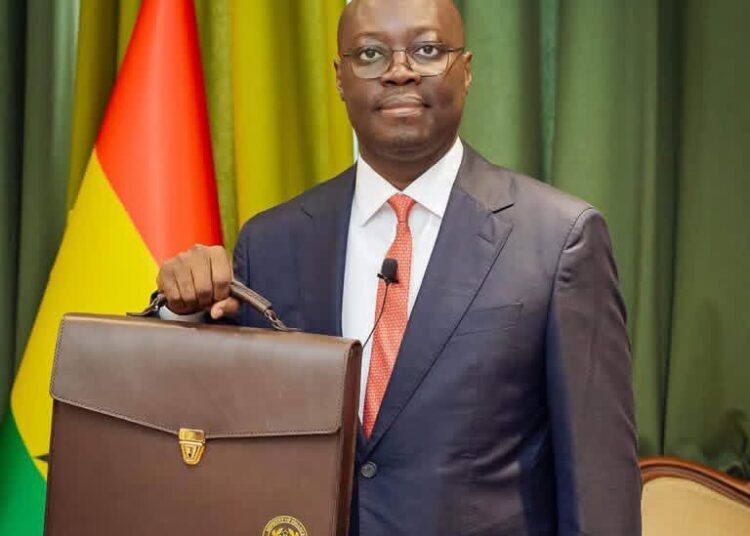
Ghana has turned a significant page in its economic history, with Finance Minister Dr Cassiel Ato Forson declaring that the country has emerged from what he describes as the most painful economic crisis in its history.
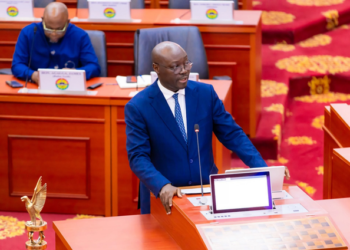
Presenting the 2027 Budget Statement and Economic Policy to Parliament, Dr Ato Forson said economic stability had returned, confidence was gradually being restored, and Ghanaians could finally breathe again after enduring a prolonged period of economic hardship.
His declaration represents a significant moment for an economy that has spent recent years battling severe inflationary pressures, currency instability, rising living costs, mounting public debt and the difficult consequences of debt restructuring.
However, beyond the optimistic assessment of the country’s economic recovery, the Finance Minister faces a much bigger challenge: convincing ordinary Ghanaians that the improving economic conditions will translate into better living standards, employment opportunities and stronger household finances.
Ghana Turns the Page After Economic Turmoil
Dr Ato Forson described the country’s recent economic difficulties as an unprecedented period of hardship, insisting that significant progress had been made in restoring stability.
“Ghana has made significant gains and has emerged from the most painful economic crisis in our history. Stability has returned, confidence is back, and Ghanaians can breathe again.”
Dr Ato Forson
The statement captures the government’s assessment of the economic progress achieved so far and signals a shift in its priorities as Ghana enters another important phase of economic management.
The country has endured considerable economic pressure in recent years, with households and businesses struggling to cope with rising prices, reduced purchasing power and uncertainty surrounding the broader economic environment.
The debt restructuring exercise also came with considerable consequences for investors and pensioners, while businesses faced tighter financial conditions and limited access to affordable credit.
Against this background, the Finance Minister believes the return of stability has created an opportunity to pursue a more ambitious economic agenda.
But restoring confidence is only one part of the recovery process. The real test will be whether the improvement in economic conditions can be sustained and felt across different segments of society.
Ato Forson Shifts Focus From Numbers to Livelihoods
While acknowledging the economic gains, Dr Ato Forson argued that the next stage of Ghana’s recovery must move beyond headline economic indicators.
He identified several groups whose circumstances must improve if the country’s economic progress is to have meaningful consequences.
Among them are young graduates struggling to secure employment, farmers seeking dependable markets for their produce and market women whose working capital has been weakened by inflation.
These groups represent different dimensions of Ghana’s economic difficulties, particularly the persistent gap between macroeconomic improvements and the everyday experiences of citizens.
Young graduates continue to look for opportunities in an increasingly competitive employment market. Farmers need reliable buyers, better market access and financing to expand production, while traders require sufficient working capital to keep their businesses operating.
The Finance Minister also highlighted pensioners whose life savings, he said, had been wiped out overnight by the debt restructuring exercise.
Their experiences underline the human cost of the country’s financial crisis and the difficult choices that accompanied efforts to restore debt sustainability.
Entrepreneurs were equally identified as a priority, particularly those with viable business ideas but limited access to affordable long-term financing.
For these businesses, access to credit remains essential to expansion, job creation and investment in productive activities.
The 2027 Budget Faces a Major Economic Test
Dr Ato Forson’s declaration comes at a critical moment as the government prepares to translate economic stabilisation into broader economic transformation.
The 2027 Budget is expected to provide the policy direction for this next phase, with considerable attention on how government intends to protect the gains achieved while creating opportunities for households and businesses.
The challenge is particularly significant because economic recovery does not automatically translate into prosperity.
Lower inflation, improved investor confidence and stronger macroeconomic stability can create favourable conditions for growth, but citizens ultimately judge economic performance through their ability to find jobs, afford essential goods, expand businesses and secure their financial future.
The government must therefore demonstrate how its economic policies will address these concerns without undermining the stability it claims to have restored.
Affordable financing for businesses, stronger agricultural value chains, employment opportunities for graduates and measures to protect vulnerable households will be important indicators of whether the recovery is reaching ordinary Ghanaians.
The pensioners affected by the debt restructuring exercise also represent a difficult policy question, particularly regarding how confidence in Ghana’s financial markets can be strengthened while protecting the interests of investors.
Ghana Cannot Afford to Waste Its Economic Breathing Space
The Finance Minister cautioned that the economic breathing space created by the return of stability must be used wisely.
He stressed that decisions taken at this stage would have far-reaching consequences for millions of Ghanaians and determine the country’s economic direction in the coming years.
This places considerable responsibility on the government to ensure that renewed stability is not treated as an achievement in itself, but rather as a foundation for sustainable growth and improved living conditions.
Ghana has experienced the consequences of economic mismanagement and excessive borrowing, making fiscal discipline and prudent public spending essential to preserving the gains.
READ ALSO: Ghana Pushes 4 Major Reforms for Digital Infrastructure Resilience at ITU PP-26