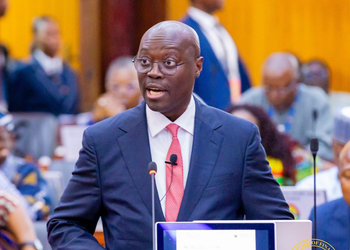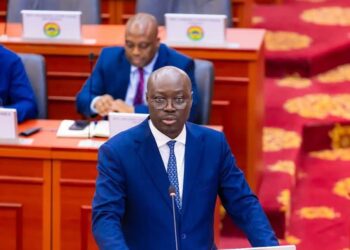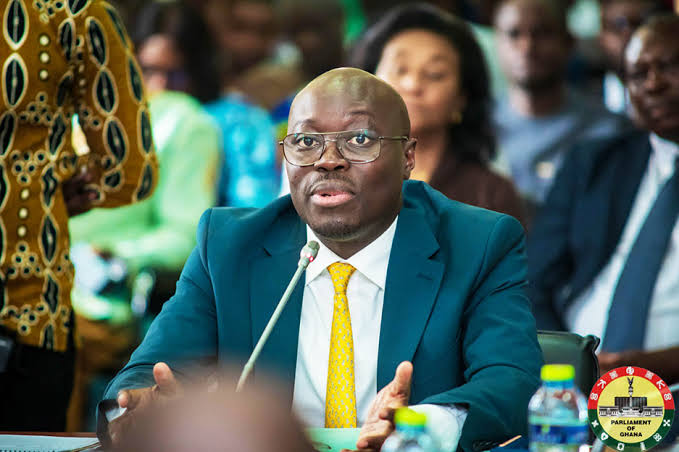
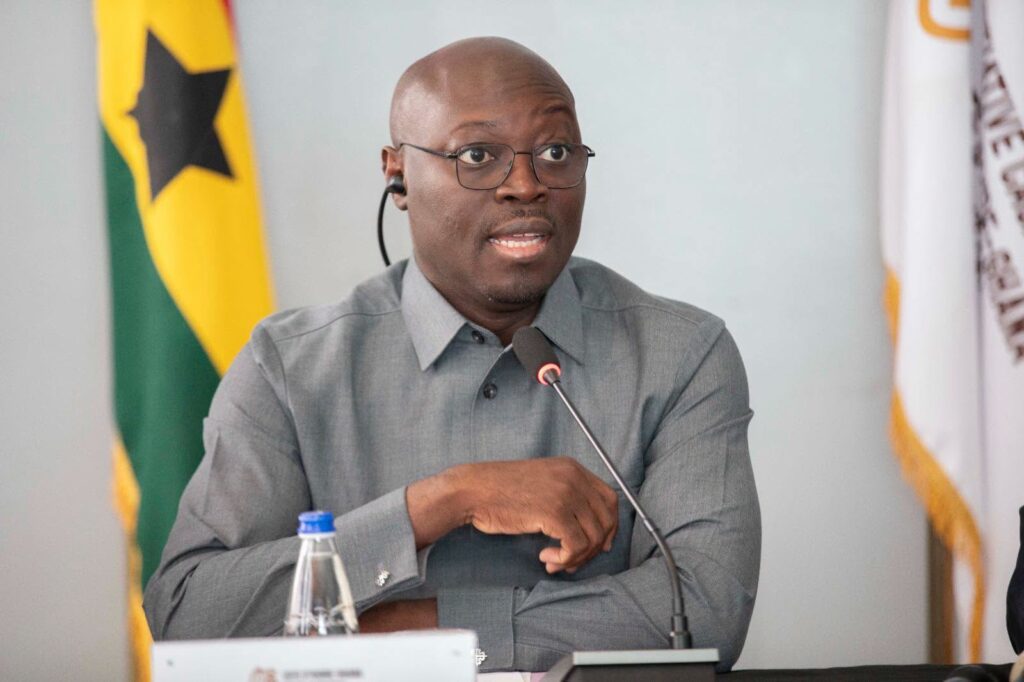
Responding to the Minority’s press conference following the presentation of the 2027 Budget, the Minister of Finance, Dr Cassiel Ato Forson has challenged the opposition’s criticism of the Government’s economic performance, insisting that its description of the improving indicators as a “paper economy” disregards the country’s recent economic difficulties.
The Member of Parliament for Ajumako Enyan Esiam expressed his disagreement in a post-budget interview questioning the substance of the Minority’s criticism.
Dr Forson acknowledged that he understood the frustrations of the Minority Leader, having previously occupied the position himself, but argues that the opposition offers “nothing concrete or significant to criticize” of the Government’s economic programme.
“Since when did lower inflation stable currency becomes a paper economy? We’re all living in this country. Our position is simple: We need to be honest with ourselves as citizens to make progress.”
Dr Cassiel Ato Forson
The Finance Minister invoked his nearly two decades of parliamentary experience to reinforce his assessment of the opposition’s posture, arguing that the Minority has failed to appreciate the difficulties Ghana is working to overcome.
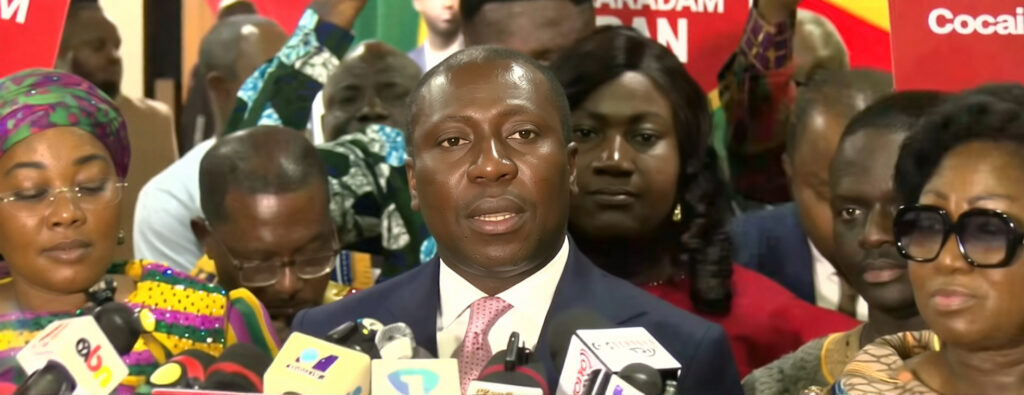
In his assessment, Ghana’s economic difficulties could not be understood solely through the performance of a single administration.
He traced the recurring instability to a “boom-and-bust pattern” that, in his estimation, had repeatedly undermined the country’s ability to attract investment and create sufficient employment. “We started so well in 1957,” Dr Forson remarked, identifying the recurring economic reversals as a central obstacle to the country’s development.
He added that the failure to sustain economic gains has prevented Ghana from attracting the investment required to generate jobs for its growing population.
Against that background, the Finance Minister articulated the Government’s intention to redirect the country’s economic recovery towards productive capacity. He explained that the administration considers the emergence from the recent economic crisis an opportunity to restructure the economy and establish a stronger foundation for sustainable growth.
The Member of Parliament for Ajumako Enyan Esiam acknowledged the severity of the crisis Ghana experienced, but insisted that stabilisation should not constitute the Government’s ultimate objective.
Instead, he identified the available economic breathing space as an opportunity to strengthen production, expand investment and create employment.“The economy will be built. That economy will be built in four years,” he asserted, outlining the administration’s intended timeframe for its economic transformation agenda.
Government Sets Aside GH¢29 Billion For Bond Redemption
Beyond the debate over the Government’s economic performance, Finance Minister Dr Cassiel Ato Forson also outlined a debt repayment strategy involving accumulated financial buffers and the early redemption of domestic bonds falling due in February 2027.
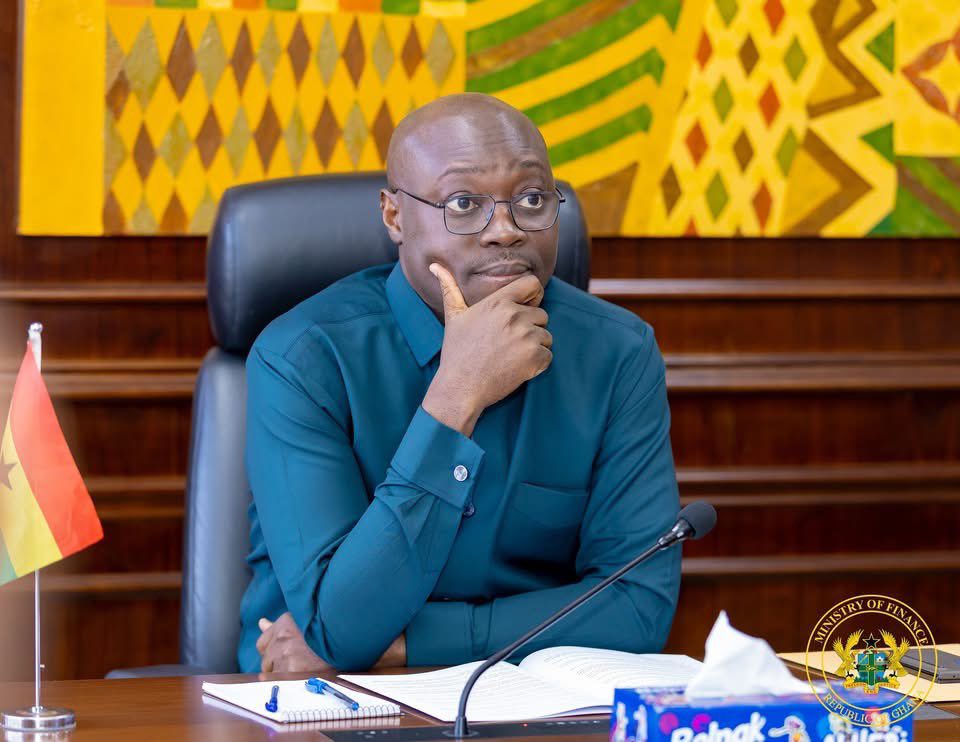
Dr Forson indicated that the repayment schedule presented substantial obligations for 2027 and 2028, requiring the Government to plan ahead instead of waiting until the payments became due.
“We’ve built approximately 29 billion Ghana Cedis into the sinking fund. We’ve also built about 480 million United States dollars in the US dollar sinking fund.”
Dr Cassiel Ato Forson
The Finance Minister explained that the domestic bonds due on February 16, 2027, carried a principal obligation of GH¢29 billion and interest payments of GH¢11.1 billion, bringing the combined amount to approximately GH¢40 billion.
Consequently, the Government has announced an early redemption offer, inviting eligible bondholders to receive their money ahead of the original repayment date. “In real terms, you are reducing your debt by 29 billion Cedis,” Dr Forson remarked, explaining the rationale for using the accumulated funds to settle the principal obligation before maturity.
He indicated that the resources are currently available in a bank account, making it unnecessary for the Government to retain the funds while the corresponding debt is outstanding.
The Minister further identified the accumulation of these buffers as evidence of fiscal discipline, contrasting the current arrangements with the financial position he claimed the administration inherited in January 2025. “We inherited zero buffers,” he averred, challenging anyone disputing his account to produce evidence of the previous administration’s accumulated resources.
He also indicated that the Government has already paid GH¢40 billion in Domestic Debt Exchange Programme bond obligations since taking office, with another GH¢29 billion scheduled for repayment through the announced redemption exercise.
For the 2028 obligations, Dr Forson indicated that the Government intends to replicate the same approach by accumulating resources ahead of the repayment dates. He explained that the strategy has been institutionalised through its incorporation into the medium-term debt management strategy.
The Finance Minister also ruled out “any immediate appetite” for returning to the international capital market to raise Eurobond financing, expressing confidence in the capacity of Ghana’s domestic capital market. He criticised the previous administration’s practice of borrowing approximately US$3 billion annually between 2017 and 2021, questioning the productive assets that the loans financed.
In addition, Dr Forson outlined the Government’s intention to introduce a Loans Act to establish clearer restrictions on public borrowing. Under the proposed approach, commercial loans would finance self-financing projects, while concessional borrowing would support social projects.
READ ALSO: Finance Minister: 24-Hour Economy To Attract Private Sector Investment