Ghana is stepping up efforts to strengthen its international trade competitiveness and attract strategic industrial investment through renewed engagements with global logistics and automotive companies, as the government seeks to improve supply chain efficiency and expand the country’s manufacturing capacity.
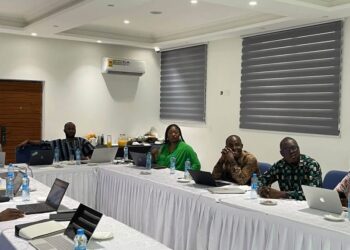
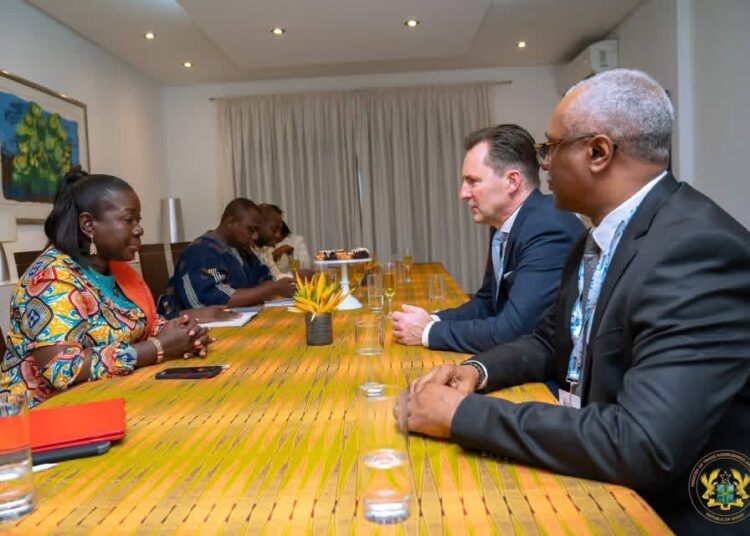
The Minister for Trade, Agribusiness and Industry, Hon. Elizabeth Ofosu-Adjare, has held separate business-to-business discussions with senior executives of DHL International Côte d’Ivoire and German automotive manufacturer Volkswagen to explore opportunities for deeper cooperation in trade facilitation, logistics services and automotive industry development.
The engagements brought together the Minister and Mr Kader O. Coulibaly, Regional Director for DHL West and Central Africa, as well as Mr. Thomas Schäfer, Chief Executive Officer of the Volkswagen Brand.
“Strengthening logistics systems and attracting strategic automotive investment remain important to Ghana’s ambition of becoming a competitive regional trade and manufacturing hub.”
Minister for Trade, Hon. Elizabeth Ofosu-Adjare
DHL Talks Target Trade Efficiency
Hon. Ofosu-Adjare and Mr. Coulibaly explored opportunities to strengthen cooperation in logistics operations, improve trade facilitation services and support Ghanaian businesses seeking to penetrate regional and international markets.
Efficient logistics remains a critical component of international trade because the movement of goods across borders involves transportation, warehousing, customs procedures, documentation and delivery systems. Delays and high transportation costs can undermine the competitiveness of businesses, particularly small and medium-sized enterprises seeking to export their products.
Ghana’s position as a potential regional distribution and logistics centre makes the development of efficient supply chain systems particularly important as businesses seek to take advantage of opportunities under the African Continental Free Trade Area (AfCFTA).
Data from the Ghana Statistical Service’s 2024 annual trade report showed that Ghana recorded a trade surplus of GH¢32.1 billion through intra-African trade, compared with GH¢20.7 billion in 2023.
Also, exports to African markets increased from GH¢38.6 billion to GH¢59.5 billion during the period, demonstrating the growing importance of the continental market to Ghanaian businesses.
“Ghana’s growing participation in African trade requires efficient logistics networks that can connect local producers to markets across the continent.”
Minister for Trade, Hon. Elizabeth Ofosu-Adjare
The engagement with DHL therefore presents an opportunity to explore how international logistics expertise can support Ghana’s efforts to address supply chain challenges and improve the competitiveness of local enterprises.
Potential areas of cooperation include more efficient freight management, improved international distribution systems and logistics solutions that enable Ghanaian exporters to meet delivery requirements in regional and global markets.
Volkswagen Engagement Targets Automotive Growth
In a separate meeting, Hon. Ofosu-Adjare engaged Mr. Thomas Schäfer, Chief Executive Officer of the Volkswagen Brand, on the company’s business interests in Ghana and opportunities to deepen its participation in the country’s automotive industry.
The discussions focused on the implementation of the National Automotive Policy and the government’s efforts to position Ghana as an attractive destination for automotive manufacturing and investment.
Ghana’s automotive development agenda seeks to move the country beyond its traditional dependence on imported vehicles towards local assembly, component manufacturing and the development of an integrated automotive value chain.
The Ghana Automotive Development Policy provides the framework for establishing vehicle assembly and manufacturing capacity, with provisions covering passenger cars, sports utility vehicles and light commercial vehicles, including pickups, minibuses and cargo vans.
Volkswagen is among the international automotive companies that have established assembly operations in Ghana under the policy.
The company opened its assembly facility within the Tema Free Zones Enclave in March 2023. The facility has an installed production capacity of more than 5,000 vehicles annually, representing an important investment in Ghana’s emerging automotive manufacturing sector.
The establishment of the facility also provides opportunities for skills development, technology transfer and the participation of local businesses in automotive related services.
“Volkswagen’s engagement with Ghana forms part of the country’s broader ambition to develop a competitive automotive industry with stronger local manufacturing capabilities.”
Mr. Thomas Schäfer, C.E.O of the Volkswagen Brand
Strategic Partnerships Drive Industrial Ambition
The two engagements underscore the importance of international business partnerships in advancing Ghana’s trade and industrial development objectives.
While DHL’s logistics expertise could contribute to improving the movement of goods and strengthening export distribution systems, Volkswagen’s involvement in the automotive sector offers opportunities to expand manufacturing capacity and deepen industrial development.
Both areas are interconnected in the broader objective of improving Ghana’s competitiveness. Manufacturing industries require dependable supply chains to access raw materials, transport components and distribute finished products to consumers across different markets.
Similarly, businesses participating in regional and international trade depend on efficient logistics services to manage costs, meet delivery schedules and compete with suppliers from other economies.
The AfCFTA provides an important framework for advancing these objectives by creating opportunities for businesses to access a wider continental market.
However, converting the agreement’s market-access opportunities into measurable economic gains will require sustained investment in infrastructure, trade-related services, industrial capacity and private-sector partnerships.
Ghana’s merchandise trade performance also demonstrates the importance of strengthening the country’s productive and export capabilities.
According to the Ghana Statistical Service, merchandise exports reached US$32 billion in 2025, while imports stood at US$20.5 billion, resulting in a recorded trade surplus of US$11.5 billion.
Maintaining and improving this performance will require greater export diversification, stronger local manufacturing and improved access to international markets.
“Strategic collaboration with global businesses can strengthen Ghana’s productive capacity, improve market access and support its ambition of becoming a competitive destination for trade and investment.”
Minister for Trade, Hon. Elizabeth Ofosu-Adjare
The Ministry’s engagements with DHL and Volkswagen form part of these broader efforts to attract investment, promote industrial development and establish stronger commercial relationships with international companies.
READ ALSO:France Applauds Ghana’s Economic Turnaround, Praises Ato Forson