• About
  • Advertise
  • Privacy Policy
  • Contact
Monday, May 18, 2026
  • Login
The Vaultz News
  • Top Stories
  • News
    • General News
    • Education
    • Health
    • Opinions
  • Economics
    • Economy
    • Finance
      • Banking
      • Insurance
      • Pension
    • Securities/Markets
  • Business
    • Agribusiness
    • Vaultz Business
    • Extractives/Energy
    • Real Estate
  • World
    • Africa
    • America
    • Europe
    • UK
    • USA
    • Asia
    • Around the Globe
  • Innovation
    • Technology
    • Wheels
  • Entertainment
  • 20MOBPL2DNew
  • Jobs & Scholarships
    • Job Vacancies
    • Scholarships
No Result
View All Result
The Vaultz News
  • Top Stories
  • News
    • General News
    • Education
    • Health
    • Opinions
  • Economics
    • Economy
    • Finance
      • Banking
      • Insurance
      • Pension
    • Securities/Markets
  • Business
    • Agribusiness
    • Vaultz Business
    • Extractives/Energy
    • Real Estate
  • World
    • Africa
    • America
    • Europe
    • UK
    • USA
    • Asia
    • Around the Globe
  • Innovation
    • Technology
    • Wheels
  • Entertainment
  • 20MOBPL2DNew
  • Jobs & Scholarships
    • Job Vacancies
    • Scholarships
No Result
View All Result
The Vaultz News
No Result
View All Result
in Banking

AfDB Approves LEAF Programme to Spur Commercial and Local Currency Investments

M.Cby M.C
February 20, 2022
Reading Time: 3 mins read
AfDB set to Develop Digital Skills among Rural African Youths

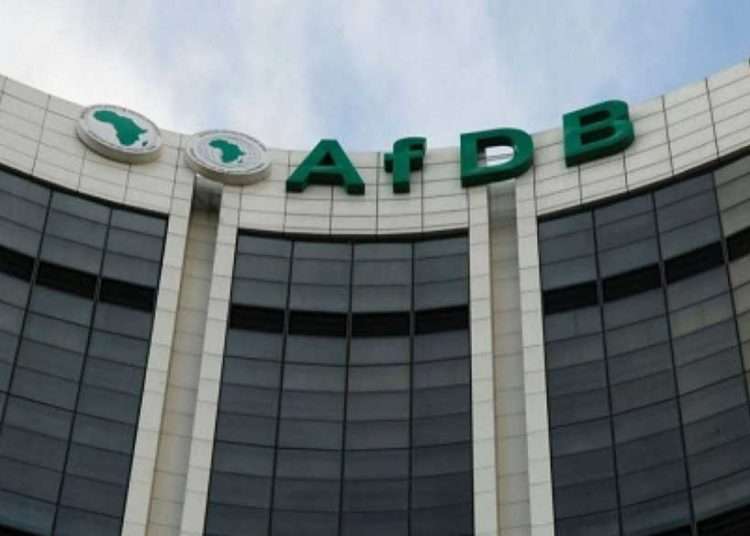
AfDB Building

The Board of Directors of the African Development Bank Group (AfDB) has approved the Leveraging Energy Access Finance Framework (LEAF) programme to promote investment in key sectors in Ghana and other African countries.

The US$800 million LEAF program is expected to help spur commercial and local currency investments. Under the programme, the Bank will commit up to US$164 million to promote decentralized renewable energy in six African countries to scale up the activities of decentralized renewable energy companies in such countries. The countries include: Ghana, Guinea, Ethiopia, Kenya, Nigeria, and Tunisia.

Under the LEAF Programme, some 18 decentralized renewable energy projects are expected to be financed, providing access to six million people and businesses, resulting in 28.8 million tonnes CO2 equivalent in greenhouse gas emission reductions over the lifetime of the systems.
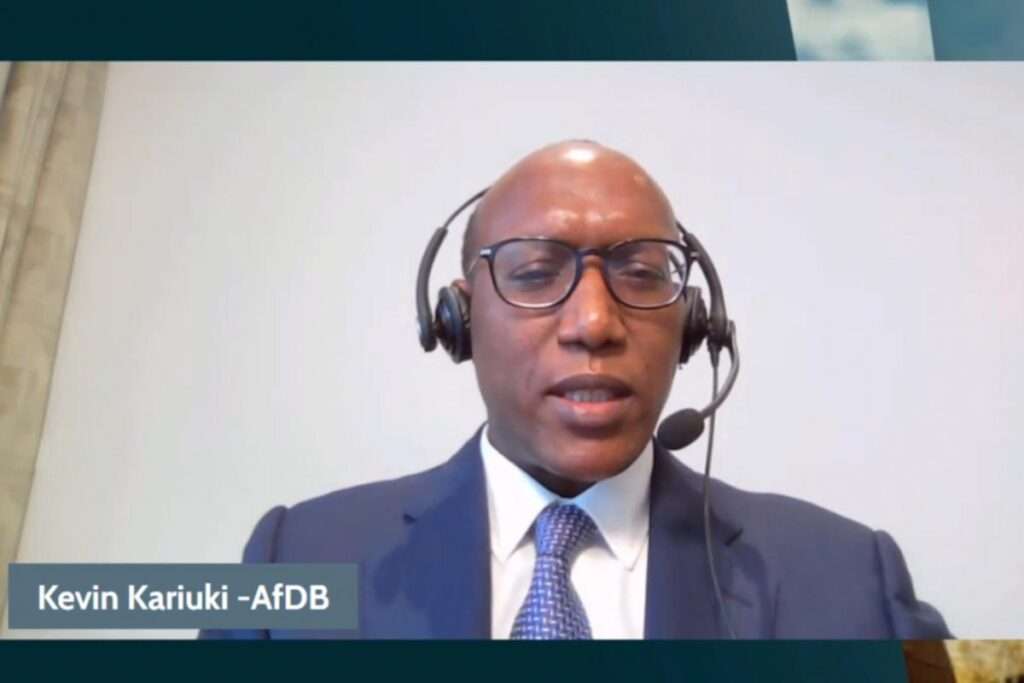
kariuki
Dr. Kevin Kariuki

Dr. Kevin Kariuki, the bank’s Vice-President in charge of Power, Energy, Climate Change and Green Growth, expressed his excitement over the programme, noting that it will accelerate access to renewable energy.

ADVERTISEMENT

“The African Development Bank is delighted to partner with the Green Climate Fund on the Leveraging Energy Access Finance Framework, which will not only accelerate access to electricity based on decentralized renewable energy solutions, but reduce the respective countries’ carbon footprints. It will also do so with the active participation of a private sector facilitated by local currency financing and commercial capital availed under the programme.”

Dr. Kevin Kariuki

LEAF Approval Timely

Over six years, LEAF will deploy concessional finance, credit enhancement instruments and technical assistance to crowd-in private sector investors, including local banks, to finance and accelerate efforts to power the continent.

The Bank’s acting director in charge of Renewable Energy and Energy Efficiency Department, Dr. Daniel Schroth, lauded the approval of the programme, stating that it is a timely intervention.

“The approval of this program is very timely as it increases the Bank’s toolbox to support the fast-moving decentralized energy access market which complements conventional grid-connected solutions.”

Dr. Daniel Schroth

Many Africa Countries Still Lack Access to Electricity

Many African countries still face challenges in achieving universal access to sustainable, clean, affordable and reliable electricity. According to the latest Sustainable Development Goal (SDG) 7 tracking report, close to 600 million Africans lack access to electricity.

According to the SDG tracking report, as a result of the COVID-19 crisis, the number of people without access to electricity increased again for the first time in recent years.

The Bank’s acting director in charge of Renewable Energy and Energy Efficiency Department averred that scaling up decentralized renewable energy (solar home systems, green mini-grids, and solar solutions for commercial and industrial use) is crucial to achieving the SDG7 objectives and requires significant private sector and local currency financing.

The framework forms part of the Bank’s broader off-grid strategy under the New Deal on Energy for Africa and complements existing initiatives, such as the Sustainable Energy Fund for Africa.

READ ALSO: CSIR Introduces Modern Methods of Rice Cultivation to Farmers

Sign Up to Our Newsletter

Fresh updates, Straight to your inbox

Tags: AfDBLEAF Programmerenewable energy
Share2Tweet1ShareSendSend
Please login to join discussion
Previous Post

Ministry of Education Has Not Advertised For Recruitment Of Headmasters For STEM- Rev Fordjour

Next Post

UK: Queen Elizabeth II Tests Positive for Covid-19, Experiences Mild Cold-Like Symptoms

Related Posts

Ecobank Ghana PLC Breaks Silence After Supreme Court Judgement
Banking

Ecobank Ghana PLC Breaks Silence After Supreme Court Judgement

May 17, 2026
Ghana Defies Odds With Record Financial Growth
Banking

Ghana Defies Odds With Record Financial Growth

May 16, 2026
Fidelity Demands Africa Own Its Digital Future At a time when Africa’s digital economy is accelerating at an unprecedented pace, Fidelity Bank Ghana has delivered one of the strongest messages yet on the continent’s technological future. The bank made a bold and urgent case for Africa to stop depending on foreign controlled digital systems and begin building its own infrastructure capable of retaining value, strengthening currencies, and driving long term economic sovereignty. As one of the key sponsors of the 3i Africa summit, Fidelity Bank did not just show up to participate. It arrived with a message that resonated deeply across conference halls and policy discussions. Fidelity Bank emerged as one of the loudest voices championing a future where African nations control the very digital rails that power their economies. Digital Infrastructure Is The New Economic Power One of the defining moments of the summit came during a high level panel discussion on digital public infrastructure, where Adeline Aryee delivered a statement that immediately captured the attention of participants. She declared that if Africa builds its own digital rails, it naturally retains the value created by those systems. Her message was clear and uncompromising. In previous decades, national infrastructure was measured by roads, bridges, ports, and airports. Today, the true engines of economic power are payment platforms, identity systems, financial technology ecosystems, and digital marketplaces. According to Aryee, digital public infrastructure is no longer a luxury. It is now a strategic national asset. Her remarks struck at the heart of one of Africa’s most pressing economic concerns. Despite growing digital adoption, many transactions across the continent still pass through foreign payment systems, resulting in value leakage and continued pressure on local currencies. Ghana’s Success Story Becomes A Continental Blueprint Aryee highlighted Ghana’s progress in financial inclusion, mobile payments, and digital banking, describing the country as an emerging model for other African economies. Over the years, Ghana has invested heavily in domestic payment systems such as GhIPSS and its flagship platform, Gh-link. These systems have significantly expanded access to financial services while promoting digital transactions across urban and rural communities. Yet Aryee argued that inclusion alone is no longer enough. The next chapter for Africa, she insisted, must focus on ownership. She questioned why local transactions continue to depend on foreign rails when domestic infrastructure already exists. According to her, such dependence creates unnecessary external exposure and limits the continent’s ability to fully capture the economic benefits of its growing digital market. Her comments triggered intense debate among summit participants, many of whom acknowledged the urgent need for policy reforms and infrastructure investments. Market Driven Innovation Takes Center Stage Beyond infrastructure, Fidelity Bank also made a strong case for innovation that begins with real market needs. During the Ecosystem Roundtable on platforms, talent, and digital markets, Prince Osei Hyeaman-Addai shared insights from the bank’s years of digital financial innovation. He stressed that successful digital products are not built in boardrooms or based on assumptions. Instead, they are created by listening carefully to the market and understanding customer pain points. According to him, the market itself reveals the problems that need solving, the type of platform required, and the path toward scalable growth. His comments reflected a growing shift in African fintech circles, where customer centered design is becoming essential for product adoption and long term relevance. Trust And Credibility Remain The Real Currency Prince also emphasized that technology alone does not guarantee success. In his view, trust, credibility, and strong operational structures remain the real foundations of successful innovation. He noted that while investor interest in African fintech continues to rise, startups must prove they can deliver sustainable solutions, maintain transparency, and build products that respond to local realities. This perspective reflects Fidelity Bank’s own journey in digital transformation. Over the years, the bank has built strategic collaborations with leading fintech players, including IT Consortium, helping pioneer wallet to bank integrations and mobile financial solutions in Ghana. These partnerships have helped position Fidelity as one of Ghana’s most innovation driven financial institutions. A Defining Moment For Africa’s Digital Future Fidelity Bank’s participation at the 3i Africa Summit 2026 was more than a corporate appearance. It was a strategic declaration. At a time when Africa is racing to build competitive digital economies, the bank’s message was impossible to ignore. Africa cannot simply consume technology created elsewhere. It must own the infrastructure, shape the platforms, and capture the value generated by its digital future. As conversations from the summit continue to ripple across financial and policy circles, one thing is becoming increasingly clear. Africa’s next economic revolution may not be built on oil, gold, or minerals. It may be built on digital rails designed, owned, and powered by Africans. READ ALSO: IMF Ghana Review Ends in Dramatic Cliffhanger Fidelity Demands Africa Own Its Digital Future At a time when Africa’s digital economy is accelerating at an unprecedented pace, Fidelity Bank Ghana has delivered one of the strongest messages yet on the continent’s technological future. The bank made a bold and urgent case for Africa to stop depending on foreign controlled digital systems and begin building its own infrastructure capable of retaining value, strengthening currencies, and driving long term economic sovereignty. As one of the key sponsors of the 3i Africa summit, Fidelity Bank did not just show up to participate. It arrived with a message that resonated deeply across conference halls and policy discussions. Fidelity Bank emerged as one of the loudest voices championing a future where African nations control the very digital rails that power their economies. Digital Infrastructure Is The New Economic Power One of the defining moments of the summit came during a high level panel discussion on digital public infrastructure, where Adeline Aryee delivered a statement that immediately captured the attention of participants. She declared that if Africa builds its own digital rails, it naturally retains the value created by those systems. Her message was clear and uncompromising. In previous decades, national infrastructure was measured by roads, bridges, ports, and airports. Today, the true engines of economic power are payment platforms, identity systems, financial technology ecosystems, and digital marketplaces. According to Aryee, digital public infrastructure is no longer a luxury. It is now a strategic national asset. Her remarks struck at the heart of one of Africa’s most pressing economic concerns. Despite growing digital adoption, many transactions across the continent still pass through foreign payment systems, resulting in value leakage and continued pressure on local currencies. Ghana’s Success Story Becomes A Continental Blueprint Aryee highlighted Ghana’s progress in financial inclusion, mobile payments, and digital banking, describing the country as an emerging model for other African economies. Over the years, Ghana has invested heavily in domestic payment systems such as GhIPSS and its flagship platform, Gh-link. These systems have significantly expanded access to financial services while promoting digital transactions across urban and rural communities. Yet Aryee argued that inclusion alone is no longer enough. The next chapter for Africa, she insisted, must focus on ownership. She questioned why local transactions continue to depend on foreign rails when domestic infrastructure already exists. According to her, such dependence creates unnecessary external exposure and limits the continent’s ability to fully capture the economic benefits of its growing digital market. Her comments triggered intense debate among summit participants, many of whom acknowledged the urgent need for policy reforms and infrastructure investments. Market Driven Innovation Takes Center Stage Beyond infrastructure, Fidelity Bank also made a strong case for innovation that begins with real market needs. During the Ecosystem Roundtable on platforms, talent, and digital markets, Prince Osei Hyeaman-Addai shared insights from the bank’s years of digital financial innovation. He stressed that successful digital products are not built in boardrooms or based on assumptions. Instead, they are created by listening carefully to the market and understanding customer pain points. According to him, the market itself reveals the problems that need solving, the type of platform required, and the path toward scalable growth. His comments reflected a growing shift in African fintech circles, where customer centered design is becoming essential for product adoption and long term relevance. Trust And Credibility Remain The Real Currency Prince also emphasized that technology alone does not guarantee success. In his view, trust, credibility, and strong operational structures remain the real foundations of successful innovation. He noted that while investor interest in African fintech continues to rise, startups must prove they can deliver sustainable solutions, maintain transparency, and build products that respond to local realities. This perspective reflects Fidelity Bank’s own journey in digital transformation. Over the years, the bank has built strategic collaborations with leading fintech players, including IT Consortium, helping pioneer wallet to bank integrations and mobile financial solutions in Ghana. These partnerships have helped position Fidelity as one of Ghana’s most innovation driven financial institutions. A Defining Moment For Africa’s Digital Future Fidelity Bank’s participation at the 3i Africa Summit 2026 was more than a corporate appearance. It was a strategic declaration. At a time when Africa is racing to build competitive digital economies, the bank’s message was impossible to ignore. Africa cannot simply consume technology created elsewhere. It must own the infrastructure, shape the platforms, and capture the value generated by its digital future. As conversations from the summit continue to ripple across financial and policy circles, one thing is becoming increasingly clear. Africa’s next economic revolution may not be built on oil, gold, or minerals. It may be built on digital rails designed, owned, and powered by Africans. READ ALSO: IMF Ghana Review Ends in Dramatic Cliffhanger Fidelity Demands Africa Own Its Digital Future
Banking

Fidelity Demands Africa Own Its Digital Future

May 15, 2026
Absa Bank Ghana Empowers Academic City University College With Money Skills
Banking

Absa Bank Ghana Empowers Academic City University With Money Skills

May 14, 2026

Sign Up to Our Newsletter

Fresh updates, Straight to your inbox

Recent News

Ivory Coast, Nigeria and Ghana make the podium for the men's 4×100m relay at the CAA African Senior Athletics Championship in Accra

No Gold for Ghana, South Africa Dominate Senior Athletics Championship

May 18, 2026
Black Starlets in a precarious position to qualify for the CAF U-17 AFCON in Morocco

CAF U-17 AFCON: 10-Man Senegal Beat Ghana In Second Group Game

May 17, 2026
Davies Narh Korboe, President of the FAGE

Horticulture Expo 2026 Targets Non-Traditional Export Growth

May 17, 2026
Ecobank Ghana PLC Breaks Silence After Supreme Court Judgement

Ecobank Ghana PLC Breaks Silence After Supreme Court Judgement

May 17, 2026
download 53

Drone Strike Targets UAE’s Sole Nuclear Power Plant

May 17, 2026
Next Post
Queen

UK: Queen Elizabeth II Tests Positive for Covid-19, Experiences Mild Cold-Like Symptoms

The Vaultz News

Copyright © 2025 The Vaultz News. All rights reserved.

Navigate Site

  • About
  • Advertise
  • Privacy Policy
  • Contact

Follow Us

Welcome Back!

Login to your account below

Forgotten Password?

Retrieve your password

Please enter your username or email address to reset your password.

Log In
No Result
View All Result
  • Top Stories
  • News
    • General News
    • Education
    • Health
    • Opinions
  • Economics
    • Economy
    • Finance
      • Banking
      • Insurance
      • Pension
    • Securities/Markets
  • Business
    • Agribusiness
    • Vaultz Business
    • Extractives/Energy
    • Real Estate
  • World
    • Africa
    • America
    • Europe
    • UK
    • USA
    • Asia
    • Around the Globe
  • Innovation
    • Technology
    • Wheels
  • Entertainment
  • 20MOBPL2D
  • Jobs & Scholarships
    • Job Vacancies
    • Scholarships

Copyright © 2025 The Vaultz News. All rights reserved.

This website uses cookies. By continuing to use this website you are giving consent to cookies being used. Visit our Privacy and Cookie Policy.

Discover the Details behind the story

Get an in-depth analysis of the news from our top editors

Enter your email address