Tag: NPP Youth Wing

  • NPP Youth Organiser Defers Parliamentary Bid, Prioritises Party Service

    NPP Youth Organiser Defers Parliamentary Bid, Prioritises Party Service

    In less than a month, the New Patriotic Party will converge in the Ashanti Region to elect aspirants for its national executive positions. Salam Mustapha, the NPP National Youth Organiser, seeks re-election to continue serving in the position after his current term.

    In speaking about his life, Mr Mustapha explained that his political ambitions have so far centred on national party service rather than a parliamentary career. The National Youth Organiser indicated that although he could consider a parliamentary bid in the future, his immediate priority remains completing his work within the youth wing.

    Salam Mustapha, National Youth Organizer of NPP

    The decision, he noted, dates back to his first contest for the National Youth Organiser position, when some party members encouraged him to pursue a parliamentary seat instead. However, he chose to remain within the youth structure, where he had developed his political experience over several years. “Let me serve the party. I mean, I’ve grown in the youth wing for a long time,” he explained.

    Consequently, Mr Mustapha has not committed himself to contesting a parliamentary seat in Tamale South, despite acknowledging that the constituency could be won by the right candidate with adequate resources and a sound strategy.

    From his perspective, the outcome of recent elections demonstrates that no constituency should automatically be regarded as unwinnable. He argued that effective organisation, the right candidate and sufficient resources could alter the political fortunes of a party in any part of the country.

    The National Youth Organiser also dismissed the suggestion that the established political presence of Honourable Haruna Iddrisu in Tamale South should discourage future NPP candidates. He pointed to the constituency’s political history, noting that its electoral dynamics had changed over time.

    Honourable Haruna Iddrisu

    “If you ask me whether Haruna Iddrisu is beatable, the answer is yes. With the right candidate, resources, and strategy, it is entirely possible. Given the events of 2024, there is no seat in Ghana today that I would consider unwinnable. If you do the right things, you can win.”

    Salam Mustapha

    Meanwhile, Mr Mustapha’s immediate attention remains fixed on the upcoming internal elections and his bid to retain the national youth leadership position.

    Reading, Ideology Shaped Youth Organiser’s Choice Of NPP

    Salam Mustapha also attributed his decision to identify with the New Patriotic Party to years of reading, exposure to competing political ideologies and his personal inclination towards liberal economic ideas. The National Youth Organiser explained that his political orientation developed despite growing up in a community where support for the National Democratic Congress remained dominant.

    Mr Mustapha described himself as an avid reader whose interest in political thought began at a young age. His early exposure to books on capitalism, communism, socialism, feudalism and other political systems gave him an opportunity to consider different ideological positions before settling on views that aligned more closely with the NPP.

    In his view, liberalism and capitalism eventually made greater sense to him because of their emphasis on individual ownership and enterprise. That ideological preference, he indicated, gradually influenced his political outlook.

    The 2000 general election campaign further strengthened that connection. Mr Mustapha recalled becoming increasingly attracted to the NPP after following then presidential candidate John Agyekum Kufuor’s campaign messages, political songs and policy proposals.

    His family environment also provided additional exposure to the party. NPP materials became readily available around him, while relations with individuals associated with the party helped deepen his understanding of its politics.

    Nevertheless, the National Youth Organiser stressed that his decision did not emerge simply from family or community influence. Instead, personal study and an independent approach to political ideas played a significant role in determining where his political allegiance eventually settled.
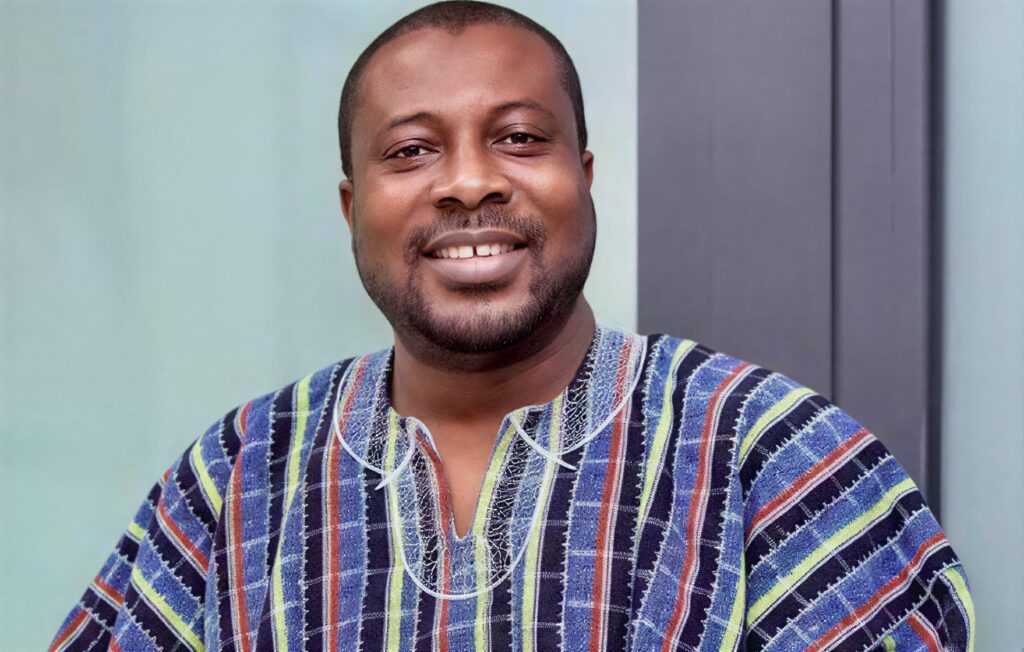
    Salam Mustapha, National Youth Organiser of NPP

    “I’m quite a non-conformist. When everybody is going to the right, you can bet that I’ll go to the left.”

    Salam Mustapha

    This independent streak, he suggested, also influenced his willingness to support a party that did not command the dominant political following within his immediate community. His choice of the NPP therefore developed through a combination of intellectual curiosity, ideological conviction and exposure to the party’s campaign messages.

    Beyond politics, Mr Mustapha has also built an interest in agriculture, particularly commercial crop farming. He disclosed that he operates a rice farm on the outskirts of Tamale and has considered expanding into animal farming, although he acknowledged the additional difficulties associated with that area of agriculture.

    The National Youth Organiser encouraged young people to consider large scale and mechanised farming as a viable economic opportunity. He argued that Ghana could benefit significantly if more young people treated agriculture as a long-term commercial venture rather than viewing it only as subsistence activity.

    At the same time, he acknowledged that rice farmers currently face difficulties with pricing and market conditions. He nevertheless explained that farmers could improve their prospects by establishing relationships with reliable off takers and taking advantage of Ghana’s growing domestic processing capacity.

  • NPP Lifts Suspension on TESCON Elections, Outlines Guidelines to Ensure Credibility

    NPP Lifts Suspension on TESCON Elections, Outlines Guidelines to Ensure Credibility

    The National Youth Wing of the opposition New Patriotic Party (NPP) has officially lifted the suspension on elections within its student wing, TESCON, following the release of a comprehensive set of guidelines aimed at ensuring free, fair, and credible polls in the 2025/2026 electoral cycle. 

    This development marks a significant turning point in the party’s efforts to restore discipline and transparency within the ranks of its vibrant student base, especially after the disturbances that marred TESCON’s participation in the 2022 National Delegates Conference.

    In a press release signed by the National Youth Organiser, Salam Mustapha, the Youth Wing announced that the new electoral framework has been carefully crafted to avoid a repeat of the chaotic scenes that plagued TESCON elections in the recent past. 

    “This action is to avoid the repetition of the unfortunate incidents of 2022 which disrupted TESCON’s participation in the National Delegates Conference. The new guidelines aim to prevent any recurrence of such incidents and to restore integrity and order to TESCON elections”.

    NPP’s National Youth Organiser, Salam Mustapha

    According to the Youth Wing, the cornerstone of the new guidelines is the establishment of a TESCON Elections Supervisory Team in each region, a mechanism designed to oversee and validate every stage of the electoral process.

    Each regional team will be composed of three members from the National Youth Wing, the Regional Youth Organiser, and the Regional TESCON Coordinator. 

    NPP TESCON Logo

    Importantly, the directive makes it clear that no TESCON election will be recognised unless it is supervised by this officially sanctioned team, with the release adding that any election conducted outside of this structure will be deemed null and void, a strong signal of the party’s intent to enforce internal discipline.

    The newly released guidelines also introduce standardised procedures for nominations, verification, voting, and the declaration of results. 

    This, according to the statement, will help ensure uniformity and transparency in the electoral processes across all institutional TESCON chapters nationwide. 

    To complement this, the NPP National Youth Wing has provided standardised forms, election notices, and reporting templates, which all chapters are required to use.

    A structured dispute resolution framework, according to the statement, has also been put in place to handle petitions and electoral grievances efficiently and fairly.

    Manual over Electronic Voting

    One of the notable changes in the electoral procedure is the stipulation that all TESCON elections will be conducted manually, with electronic voting systems being employed only in exceptional circumstances and with prior approval from the National Youth Wing.

    This move is aimed at reducing the risk of system manipulation and promoting a more transparent process that builds trust among aspirants and delegates alike.

    The release further outlined a strict timeline for the conduct of elections across the country, which has been agreed upon with the National Youth Wing. 

    This is intended to prevent delays and ensure that all chapters are in good standing ahead of key national party events. 

    By instituting a strict calendar and uniform process, the Youth Wing hopes to avoid the administrative confusion that contributed to TESCON’s sidelining during the 2022 National Delegates Conference.

    Mr. Mustapha called on all stakeholders—including Regional Youth Officers, TESCON Coordinators, aspirants, and institutional chapters—to adhere strictly to the new guidelines. 

    “Our collective goal is to rebuild a disciplined, united, and credible TESCON that will continue to contribute meaningfully to the fortunes of the NPP.”.

    NPP’s National Youth Organiser, Salam Mustapha

    The full set of guidelines is being circulated to all Regional Youth Organisers and TESCON Coordinators and will also be made available at the National Youth Wing Secretariat upon request.

    TESCON, the Tertiary Students Confederacy of the New Patriotic Party, has long served as a crucial feeder institution for the party’s future leaders and has played an instrumental role in campus politics across Ghana. 

    NPP’s National Youth Organiser, Salam Mustapha

    However, internal wrangling, weak oversight, and disjointed election protocols in recent years have undermined its efficacy and public perception.

    With these new guidelines, the NPP leadership hopes to rejuvenate the base of TESCON, restore faith among student members, and provide a more orderly and reliable framework through which young members can participate in internal democracy.

  • Salam Mustapha Apologizes to Gyampo, Retracts Defamatory Allegations

    Salam Mustapha Apologizes to Gyampo, Retracts Defamatory Allegations

    The National Youth Organizer of the ruling New Patriotic Party (NPP), Salam Mustapha has publicly retracted and apologized to Professor Ransford Gyampo, the President of the University Teachers Association of Ghana (UTAG) at the University of Ghana, Legon, following serious allegations made in a press statement issued on October 28, 2024.

    In his October 28, 2024 statement, Salam Mustapha, the National Youth Organizer of the ruling party noted that he accused Prof. Gyampo of conspiring with the National Democratic Congress (NDC) to disenfranchise students amid the ongoing University Teachers Association of Ghana (UTAG) strike.  

    The original statement, he added suggested that Prof. Gyampo was leveraging the UTAG strike as a “decoy” for political gains, allegedly assuring himself of a future political appointment within an NDC government.

    Furthermore, it included disturbing claims about Prof. Gyampo’s conduct towards students, suggesting an international reputation for inappropriate relationships and altering academic grades.

    “Lawyers of Prof Gyampo have subsequently engaged me and drawn my attention to the defamatory nature of the contents of my Press Release. Given that I have no evidence to back the allegations I made against Prof Gyampo, I hereby retract and render an unqualified apology to him”.

    Salam Mustapha, NPP National Youth Organizer.

    While emphasizing the importance of responsible communication in political discourse, Salam Mustapha also committed to ensuring that this retraction is disseminated with the same prominence as the original press statement across all media outlets that reported the allegations.

    This incident raises critical questions about the standards of political communication within Ghana, particularly among youth leaders who wield significant influence.

    The NPP Youth Organizer’s swift acknowledgement of wrongdoing is a noteworthy move in the political landscape, suggesting a growing awareness of the ramifications that baseless allegations can have on individuals’ reputations and careers.

    This retraction and apology not only represent a personal accountability moment for Salam Mustapha but also reflect a broader commitment to ethical discourse in Ghanaian politics.

    Professor Ransford Van Gyampo, the President of the University Teachers Association of Ghana (UTAG) at the University of Ghana, Legon

    Suspension of UTAG’s Anti-Galamsey Strike

    In another statement, the National Youth Wing of the New Patriotic Party (NPP), expressed its heartfelt appreciation to the University Teachers Association of Ghana (UTAG) for their decision to call off a strike that had disrupted academic activities, allowing the University of Ghana to resume classes.

    This development according to the ruling party’s youth wing comes as a welcome relief to thousands of students who had been adversely affected by the protracted strike.

    Salam Mustapha, the NPP National Youth Organizer, conveyed his enthusiasm over the news, stating, “It was a great delight to receive the news that UTAG has called off its strike and subsequently announced the resumption of school by the University of Ghana. I am exceedingly happy with this development and doff my hat for UTAG and salute them.”

    His remarks underline the critical role that education plays in the lives of students and the broader societal implications of academic interruptions.

    Reflecting on the strike, Salam Mustapha noted that his earlier plea for the resumption of academic work, issued on October 28, 2024, was motivated by a deep concern for the student’s educational progress.

    He acknowledged the importance of maintaining an uninterrupted academic calendar, especially considering that many students were registered to vote in the upcoming elections.  “I was mindful of the academic work and also their constitutional right to vote since most of the students registered on campus,” he stated.

    He shared insights from fruitful discussions with some union members who expressed concerns that continued disruption could severely impact the academic calendar and, consequently, students’ educational outcomes.

    In conclusion, Salam Mustapha extended his profound gratitude to UTAG and its executives for their dedication and commitment to the welfare of Ghanaian students, emphasizing their role in facilitating a conducive learning environment.

    He concluded with an enthusiastic affirmation, “The NPP youth wing says ayeekoo,” recognizing the efforts made by UTAG in prioritizing students’ interests.

  • NDC, Gyampo Orchestrating UTAG Strike to Disenfranchise Students – Salam Mustapha

    NDC, Gyampo Orchestrating UTAG Strike to Disenfranchise Students – Salam Mustapha

    The National Youth Wing of the New Patriotic Party (NPP) has strongly accused Professor Ransford Gyampo and the opposition National Democratic Congress (NDC) of using the ongoing strike by the University Teachers Association of Ghana (UTAG) to disenfranchise tertiary students in the December general elections.

    Salam Mustapha, the ruling party’s National Youth Organizer, in a statement, alleged that the strike is a calculated attempt to disenfranchise Ghanaian students, particularly those registered to vote on campuses across the country.

    The NPP Youth Organizer, Salam Mustapha, claimed that Professor Gyampo, along with key figures in the NDC, is strategically pushing for the strike to discourage students from returning to campuses to cast their ballots.

    “The strike is not driven by issues of labor rights or the fight against illegal mining (galamsey), as claimed. Instead, it is a politically motivated move designed to prevent students, many of whom support Dr Mahamudu Bawumia, from participating in the elections. If you wondered why UTAG was the only labour union that decided to still go ahead with the strike action.

    “The reason is purely and simply political. The NDC and their friends in UTAG, led by Prof. Gyampo, know that the majority of Ghanaian students prefer Dr. Mahamudu Bawumia to John Dramani Mahama. And, that going on strike means that the students, many of whom live far away from campus during vacation, will be dissuaded from making the long distance to return on campus only to vote.”

    Salam Mustapha, NPP National Youth Organizer

    According to Salam Mustapha, the Trade Union Congress (TUC), representing organized labour in Ghana, recently pulled back from a planned nationwide strike after consultations with the government regarding efforts to address galamsey.

    However, he contended, the NDC was disappointed with the TUC’s decision, hoping that a full-scale strike would disrupt public services and sway public sentiment against the NPP.

    He further asserted that UTAG’s insistence on proceeding with the strike, even after the TUC’s resolution, is a clear indication of the NDC’s influence within UTAG and is part of a targeted attempt to restrict students’ voting rights.

    “By keeping universities closed, the NDC and Prof. Gyampo aim to frustrate students, forcing them to remain off-campus and away from polling centres on December 7. They hope this will prevent thousands of students, who overwhelmingly favor Dr. Bawumia over John Mahama, from casting their votes”.

    Salam Mustapha, NPP National Youth Organizer
    Professor Ransford Van Gyampo, President, University Teachers Association of Ghana, University of Ghana Chapter

    Call on UTAG Members and Other Stakeholders

    The NPP Youth Wing, thus urged UTAG members, as well as student bodies like the National Union of Ghana Students (NUGS) and the University Students Association of Ghana (USAG), to resist what he describes as manipulation by political interests.

    Salam Mustapha called on UTAG’s general membership to hold their leadership accountable and question the motivations behind the strike.

    “Prof. Gyampo is using UTAG as a pawn to frustrate the school authorities to recall school hence the strike. This is evil and another sign that the NDC and their friends leading the UTAG strike action simply do not care about the fate of the students.”

    Salam Mustapha, NPP National Youth Organizer

    The National Youth Organizer of the ruling party also claimed that the NDC’s internal polling data shows that support for the NPP among students is strong.

    He pointed out that these results have led the NDC to resort to extreme measures, like orchestrating a strike, to limit the anticipated youth voter turnout on Election Day.

    In addition to this accusation, Salam Mustapha pointed to what he called “Prof. Gyampo’s history of exploiting his status as a lecturer for personal gain” and described him as untrustworthy in his role as a student advocate.

    The statement also asserted that students are highly motivated to vote in this election, largely due to the perceived successes of policies like Free SHS and job creation efforts.

    Salam Mustapha emphasized that students view Dr. Bawumia as a leader with integrity, committed to advancing educational and economic opportunities.

    “Students want to vote for a man who has integrity—something that John Mahama could not offer as Vice President or President,” he said.

    The statement concluded with a direct plea to university authorities, urging them to make decisions that would ensure students have the opportunity to participate in the December elections.

    “Ghanaian students will not forgive us if we deny them their right to vote in this critical election. They want to secure a future with a leader they trust, and that leader is Dr. Bawumia,” Salam Mustapha asserted.

  • NPP Youth Vows Forceful Response to Alleged NDC Vandalism Plot 

    NPP Youth Vows Forceful Response to Alleged NDC Vandalism Plot 

    The National Youth Wing of the New Patriotic Party (NPP) has issued a stern warning against what it claims is an imminent plan by the National Democratic Congress (NDC) to destroy billboards and posters of the NPP’s presidential candidate, Vice President Dr Mahamudu Bawumia.  

    In a strongly worded statement released by Salam Mustapha, National Youth Organizer of the NPP, the party alleged that the NDC intends to begin this operation “tonight,” targeting Dr Bawumia’s campaign materials in constituencies across the country.

    Salam Mustapha, thus warned that it will respond with equal force if these actions are carried out, declaring its intention to retaliate by tearing down campaign materials belonging to the NDC’s presidential candidate, former President John Dramani Mahama.

    “The NDC has made it a habit to destroy the posters and billboards of the NPP, and we have remained quiet for too long. Our patience has run out as the police have shown incapacity to deal with the situation”.

    Salam Mustapha, National Youth Organizer, NPP

    This declaration marks a significant escalation in tensions as Ghana heads toward its hotly contested 2024 general elections.

    The NPP Youth Wing made clear that it will no longer rely on the police for protection of its campaign materials, as they claim law enforcement agencies have failed to address their repeated complaints about similar incidents in the past.

    Call to Party Structures Across Constituencies

    The National Organizer of the ruling party, Salam Mustapha activated all NPP systems at the constituency and regional levels in the release, urging vigilance among party members and executives.

    He underscored the NPP’s preparedness to take direct action if the alleged destruction of their materials begins, signalling a readiness to defend their candidate’s visibility on the campaign trail at all costs.

    In his directives, Salam Mustapha strongly asserted that in the unlikeliest situation if the NDC carries out its alleged plan, the NPP will retaliate by shredding former President Mahama’s posters and billboards in return.

    “We will nib this buffoonery ourselves by exacting proportional counter-response,” Salam Mustapha asserted.

    The statement reflects frustration with what the NPP sees as a pattern of provocation from their main political rivals and a lack of adequate response from security agencies tasked with maintaining electoral order.

    Direct Message to Law Enforcement

    The NPP Youth Wing’s statement took a notably defiant tone toward Ghana’s police service, criticizing the force for what it describes as a lack of interest and action in addressing the destruction of NPP campaign materials.

    The statement implied that the party no longer sees the police as a neutral or reliable intermediary in the dispute and will instead take matters into its own hands.

    “To the police service across the country, since you are not interested in this matter, we will not come to you to report anything,” the statement said, clearly signalling a shift toward self-policing by the party.

    This aggressive posture from the NPP Youth Wing underscores the rising political tensions in the lead-up to the December 7, 2024, elections.

    With just months to go before Ghanaians head to the polls, the battle between the NPP and the NDC appears to be intensifying in policy debates rallies and physical space, where both parties are vying for visibility and dominance.

    The decision by the NPP Youth Wing to respond forcefully to any vandalism of their campaign materials could fuel further clashes between supporters of the two dominant political parties.

    Ghana has long been considered one of the most stable democracies in Africa, but election periods often bring heightened tensions and isolated incidents of violence, particularly between party loyalists, and hence the message from the ruling party’s youth wing is not surprising.