Tag: Opposition

  • NPP Woes Deepen as Support Erodes in Akan-Dominated Regions

    NPP Woes Deepen as Support Erodes in Akan-Dominated Regions

    Fresh polling data from Global InfoAnalytics indicates growing difficulties for the opposition New Patriotic Party (NPP), with internal divisions and declining public confidence contributing to an erosion of its support base in Akan-dominated regions traditionally considered its political stronghold.

    The findings suggest that nearly a year after its defeat in the 2024 general elections, the party is struggling to retain core supporters and is now trailing the governing National Democratic Congress (NDC) in declared party affiliations in key areas.

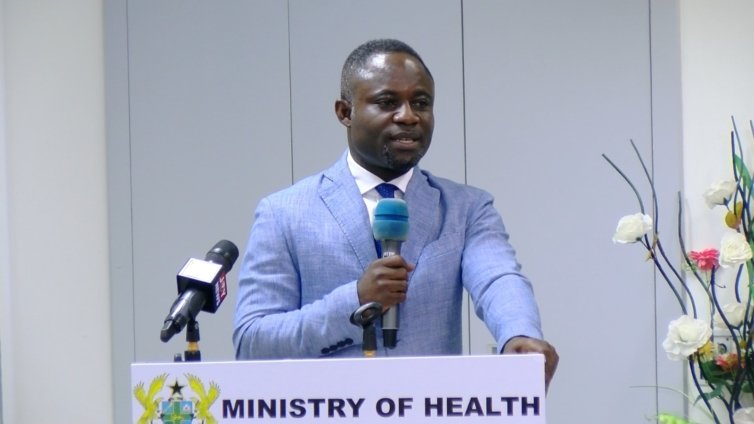
    The data emerges from an ongoing face-to-face poll being conducted across more than 83 randomly selected constituencies in all 16 regions of Ghana. According to the Executive Director of Global InfoAnalytics, Mussa Dankwah, early results from Akan-dominated regions show the NDC leading with 36 percent of declared party supporters, while the NPP stands at 31 percent.

    Floating voters account for 17 percent, with 3 percent identifying with other political parties. A further 13 percent of respondents declined to disclose their party affiliation, a group that analysts say could prove decisive in future elections.

    Mr. Dankwah attributed the NPP’s weakening position in part to bickering and infighting within the party, which he said is straining its traditional base, especially in its own political backyard.

    Mussa Dankwah, Pollster and Executive Director Global InfoAnalytics

    He warned that the implications of the data are serious, given that the regions surveyed include Ahafo, Ashanti, Bono, Bono East, Central, Eastern, Western and Western North. These regions have historically delivered strong electoral margins for the NPP, making any sustained loss of support there particularly damaging.

    “If the NPP is unable to hold their own in these regions, the battle ahead will be a very challenging one,” Mr. Dankwah cautioned. He stressed that losing ground in these areas would complicate the party’s efforts to mount an effective national comeback, especially as competition intensifies ahead of future elections.

    The poll findings form part of a broader national study that is still ongoing. Mr. Dankwah said the full report, expected in the coming weeks, will provide a comprehensive picture of party affiliations nationwide.

    This will include data from the northern regions, the Volta and Oti areas, as well as swing regions that often play a decisive role in determining election outcomes. While the current figures focus on Akan-dominated regions, he suggested that the national data could further illuminate trends affecting both major parties.

    A Disconnect between Political Actors and Public Sentiment

    Beyond the numbers, Mr. Dankwah has raised concerns about what he described as a disconnect between political actors and public sentiment, particularly within the opposition.

    In earlier comments, he questioned how politics in Ghana is sometimes conducted without sufficient effort to understand the mood and expectations of the electorate. In his assessment, while the government appears attentive to public opinion, the opposition risks sidelining voter concerns.

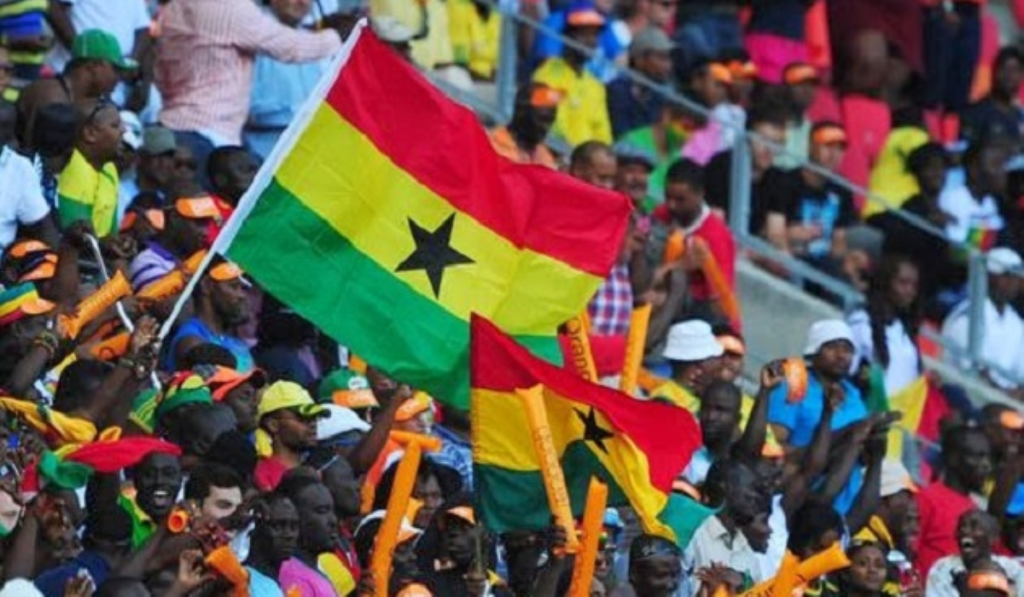
    NPP Flag

    “If you are not reading the room correctly, then it suggests public opinion means nothing to you,” he said, warning that failing to understand whether opposition strategies resonate with voters could lead to serious political consequences.

    For Mr. Dankwah, effective opposition requires not only criticizing the government but also ensuring that such criticism aligns with the lived experiences and priorities of the public.

    He urged the NPP to take opinion research more seriously and to invest in credible polling to better gauge public sentiment. According to him, if party leaders have reservations about Global InfoAnalytics’ data, they should commission their own independent pollsters.

    He argued that such polls should not be limited to internal leadership contests, but should also examine how the party can function as a credible and constructive opposition.

    The warning comes against the backdrop of Global InfoAnalytics’ December 10, 2025 poll, which highlighted a significant decline in the NPP’s openly declared supporters.

    According to that data, the proportion of respondents who voluntarily identified themselves as NPP supporters fell from 36 percent in October 2024 to 27 percent in October 2025.
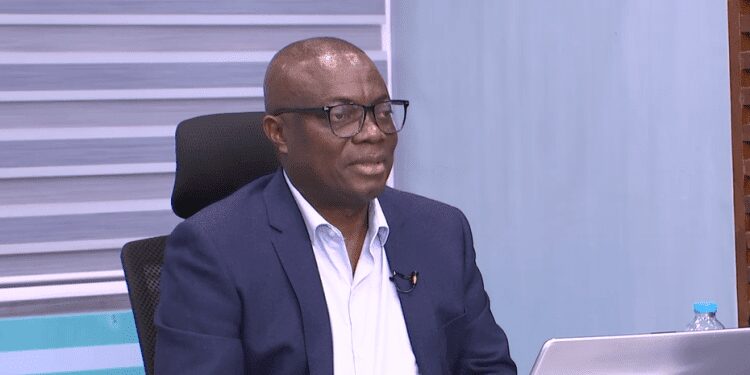
    Mussa Dankwah, Pollster and Executive Director Global InfoAnalytics

    Mr. Dankwah described the nine-percentage-point drop as significant, particularly because it reflects a loss among voters who are typically considered the party’s most committed base.

    He noted that declines in openly declared support often signal deeper challenges related to party unity, messaging and public confidence. While some supporters may have shifted to other parties, others may now be choosing to remain undecided or unwilling to publicly associate with the NPP.

    Taken together, the findings point to a period of reassessment for the opposition party. While the NPP remains a major force in Ghana’s political landscape, the combination of internal tensions, declining declared support and questions about its connection to public sentiment could undermine its effectiveness if left unaddressed.

    As the full Global InfoAnalytics report is awaited, Mr. Dankwah’s message is clear: without a more deliberate, data-driven and responsive approach, the NPP risks further erosion of support in regions it can least afford to lose.

  • Mr President, Beware: Ego within Camp is More Dangerous  than any Opposition – Kay Codjoe Writes

    Mr President, Beware: Ego within Camp is More Dangerous than any Opposition – Kay Codjoe Writes

    Dear President Mahama, this is written with respect, but also with the clarity the moment demands. Complacency is a virus. It starts quietly, it spreads quickly, and it destroys everything a nation hopes for.

    And right now, it is the one thing you must fight harder than the opposition, harder than economic recovery, and harder than the ghosts of the last administration. Complacency is the enemy that enters unnoticed, especially when the people have given you a supermajority.

    The real risk does not lie in your leadership but in the ecosystem around it. History repeatedly shows that great administrations stumble not because the leader lacked intent, but because the inner circle lacked discipline.

    Complacency within that space is far more dangerous than complacency at the top. A President may carry vision, yet a careless team can bury it before it takes root. A President may act with sincerity, yet an entourage swollen with ego can suffocate that sincerity before it ever reaches the people.

    Do not mistake that supermajority for a blank cheque. Ghanaians did not give you Parliament so that you could relax. They gave it to you so that you could correct the failures that pushed the country to the brink.

    They gave it to you because the alternative became unbearable. They gave it to you expecting better judgment, not louder partisanship. And that trust can evaporate faster than it formed.

    Some of the people around you are egoistic, loud, and disconnected from the truth. Some have mistaken proximity for relevance. Some have confused access with authority.

    And some are so intoxicated by their new positions that they think the people voted for them, not for the country’s last chance at stability. These individuals do not strengthen your mission. They weaken it. They do not raise your image. They dilute it.

    The danger is simple. If complacency sets in, if ego replaces humility, if party loyalty replaces national interest, your government will reproduce the same flaws it came to correct. And Ghana cannot survive another cycle of leadership drifting into arrogance.

    If after all these years of the Fourth Republic we still churn out leaders who are disconnected from reality, then we must admit that the problem is deeper than political parties. It becomes a cultural crisis, a governance crisis, and a crisis of the national conscience.

    Mr. President, do not let the noise around you drown the signal in front of you. The people are tired, not blind. They want progress, not excuses. They want accountability, not theatrics.

    Ghana cannot be governed by men who believe politics is performance. We cannot move forward with statesmen who treat truth as an inconvenience. And we cannot build a future where partisan reflex overrides national duty.

    Your mandate is not a trophy. It is a responsibility. And responsibilities become heavy when surrounded by individuals who think the people owe them gratitude for simply existing. This is the moment to choose competence over noise, humility over entitlement, and sincerity over showmanship.

    Ghana has placed its hope in you again. Do not let complacency turn that hope into regret. The next chapter of this nation requires courage, discipline, and leaders who think beyond their chairs. Because the country is watching. The people are assessing. And history is waiting to write its verdict.

    Choose wisely. Lead firmly. And protect the trust Ghanaians have given you.

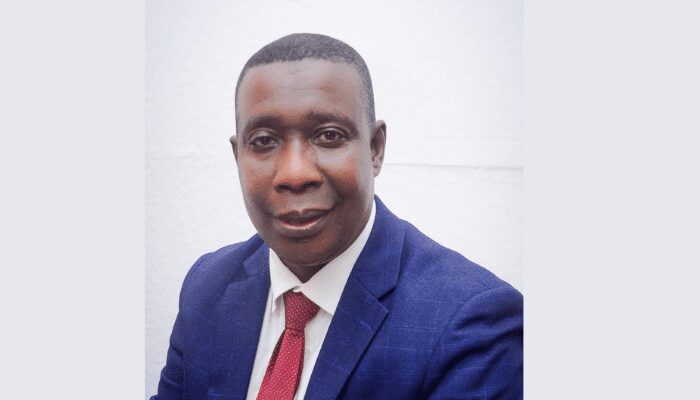
    Author: Kay Codjoe, Market Research Consultant and Volunteer Associate at the IMANI Centre for Policy and Education

  • Stop Playing Politics with Health — Minority Chides Health Minister

    Stop Playing Politics with Health — Minority Chides Health Minister

    The Ranking Member of the Parliamentary Select Committee on Health, Hon. Nana Ayew Afriye at the minority press briefing, called on the Minister for Health and the government to put political reasons behind them and address the issues of the health sector workers.

    Among other issues, such as issuance of clearance certificates, months of unpaid salaries, and poor conditions of services, have been the concerns raised by health sector workers at demonstrations in past months.

    The Minister for Health, Hon. Mintah Akandoh at his last press engagement, stated that 13,500 nurses and midwives whose financial clearance expired before their postings, the Ministry could confirm that over 7,000 have already been paid, and clearance has been obtained for the remaining 6,500, which will be processed immediately.

    The minister also emphasized the efforts of the government at ensuring that all health sector workers are duly remunerated, attributing the delays to administrative lapses, and assuring the ministry’s commitment to the wellbeing of health professionals.

    Minister for Health, Hon. Kwabena Mintah Akandoh

    However, Dr. Afriye, the ranking member on the parliamentary select committee on health, argued that the delay in the clearance and salary payment of the nurses can only be attributed to political reasons and not administrative lapses, contrary to the minister’s claim.

    The opposition member of parliament stated that the health minister did not need to seek clearance again from cabinet; all he needed to do was to extend the expiry date for the clearance from the Ministry of Finance and use it.

    He made the argument that the supposed expired clearance covered 15,000 people and that money was allocated for their employment.

    “Money was allocated for 15,000. You came in 7,000, almost 8,000 had started. The remaining were employed by the Ghana Health Service. Albeit they were late, but they were at post. You didn’t see the need to tell the institutions to reject them. Neither did the institutions write to you to reject them. What it meant was that they filled a gap and they were needed to be at post. So, the institution used them” –

    Hon. Nana Ayew Afriye, Ranking Member of the Parliamentary Select Committee on Health.

    The member of parliament for Effiduase/Asokore further argued that it is a normal practice in public service administration to extend clearance when it expires.

    Ghanaian Nurses

    He therefore suggested that there is no valid reason, except for political reasons, for the government’s decision to leave the health sector workers without salaries for over eight months and later decide to approve another clearance at a cabinet meeting.

    “Except for political reasons. They did not extend this for political reasons. And then, eight, ten months down, they face an embarrassment where the students or their staff went on a public demonstration to draw your mind to this clearance and the need for extension.

    Embarrassing enough, you are saying that you’ve taken it to cabinet for an approver. What sort of cabinet do you have to take for an approver when you have a clearance already?” – Hon. Nana Ayew Afriye, ranking member on the parliamentary select committee of health.

    Hon. Nana Ayew Afriye, Ranking Member of the Parliamentary Select Committee on Health.

    Dr. Afriye further made the point that government is a continuum, emphasizing that there was no need for a successor government to abandon a process started by the previous government and allow people to work for months without pay.

    Reasonable Opposition

    The opposition member of parliament made the point that the minority has intentionally decided to allow the government to settle in properly in the first year, which made them stay calm on several issues.

    He noted that when health sector workers decided to go on strike, the opposition came to the agreement that it was too early to support them to continue on strike, appealing to them to be ‘reasonable’ with the government and return to work.

    Dr. Afriye made the point that they have decided not to be political with the situation confronting the health sector workers. However, it appears the governing party is hell-bent on politicizing the issues.

    He further stated that even in opposition in 2020, the same party politicized issues of the health sector workers by supporting them to be on strike for three weeks.

    He therefore called on the government to not take the opposition’s goodwill for granted by making sure that the issues are resolved without politicization, for the benefit of the Ghanaian people.

  • NPP General Secretary Aspirant Slams President Mahama Over Hardship Despite Cedi Forecast

    NPP General Secretary Aspirant Slams President Mahama Over Hardship Despite Cedi Forecast

    General Secretary aspirant of the New Patriotic Party (NPP), Eugene Boakye Antwi, has criticised President John Dramani Mahama’s administration, insisting that Ghanaians continue to face severe hardship nine months into his government despite the President’s positive outlook on the cedi.

    Speaking on the state of the economy, Mr Antwi said the government’s promises of relief have not materialised, with the cost of living and lack of jobs leaving many families struggling.

    “After nine months into Mahama’s government, the hardship hasn’t reduced,” he declared. The NPP stalwart argued that rising prices, coupled with stagnant incomes, were clear evidence of the government’s inability to address the economic challenges that affect households daily.

    He maintained that the Mahama administration had yet to find effective solutions, noting that citizens continue to suffer under worsening conditions. Mr Antwi also accused the government of failing to deliver on the economic promises that secured its victory in the 2024 general elections.

    Eugene Boakye Antwi, Former Subin MP

    He stressed that the NPP remains the only party with a proven record of “steering the economy through turbulent times,” and assured Ghanaians that the party was preparing to provide a stronger alternative ahead of the next polls.

    His comments came shortly after President Mahama’s first media encounter on Wednesday, September 10, 2025, where the President gave assurances that the cedi would remain relatively stable.

    He projected that depreciation would not exceed 5% annually, describing the fluctuations as part of a natural adjustment process rather than signs of fresh instability.

    The President explained that while the Bank of Ghana (BoG) had intervened heavily in the first half of 2024, when the cedi depreciated by nearly 25%, it had since scaled down its interventions as the local currency showed signs of stabilising.

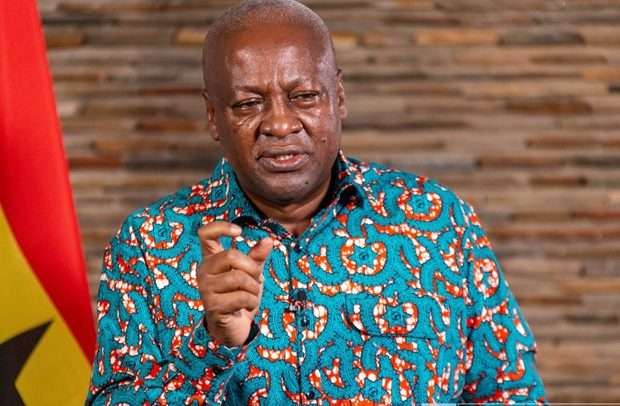
    President John Dramani Mahama
    President John Dramani Mahama

    Expert Cautions

    Reacting to the President’s remarks, Professor William Baah-Boateng, Vice Chancellor of the Methodist University of Ghana, welcomed the projection as encouraging for the economy.

    “If the president aims to keep the exchange rate beyond 5% then that is excellent. Now we are doing about GHS 12. When you take 5% off GHS 12, you are looking at about 60 pesewas. So, if the cedi hovers around 60 pesewas, then it is the same as stability. If we can work around that, then that is what we will all be happy about”

    Professor William Baah-Boateng, Vice Chancellor of the Methodist University of Ghana

    The economist credited recent progress on inflation to two main factors, including the currency’s relative stability and ongoing food supply from the harvesting season. “The appreciation of the cedi has contributed – and we have food in abundance” he noted.

    However, he warned that the approaching festive season could heighten demand for foreign exchange and pose a challenge to the cedi’s performance. 

    Professor William Baah-Boateng
    Professor William Baah-Boateng, Vice Chancellor of the Methodist University of Ghana

    “But what we have to work on is meeting the exchange demand that will come as a result of imports for the festivities. If the central bank can meet that, then we will be able to maintain it at that level”

    Professor William Baah-Boateng, Vice Chancellor of the Methodist University of Ghana

    The contrasting reactions highlight a growing debate over the trajectory of Ghana’s economy under Mahama. On one hand, experts such as Prof Baah-Boateng see cause for cautious optimism, citing exchange rate stability and better inflation control.

    On the other, opposition voices continue to stress that macroeconomic gains have yet to ease daily struggles faced by ordinary citizens.

    President Mahama’s projection of a more stable cedi appears designed to bolster confidence in Ghana’s financial management, while critics argue that structural challenges, including unemployment and high living costs, remain unresolved.

    As the festive season approaches, the test of the currency’s stability and the government’s ability to meet exchange demands could shape public perception of its economic stewardship.

  • Democratic, Not Desperate Minority – Jinapor

    Democratic, Not Desperate Minority – Jinapor

    The Member of Parliament (MP) for Damongo, Hon. Samuel Abu Jinapor, has pushed back against criticisms that Ghana’s opposition is “desperate” or overly eager in challenging government actions.

    Speaking firmly in defence of the Minority’s approach in Parliament, the MP emphasized that the actions of the opposition are grounded in democratic responsibility, not political anxiety.

    “We need to ask ourselves, what is the role of the opposition in a democracy such as ours? The role of the opposition essentially, first, is to keep the government accountable.

    “This is absolutely important, which is why it is said that you cannot have a proper functioning democracy if there is a non-existent opposition”

    Hon. Samuel Abu Jinapor, MP for Damongo

    In a clear-eyed articulation of the constitutional role of opposition parties, Jinapor argued that the main Ghanaian opposition, the New Patriotic Party (NPP) is simply carrying out its most sacred duty to keep the government in check.

    Referencing Ghana’s post-independence constitutional development, the MP reminded critics that Ghana’s democratic structure expressly prohibits the existence of a one-party state. He pointed to history as the underlying reason behind this prohibition.

    “It is a reaction to our history where we had a one-party state. The framers of our constitution felt that to have a one-party state means we do not have a true and functioning democracy”

    Hon. Samuel Abu Jinapor, MP for Damongo
    Hon. Samuel Abu Jinapor, MP for Damongo

    According to Jinapor, democracies everywhere cannot function effectively without an active and engaged opposition. The task of keeping the government accountable, he explained, is not just essential but foundational to the health of the republic.

    Three Cardinal Pillars

    The MP laid out what he described as the three cardinal pillars of a responsible opposition.

    For him, Holding the government accountable, offering constructive criticism, and positioning itself as a viable alternative government are non-negotiable for any serious opposition. “These are the three cardinal pillars of any opposition worth its salt.”

    Expanding on this, Jinapor said it is within these principles that the current NPP Minority is operating. He rejected claims that opposition parties are obstructive or overly aggressive in Parliament, instead asserting that their conduct is in line with democratic standards.

    “So if you are in Parliament and a matter is brought to the floor of Parliament, a policy of the government is brought to the floor of Parliament, or there’s an issue in the country which is topical and relevant and the opposition raises issues about it, in so doing, it satisfies these three cardinal requirements or responsibilities of an opposition”

    Hon. Samuel Abu Jinapor, MP for Damongo

    He acknowledged that the “method or tone” of opposition engagement may be a matter of personal style but maintained that such stylistic concerns do not invalidate the core function of the opposition in democratic governance.

    Hon. Samuel Abu Jinapor, MP for Damongo

    Broader Accountability Structure

    While highlighting the centrality of the opposition, Jinapor also noted that accountability does not rest solely with the Minority. 

    “It is also the responsibility of the media, civil societies and the rest,” he said, highlighting the crucial role other political and societal actors play in holding power to account.

    Nonetheless, he argued, the Parliamentary opposition has a duty to raise issues of national concern when they appear before the House or in the public domain.

    “I’m not too sure whether that can be said to be trying too hard or being desperate or being eager or not giving the government time”

    Hon. Samuel Abu Jinapor, MP for Damongo

    The MP insisted that constructive criticism, even if uncomfortable, should be welcomed by any government that believes in democratic principles. He suggested that the government may even benefit from some of the opposition’s positions if taken in good faith.

    “Once the outreach of the opposition satisfies these three cardinal ingredients of an opposition party… the opposition is doing its work”

    Hon. Samuel Abu Jinapor, MP for Damongo
  • ESPA Insists Opposition on Redirection of Sanitation Levy

    ESPA Insists Opposition on Redirection of Sanitation Levy

    The Environmental Service Providers Association (ESPA) has insisted on its strong opposition to the government’s decision to redirect the Sanitation and Pollution Levy (SPL) towards addressing shortfalls in the energy sector under the 2025 budget.

    The association, which represents private waste contractors in Ghana, argued that the reallocation of the funds undermines critical waste management and sanitation initiatives that the levy was originally intended to support.

    Speaking on the situation, the Executive Secretary of ESPA, Ama Ofori-Antwi has insisted on the association’s crucial role and composition concerning waste management. She said;

    “The Environmental Service Providers Association, we normally refer to ourselves as ESPA. So ESPA is an association of private waste contractors. It’s an umbrella body of different, private sectors, different sectors working in the environmental and sanitation sector. So as part of the membership, we have people who are into solid waste management, and we have people who are into liquid waste management.

     And with the liquid waste, we have the septic and tears and then the car owners. We have people who are into landfill management and recycling. We even have the informal as part of the association and members who are basically into e-waste as part of the membership.’’

    Ama Ofori-Antwi Executive Secretary of ESPA

    She further emphasized that ESPA plays a crucial role in assisting the government in keeping the country clean.

    Ms. Ofori-Antwi stated that ESPA initially welcomed the introduction of the Sanitation and Pollution Levy in 2021, as it provided much-needed funding for waste management and recycling initiatives. However, the government’s recent decision to divert the levy to offset debts in the energy sector has raised serious concerns.

    “Already, when it comes to the sector, funding is always a challenge. Funding sanitation activities is a challenge. And then we come up with a novel idea or we use an Act and then the Act promotes a situation where we can get levies to support the sector, it means under that Act, there is some form of funding to support the sector. When the Sanitation and Pollution Levy was introduced, we were able to put up recycling facilities. The final disposal site is also managed by the fund.”

    “Now that the fund is being diverted to go and offset the energy sector bills, does it mean that the sanitation sector is no longer important? Or is there a special fund elsewhere that is going to be used to support our sector?”

    Ama Ofori-Antwi Executive Secretary of ESPA

    Lack of Clarity in Budget Allocation

    Waste Disposal

    ESPA is also concerned that there has been no clear communication regarding how sanitation services will be funded if the levy is redirected.

    “As we all know, when we talk about sanitation, sanitation has a direct correlation to our health. It’s not just about the fund. Even with the existing structures and what is happening, we all can attest to the fact that there are challenges.”

    Ama Ofori-Antwi Executive Secretary of ESPA

    Ms. Ofori-Antwi pointed out that the levy has significantly contributed to sanitation infrastructure development and job creation.

    ‘’As a result of that, there has been a lot of job creation. I can attest to the fact that with the recycling compost plants in the 16 regions, over 15,000 jobs have been created.”

    Ama Ofori-Antwi Executive Secretary of ESPA

    She warned that redirecting the levy could jeopardize these investments and job opportunities.

    “So, if the fund is being taken away, how are we going to sustain the existing facilities? And then how do we even continue with the support in terms of job creation?”

    Ama Ofori-Antwi Executive Secretary of ESPA

    Ms. Ofori-Antwi also highlighted the crucial role of the private sector in Ghana’s waste management industry. She noted that private investors have poured significant resources into sanitation projects with the expectation that the government would provide steady financial support through the Sanitation and Pollution Levy.

    ESPA is calling on the government to reconsider its decision and ensure that the Sanitation and Pollution Levy continues to be used for its intended purpose.

    The association warns that failing to do so could lead to deteriorating waste management services, increased environmental pollution, and job losses in the sector.

    As the government moves forward with its 2025 budget implementation, stakeholders in the sanitation sector will be keenly watching for clarity on how waste management and environmental sustainability will be funded in the absence of the levy.

  • Shift In ‘Ghana Politics’: A New Era of Accountability

    Shift In ‘Ghana Politics’: A New Era of Accountability

    The political landscape in Africa is undergoing a remarkable transformation, with citizens demanding greater transparency and accountability from their leaders. 

    This wave of political consciousness is reshaping governance, and according to Franklin Cudjoe, President of IMANI Africa, Ghana is no exception.

    He pointed out that this shift has led to increased trust in leadership across various countries.

    “The dynamics of politics are changing on the continent. From Senegal, and Kenya to South Africa, civilian governments are being stretched to their limits on the altar of accountability by active citizens; and the results have been positive.” 

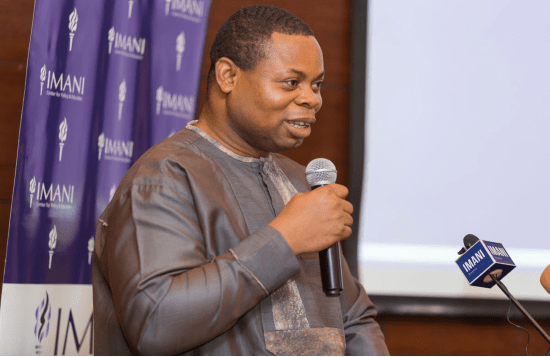
    Franklin Cudjoe

    Cudjoe draws particular attention to South Africa, where a coalition government is demonstrating how political collaboration can lead to tangible improvements. 

    Citing economist Dr. Nii Moi Thompson, Cudjoe highlighted how South Africa’s government of national unity has yielded significant results. 

    Franklin Cudjoe on Ghana politics
    Franklin Cudjoe, IMANI Africa

    He explained that the arrangement initially bolstered investor confidence and then swiftly transitioned into action. Longstanding issues that had persisted for years were resolved within months by an opposition party member serving within the government. 

    According to him, rather than having one ruling party constantly facing criticism from multiple opposition parties, the collaborative approach has ensured that all stakeholders are actively involved in governance.”Ten parties are in charge! It’s a model we must watch.”

    This model of political cooperation, where various factions work collectively rather than in opposition, has delivered rapid and effective governance solutions. 

    If Ghanaian politicians can adopt a similar approach, the country may see unprecedented progress in policy implementation and governance effectiveness.

    Ghana’s Political Landscape in 2025

    Accordingly, Franklin Cudjoe believes that Ghana, under the leadership of President John Mahama, is experiencing its own version of political transformation. 

    He noted that Mahama’s administration is shifting the perception of governance from one riddled with deception and corruption to one that prioritizes accountability and the fulfillment of promises.

    “Enter Ghana in 2025—From a manifesto that humanizes solutions to basic problems of want and access to healthcare, education, and food, to jargon and slogan-free budget that simply prioritizes allocations.

    “However small, the little good human-centered things promised in the manifesto, the overriding outcome of our recent election is that our president, John Mahama, is redefining politics in Ghana…” 

    Franklin Cudjoe
    President Mahama changes Ghana politics
    President John Dramani Mahama

    This approach, he argued, restores faith in governance and ensures that political commitments translate into real, measurable outcomes for the people. 

    While it is still early days, he believes that maintaining this path will be crucial for building a stronger and more transparent political system in Ghana.

    While Cudjoe praises the changes in governance, he also directs attention to the main opposition party, the NPP. 

    He urged them to rethink their strategy and offer a more coherent alternative to the ruling government “that learned from their many missteps.”

    He pointed out that without a clear and credible vision, opposition parties risk becoming irrelevant in the evolving political environment. “They must keep it simple, truthful, and participatory.”

    In a democracy, a strong and responsible opposition is essential for keeping the government accountable. 

    However, if their approach is disjointed and reactionary rather than visionary, they may struggle to resonate with the electorate. 

    Cudjoe’s remarks serve as both a warning and a challenge to Ghana’s opposition party, the NPP, to recalibrate their messaging and focus on real solutions rather than political rhetoric.

    The Role of Citizens in Shaping Governance

    Beyond the actions of political leaders, the shift in governance is largely fueled by an increasingly engaged and informed citizenry. 

    Accordingly, Franklin Cudjoe noted that even the young military leaders in Burkina Faso, Mali, and Niger have earned the trust of civilians by demonstrating openness and transparency in their governance. “Hopefully, they’ll be back on the road to democracy.”

    This underscores the growing demand for honesty in governance, whether from democratic governments or transitional administrations. 

    In Ghana, citizens must remain active participants in the democratic process, holding leaders accountable and ensuring that campaign promises are translated into tangible action.

    Democracy in Ghana amid partisanship Ghana politics
    Democracy In Ghana

    The evolution of governance in Africa signals a turning point where citizens refuse to accept empty promises. 

    As Ghana navigates this changing political terrain, the responsibility falls on both the ruling party and the opposition to prioritize the needs of the people above political maneuvering.

    For President Mahama, the challenge is to maintain the momentum of his early governance style and ensure that promises are not just words on paper but concrete actions. 

    Cudjoe indicated that For the opposition, the task is to develop a credible and compelling alternative that resonates with Ghanaians.

    “It may be early days yet, but long may it continue. We will be watching and offering suggestions to straighten forked paths, the government may travel, with our incisive and no-holds-barred commentary.”

    Franklin Cudjoe

    The future of Ghana’s politics depends not just on leaders but on the collective will of its people to demand and sustain this newfound accountability. 

    If the current trajectory continues, Ghana could set an example for other African nations on how governance can truly be redefined.

  • Congo’s President Pushes for New Constitution Amid Backlash

    Congo’s President Pushes for New Constitution Amid Backlash

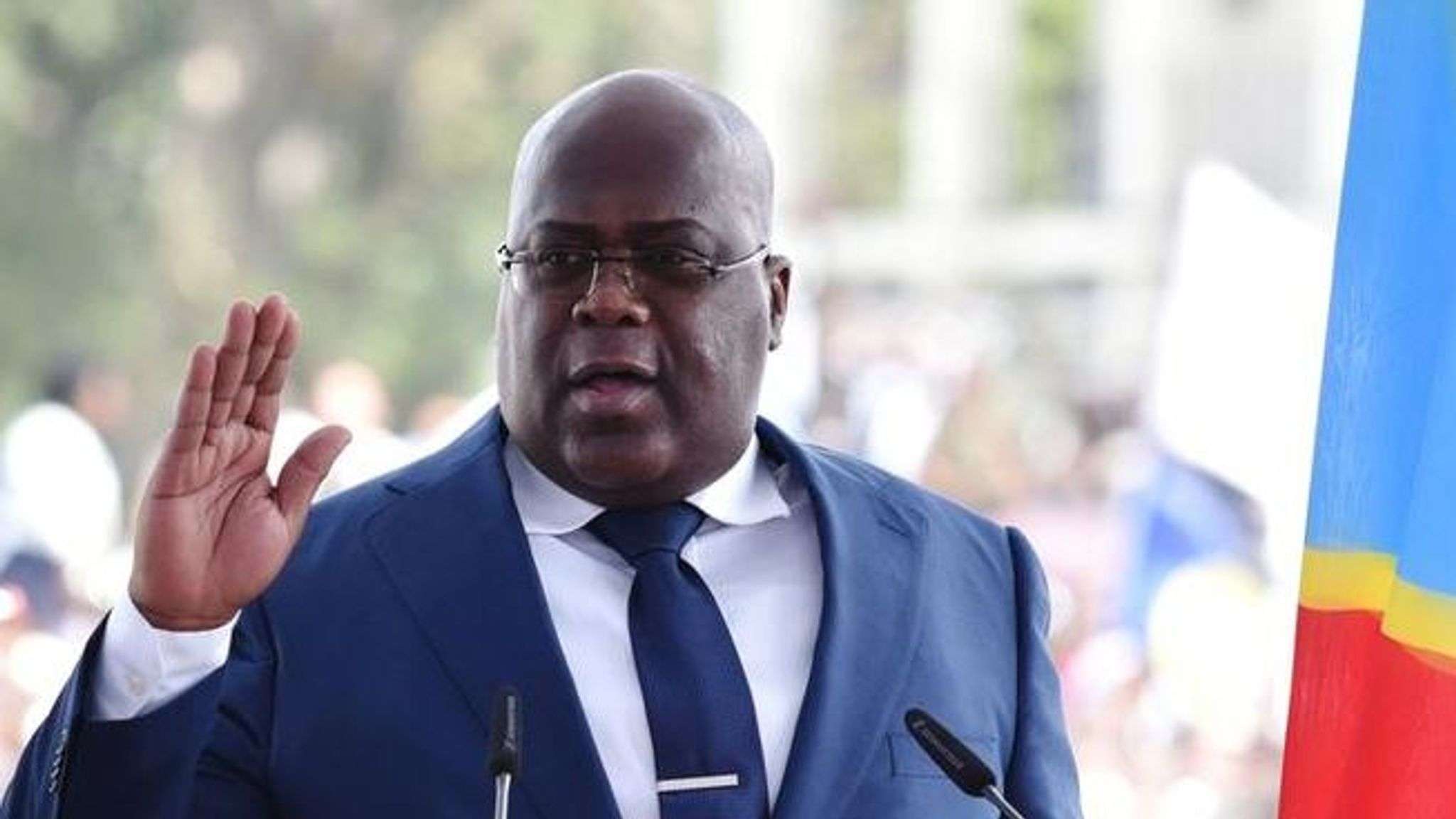
    Congo’s President Felix Tshisekedi has announced plans to establish a national commission next year tasked with drafting a new constitution. This move has raised concerns among opposition leaders, who fear it may open the door to extending presidential term limits.

    Tshisekedi has faced ongoing questions about his legitimacy, stemming from disputes over the 2018 election results. His administration has struggled to address the escalating armed conflict in eastern Congo, which has fueled discontent among citizens. 

    During a recent visit to Kisangani, the capital of Tshopo Province in northeastern Congo, Tshisekedi declared, “Our constitution is not good.” He attributed the current constitution’s flaws to its origins, saying, “It was drafted abroad and by foreigners.”

    The existing constitution was ratified by a popular referendum in 2006, marking the sixth constitution since Congo gained independence from Belgium in 1960. It emerged as a result of the 2003 peace agreement brokered in South Africa, which aimed to end years of civil war and pave the way for a government of national unity.

    In recent months, Tshisekedi has intensified his criticism of the constitution, dismissing it as “outdated.” Among his chief grievances are the delays in government formation following elections and the contentious power dynamics between provincial governors and assemblies. He pointed to these issues as proof that Congo needs a new framework. 

    However, he was careful to stress that any decision on presidential term limits would be left to the people rather than decided by him unilaterally.

    Opposition Calls Out Presidential Overreach

    This announcement has drawn swift opposition. The Together for the Republic Party, one of Congo’s major opposition groups, condemned Tshisekedi’s proposal, calling his statements misleading. 

    Hervé Diakiese, the party’s spokesperson, disputed the president’s claim about the constitution’s foreign roots. “It is false to claim that a constitution voted on in a referendum by the Congolese, after debate in the transitional parliament, is a constitution written by foreigners,” Diakiese posted on social platform X. He further accused the government of proposing “false solutions to real problems.”

    Hervé Diakiese

    Fred Bauma, a prominent human rights activist and leader of The Struggle for Change, a social justice organization, also spoke out against the president’s intentions. 

    Bauma argued that Tshisekedi, who took an oath to “observe and defend the constitution” at his inauguration, was now positioning himself as one of its chief critics. “Today he poses as the first detractor of the constitution, and this after having violated it several times,” Bauma wrote on X.

    According to constitutional experts, Tshisekedi does have the legal authority to initiate changes to the constitution, but any amendments would require either the approval of 60% of the parliament or a referendum in which more than 50% of the electorate supports the change. 

    Nevertheless, opposition leaders and civil rights groups remain wary, suspecting that the proposed changes could potentially set a precedent for power extension.

    Tshisekedi has not yet disclosed how the members of the national commission will be selected or offered specific details on its mandate. This omission has further fueled concerns about transparency and the administration’s motives.

    As such, with the central African country facing significant political and security challenges, Tshisekedi’s constitutional proposal has sparked a heated debate about governance and the future of democracy in Congo. 

    While he frames the need for change as part of a broader effort to address issues of political inefficiency, opposition leaders argue that the proposed reforms could jeopardize democratic principles by concentrating power in the presidency.

  • Tanzania Arrests Opposition Leaders Ahead of Rally

    Tanzania Arrests Opposition Leaders Ahead of Rally

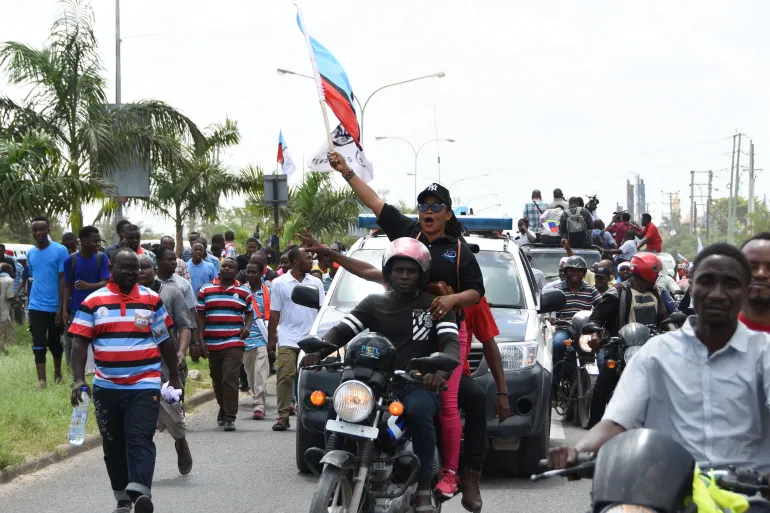
    In a sweeping crackdown on dissent, Tanzanian police have detained key opposition leaders and rounded up hundreds of supporters, effectively halting a planned rally in the southwestern city of Mbeya. 

    The arrests mark a significant escalation in the government’s suppression of political opposition, raising concerns about the state of democracy in the East African nation.

    Among those detained were leaders of the opposition Chadema party, including the prominent former presidential candidate Tundu Lissu. 

    The arrests took place on Monday, August 12, as Chadema prepared to hold a rally to mark International Youth Day. The police had previously banned the event, citing allegations of planned violence, a claim that the opposition has vehemently denied.

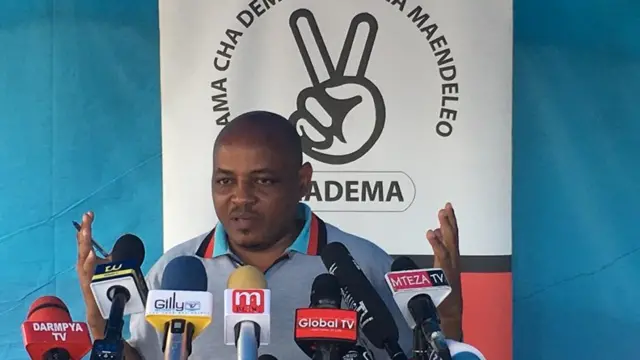
    The arrests were confirmed by Chadema’s director of communications and foreign affairs, John Mrema, who took to social media platform X to announce the news. 

    “Breaking news! The Mbeya Police have arrested all the leaders who were in the offices of Chadema in the Nyassa region, including the Hon. Tundu Lissu, the Hon. John Mnyika, the Hon. Joseph Mbilinyi, and the leaders of the Youth Council and those of the party.”

    John Mrema

    Mrema also revealed that around 500 youth supporters were detained while en route to the event. 

    The crackdown has drawn widespread condemnation from both local and international observers, who view it as a troubling sign of the Tanzanian government’s increasingly authoritarian approach.

    Chadema leader Freeman Mbowe was quick to denounce the arrests, calling for the “immediate and unconditional release” of his deputy, Lissu, and other detained youth leaders. 

    “I strongly condemn the arrest of my fellow party members. This is a clear attempt to stifle democratic expression and intimidate those who dare to speak out against the government,” Mbowe said.

    Opposition Crackdown Threatens Democratic Gains

    The latest incident comes at a time when Tanzania is gearing up for its presidential and parliamentary elections in 2025. 

    Critics argue that the arrests of opposition figures provide further evidence that democratic progress in Tanzania is stalling. 

    In recent months, Chadema and other opposition groups have been staging protests to demand that the government address a range of issues, including controversial legislation, rising living costs, and the need for independent oversight of the electoral process.

    The government’s response has been heavy-handed. Just a day before the rally, police announced a ban on the Chadema youth gathering, accusing the party of planning violent demonstrations. 

    The youth wing had anticipated a turnout of around 10,000 supporters in Mbeya. Despite the ban, Chadema officials urged their supporters to defy the order and called on President Samia Suluhu Hassan to intervene.

    President Hassan, who assumed office in 2021 following the sudden death of her predecessor John Magufuli, initially signaled a shift away from Magufuli’s hardline policies. 

    In January 2023, she lifted a ban on opposition rallies that had been imposed by Magufuli in 2016, a move that was widely seen as an olive branch to political rivals.

    Lissu, who narrowly escaped an assassination attempt in 2017 and spent several years in exile, returned to Tanzania after Hassan lifted the ban. 

    His return was seen as a hopeful sign for the country’s democratic future. Similarly, Mbowe, who had been imprisoned in 2021 ahead of a planned public forum calling for constitutional reform, was released in March 2022.

    However, the recent wave of arrests suggests that the space for political dissent in Tanzania remains narrow. 

    As such, the 2025 elections will test President Hassan’s commitment to political reform amid international scrutiny of her governance.

  • Indian Opposition Lawmakers Protest Against Modi Government

    Indian Opposition Lawmakers Protest Against Modi Government

    More than 100 Indian opposition lawmakers, including members of the Congress party, staged a protest march on Thursday, April 6, 2023, after the end of a parliamentary budget session that was marred by shouting and disruptions to proceedings amid a standoff with Prime Minister Narendra Modi’s government.

    The demonstrators carried big national flags and chanted slogans warning that India’s democracy is in danger and accused Modi’s administration of “misusing” government-run investigation agencies to intimidate opposition leaders.

    They were blocked by police after walking a short distance from the Parliament building and forced to disperse. The opposition leaders from more than a dozen parties ended the protest with a news conference.

    Mallikarjun Kharge, the Congress party Chief, criticized the disqualification of his party’s leader, Rahul Gandhi, as a Member of Parliament less than 24 hours after his conviction by a court in a defamation case.

    “The parliamentary budget session was a washout with the government getting the budget for 2023-24 approved within 12 minutes without a proper debate,” Kharge said.

    Congress party President, Mallikarjun Kharge, centre, with other opposition Lawmakers take out a protest march from Indian Parliament House, in New Delhi, India, Thursday, April 6, 2023. 

    Law Minister, Kiran Rijiju blamed the opposition for disrupting the parliamentary proceedings.

    Gandhi said last month that he was being targeted because he has raised serious questions about Modi’s relationship with Gautam Adani, who heads the Adani Group.

    Gandhi added that the objective of his expulsion from Parliament was to prevent him from speaking in the legislature about his allegation of an infusion of an unaccounted $3 billion into shell companies owned by the Adani Group, headed by Gautam Adani.

    India’s top court recently ordered an expert committee to investigate any regulatory failures related to the Adani Group.

    The investigation was prompted by allegations made by U.S. short-seller Hindenburg Research in a report that accused Adani companies of engaging in market manipulation and other fraudulent practices.

    Shares in the group’s flagship, Adani Enterprises, and other affiliated companies have lost tens of billions of dollars in market value since Hindenburg issued its report.

    The Adani Group has denied any wrongdoing, defending itself against the allegations in a 413-page rebuttal. In a tweet, it welcomed the court order.

    “It will bring finality in a time-bound manner. Truth will prevail,” the company said.

    The expert committee will submit its findings to the Supreme Court within two months, said Chief Justice D.Y. Chandrachud and justices P.S. Narasimha and J.B. Pardiwala.

    The top court also directed the government-run Securities and Exchange Board of India to investigate whether there had been a violation of rules or manipulation of stock prices by the Adani Group.

    Apart from investigating allegations against Adani, the expert committee is to suggest measures to improve regulatory oversight and protections for investors.

    Modi Hopeful That His Party Will Win Another Term

    An auto rickshaw drives past a huge hoarding showing Indian prime minister Narendra Modi’s popularity among world leaders being the highest, in New Delhi, India, Thursday, April 6, 2023. 

    Meanwhile, Indian Prime Minister, Narendra Modi asserted that his party would be voted to victory for a third straight five-year term “in next year’s national elections given its popularity among people.”

    Modi told his Hindu nationalist Bharatiya Janata Party (BJP) workers celebrating the party’s foundation day that, Indian people backed the BJP for bringing in a new political culture, while opposition parties were mostly run by political families.

    Gandhi is expected to lead the opposition’s challenge against Modi in the 2024 national elections. Gandhi challenged his conviction in an appeals court on Monday, April 3, 2023.

    The court has suspended a two-year prison sentence for Gandhi following his appeal against a criminal conviction for mocking the Prime Minister’s surname.

    READ ALSO: North Korea Threatens “Offensive Action” Over U.S. Military Exercises With South Korea Expansion