
General Secretary aspirant of the New Patriotic Party (NPP), Eugene Boakye Antwi, has criticised President John Dramani Mahama’s administration, insisting that Ghanaians continue to face severe hardship nine months into his government despite the President’s positive outlook on the cedi.
Speaking on the state of the economy, Mr Antwi said the government’s promises of relief have not materialised, with the cost of living and lack of jobs leaving many families struggling.
“After nine months into Mahama’s government, the hardship hasn’t reduced,” he declared. The NPP stalwart argued that rising prices, coupled with stagnant incomes, were clear evidence of the government’s inability to address the economic challenges that affect households daily.
He maintained that the Mahama administration had yet to find effective solutions, noting that citizens continue to suffer under worsening conditions. Mr Antwi also accused the government of failing to deliver on the economic promises that secured its victory in the 2024 general elections.

He stressed that the NPP remains the only party with a proven record of “steering the economy through turbulent times,” and assured Ghanaians that the party was preparing to provide a stronger alternative ahead of the next polls.
His comments came shortly after President Mahama’s first media encounter on Wednesday, September 10, 2025, where the President gave assurances that the cedi would remain relatively stable.
He projected that depreciation would not exceed 5% annually, describing the fluctuations as part of a natural adjustment process rather than signs of fresh instability.
The President explained that while the Bank of Ghana (BoG) had intervened heavily in the first half of 2024, when the cedi depreciated by nearly 25%, it had since scaled down its interventions as the local currency showed signs of stabilising.

Expert Cautions
Reacting to the President’s remarks, Professor William Baah-Boateng, Vice Chancellor of the Methodist University of Ghana, welcomed the projection as encouraging for the economy.
“If the president aims to keep the exchange rate beyond 5% then that is excellent. Now we are doing about GHS 12. When you take 5% off GHS 12, you are looking at about 60 pesewas. So, if the cedi hovers around 60 pesewas, then it is the same as stability. If we can work around that, then that is what we will all be happy about”
Professor William Baah-Boateng, Vice Chancellor of the Methodist University of Ghana
The economist credited recent progress on inflation to two main factors, including the currency’s relative stability and ongoing food supply from the harvesting season. “The appreciation of the cedi has contributed – and we have food in abundance” he noted.
However, he warned that the approaching festive season could heighten demand for foreign exchange and pose a challenge to the cedi’s performance.
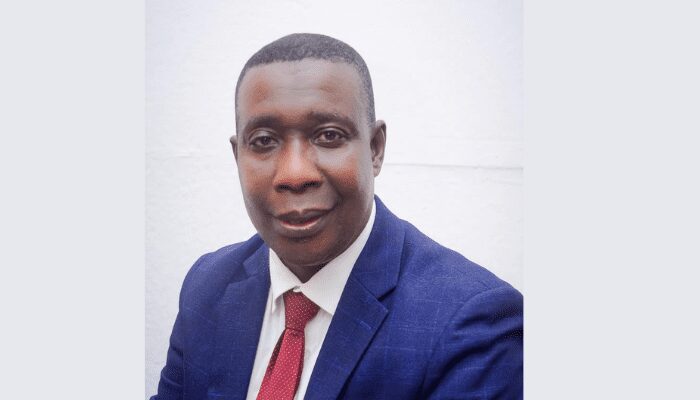
“But what we have to work on is meeting the exchange demand that will come as a result of imports for the festivities. If the central bank can meet that, then we will be able to maintain it at that level”
Professor William Baah-Boateng, Vice Chancellor of the Methodist University of Ghana
The contrasting reactions highlight a growing debate over the trajectory of Ghana’s economy under Mahama. On one hand, experts such as Prof Baah-Boateng see cause for cautious optimism, citing exchange rate stability and better inflation control.
On the other, opposition voices continue to stress that macroeconomic gains have yet to ease daily struggles faced by ordinary citizens.
President Mahama’s projection of a more stable cedi appears designed to bolster confidence in Ghana’s financial management, while critics argue that structural challenges, including unemployment and high living costs, remain unresolved.
As the festive season approaches, the test of the currency’s stability and the government’s ability to meet exchange demands could shape public perception of its economic stewardship.
READ ALSO: Singer Laments Audiences Now Attend Live Concerts Finding Faults