Tag: plastics

  • Styrofoam Convenience Comes At Environmental Cost, EPA Warns

    Styrofoam Convenience Comes At Environmental Cost, EPA Warns

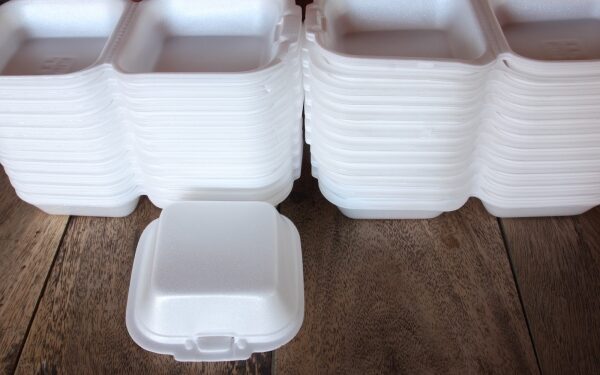
    The Chief Executive Officer of the Environmental Protection Authority (EPA), Prof. Nana Ama Browne Klutse, has cautioned that the everyday convenience associated with styrofoam products comes with serious environmental and public health implications. She made the remarks during the launch of a public awareness campaign on the ban of polystyrene foam products at Rawlings Park in Accra.

    Prof. Klutse explained that plastics have become deeply integrated into Ghana’s economy over the past three decades, supporting various sectors while creating significant waste management challenges. She noted that although plastic products have offered affordability and convenience, their long term effects require stronger action from individuals, businesses and institutions.

    Professor Nana Ama Browne Klutse

    The EPA Chief Executive added the awareness campaign forms part of efforts to educate the public on the reasons behind the restriction on polystyrene foam takeaway packs. She indicated that the initiative seeks to help citizens understand the environmental and health risks linked to the continued use of these products.

    “While plastics have provided convenience and cost advantages to us, especially single use plastics, they have resulted in heavy environmental consequences, including health challenges as well.”

    Professor Nana Ama Browne Klutse

    She further explained that polystyrene products extend beyond food packaging and are used in several areas including construction materials, mattresses and transportation packaging. According to her, the widespread application of these materials makes public education an important step in ensuring a smooth transition towards safer alternatives.

    The EPA boss acknowledged that styrofoam containers have become common in homes, restaurants, bakeries, schools and among street food vendors across the country. She recognised that changing long established habits would require patience, engagement and cooperation from different sectors of society.

    Public Awareness Campaign Targets Safer Alternatives To Styrofoam Use

    The Environmental Protection Authority began a nationwide education drive aimed at encouraging public support for the ban on polystyrene foam products. The campaign is expected to provide information on the dangers associated with styrofoam use while guiding consumers and businesses towards environmentally friendly options.

    Professor Nana Ama Browne Klutse

    Professor Klutse noted that the EPA understands the concerns of traders and consumers who depend on styrofoam packaging for their daily activities. She explained that the transition requires dialogue and practical solutions that address the needs of people who rely on these products.

    The campaign will involve collaboration among government agencies, businesses, communities and other stakeholders to promote responsible waste management practices. The EPA believes that collective participation will be essential in reducing the impact of plastic pollution across the country.

    The EPA Chief Executive emphasised that the ban should be viewed as part of a wider environmental protection effort aimed at safeguarding public health and preserving natural resources. She added that the authority would continue engaging stakeholders to provide clarity on the policy and support affected groups.

    Beyond takeaway containers, Prof. Klutse highlighted the need for discussions on the management of plastic materials used in different sectors. She explained that the challenge requires long term commitment because plastics remain present in many aspects of daily life.

    Professor Nana Ama Browne Klutse

    The initiative comes amid increasing efforts by environmental authorities to address waste management challenges in Ghana. With plastic pollution affecting drainage systems, communities and ecosystems, the EPA has continued to promote measures that encourage sustainable consumption practices.

    Professor Klutse called on households, businesses, schools and industries to support the campaign by adopting responsible practices. She indicated that protecting the environment requires shared responsibility and consistent action from all parts of society.

    The EPA adds that the awareness programme will provide an opportunity for citizens to understand the importance of the policy while contributing to a cleaner and healthier environment. The authority is expected to continue its engagements as the country works towards reducing reliance on harmful plastic materials.

  • Ghana Gets £1m from UK to Deal with Plastic Pollution

    Ghana Gets £1m from UK to Deal with Plastic Pollution

    The Foreign, Commonwealth and Development Office under the UK Government, as part of UK Aid and under its Sustainable Manufacturing and Environmental Pollution (SMEP) program, has given about £1 million to Blue Skies Holdings Limited in Ghana to provide solutions to sustainability challenges posed by plastic waste in the country.

    The project would be implemented by Blue Skies Company limited and UK retailer Waitrose & Partners in collaboration with the University of Northampton Centre for Sustainable Business Practices through the industry Research and Development Hub. The project dubbed ‘Fresh Produce Impact Hub (FRESHPPACT)’ will be implemented in partnership with the United Nations Conference on Trade and Development (UNCTAD).

    According to UK Government, the project will be carried out in three phases, focusing initially on the use of plastic in farming (agricultural mulch), packaging, and work-wear. Meanwhile, the solutions may include new technology and business models that mitigate plastic pollution through material substitution, accelerated biodegradation and improved manufacturing and remanufacturing processes.

    Speaking at the launch of the FRESHPPACT at Blue Skies in Nsawam located in Eastern of Ghana, Dr. Ebenezer Laryea, a Senior Lecturer at Northampton University, Department of Business and Law, stated the volume of plastic waste generated by the country is huge but only insignificant volume is recycled.

    Plastic Recycling

    “Ghana Produces about 1.1 million tonnes of Plastic and we recycle only about 5% of that. So with that kind of recycling effort, it means that it is very minimal. This means 95% of the plastic that is not recycled either ends up at landfills or our Oceans where it ends up in fishes in form of micro-plastics. We eat the fish so eventually, the plastic comes back to us and it is a major issue in terms of the health of the population.”

    Dr. Ebenezer Laryea

    Effects of Plastic Pollution

    Touching on December 2021 UN’s Food and Agriculture Organization report that there is an evidence of the need for better management of the millions of tonnes of plastics used in the food and farming system each year, Dr Ebenezer Laryea stressed that plastic pollution has a serious effect on soil fertility and food security at large.

    “UN recent report has said that there is more Plastic in our soil than in the oceans and if that trend continues, we are going to reach a point where there is a threat to our food security and a threat to our food security is a threat to our livelihood and lives as individuals. It is also a threat to the country as a whole. So, this is a major problem. What we looking to achieve is to collaborate with researchers and industrial partners, so that together, we can find solutions to plastic waste and plastic pollution.”

    Dr. Ebenezer Laryea

    Dr Laryea called on policymakers to intensify public education and awareness on proper waste management practices to cause behavioural change.

    The Project Manager of the Ghana Recycling Initiatives, a Private Enterprise, Louisa Kaboba, explained that currently some 14 companies are under the initiative and ensuring that as many plastics as possible will be eliminated from the environment. She added that since 2017, the organization has been able to collect about 3000 tons of plastics that may have found their way into the oceans and other parts of the environment.

    Louisa Kaboba, therefore, lauded the Fresh Produce Impact Hub project, hoping it will have positive impact on environmental sustainability.

    READ ALSO: BoG Issues Guidelines to Govern Conduct of Foreign Exchange (FX) Forward

  • Plastic Production Registers Largest Carbon Footprint In Coal-Based Economies- Study Reveals

    Plastic Production Registers Largest Carbon Footprint In Coal-Based Economies- Study Reveals

    Plastic production accounted for 96 per cent of carbon and particulate matter footprint, with half of this attributed to combustion of coal, according to a new study led by ETH Zurich, a public research university. 

    This has been the case due to growth in plastic production in coal-based economies. The researchers found that the impact of plastic on climate and health is greater than had been previously envisaged due to the increased use of coal.

    Regards the processes involved in burning coal, it produces extremely fine particles that accumulate in the air. Such particulate matter is highly harmful to health and can cause asthma, bronchitis and cardiovascular disease.

    Statistically speaking, the global carbon footprint of plastic doubled since 1995, reaching 2billion GtCO2-tonnes of carbon dioxide equivalent (CO2e) in 2015 and accounting for 4.5 per cent of global greenhouse gas emissions, according to the study.

    Over the years, the reliance on coal has meant that fossil fuels combusted for global plastics production released a total of 1.7 GtCO2e in 2015, the study found.

    “China, Indonesia and South Africa, were among the major drivers of the increasing carbon footprint from plastics. Since 1995, China’s plastics-related carbon footprint has more than tripled from both a production and a consumption perspective.”

    ETH Zurich Study

    In 2015, 40 per cent of the global plastics-related carbon footprint and more than 60 per cent of the related coal-based emissions were contributed by China. Also, 15 per cent of Indonesia’s totally mined coal was used for plastics production, either domestically or abroad. More than 10 per cent of Indonesia’s total domestic GHG emissions were attributed to plastics production in 2015.

    South Africa’s plastics-related carbon footprint has increased 10-fold since 1995 and 95 per cent of it was caused by domestic coal consumption in 2015. The reason for this is that South Africa uses coal not only to supply electricity and heat but also as a feedstock for plastics production.

    In regions such as the European Union and the United States, contributed substantially to the increasing global carbon footprint of plastics by their rising demand for plastics produced in lower-income regions, particularly in coal-based economies such as China.

    Global Health Footprint of Plastics Rise in Two Decades

    In addition to increased plastics exports, emerging economies contributed to the rising global carbon footprint of plastics by their growing plastics demand, due mainly to their growing infrastructures, transportation systems and digitalization

    Over the same period (1995-2015), according to the study, the global health footprint of plastics from fine particulate air pollution increased by 70 per cent, causing approximately 2.2 million disability-adjusted life years (DALY) in 2015.

    At every stage of its lifecycle, plastic poses distinct risks to human health, arising from both exposure to plastic particles themselves and associated chemicals. 

    Nearly 75 per cent of particulate matter-related health impacts were caused in China, India, Indonesia and other Asia, while high-income regions increasingly consumed plastics produced in these regions.

    In 2015, 85% of the workforce required for plastics consumed by the European Union and the United States was employed abroad, but 80% of the related value added was generated domestically.

    According to the study, high-income regions have outsourced the energy-intensive steps of plastics production to coal-based economies.

    It is therefore worthy to note that plastics production induces health impacts, such as through the release of particulate-matter (PM) emissions, but also socioeconomic impacts, such as by employing a workforce and creating value addition.

    READ ALSO: Ghana Ranks Among top Ten Wealthiest Nations in Africa