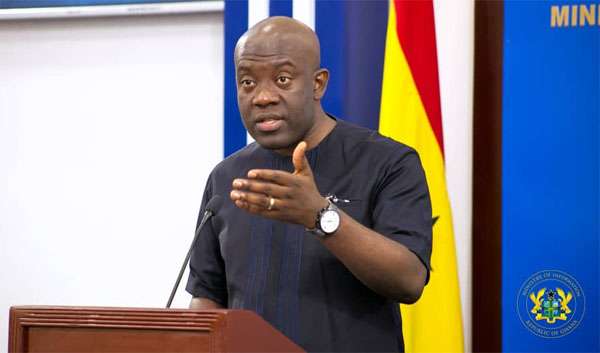
Kojo Oppong Nkrumah, the Minister of Information, has assured Ghanaians that securing the International Monetary Fund (IMF) deal is not the only resolution to dealing with the current economic challenges.
The government has since July last year, engaged the fund for a $3 billion rescue to assist rebuild the economy. In addition to this, government has rolled out policies and programmes aimed at restoring macroeconomic stability and debt sustainability.
Players in the industry have consistently voiced their ideas about how the government should help Ghanaians get relief. Providing an update on the engagement with the IMF thus far, Minister of Information, Kojo Oppong Nkrumah, said government is optimistic of overcoming present difficulties.
“The Government of Ghana has had an enhanced programme which has been designed to help us recover from major shocks we are suffering. And to make that programme effectual, we will need some balance of payments support from the IMF.
“And that is what we have been working on, and all indications suggest to us that we should be bringing that to a closure pretty soon. But that is not all the panacea to our economic challenges, we have other programmes to help us to bring back growth, help private sector kicking and get cost of living under control.”
Kojo Oppong Nkrumah
President Nana Addo Dankwa Akufo-Addo on May 2 courted the support of Japan to help Ghana reach an agreement with the International Monetary Fund (IMF) Board for the 3 billion dollar balance of payment support.
President Nana Addo Danka Akufo-Addo having a conversation at the Jubilee House with Fumio Kishida, the Japanese Prime Minister, sought the help of Japan; which is a member of the Paris Club, to play a major role in helping Ghana secure the deal with the IMF. He exclaimed that Ghana will repay whatever help that is gotten from Japan in securing the deal.
“Ghana is also counting on the support of Japan in reaching a favourable agreement with the International Monetary Fund which will pave the way for the robust recovery of Ghana’s economy.”
Nana Addo Dankwa Akufo-Addo
Right To Information Secretariat Receives Over 1000 Information Requests
Kojo Oppong Nkrumah disclosed that the Right to Information Secretariat (RTI) has so far received a total of 1,053 information requests, out of which 838 have been granted.
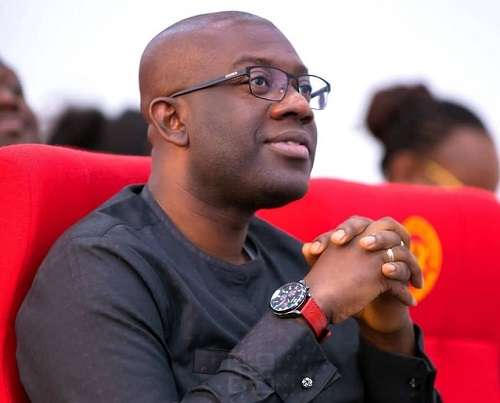
Despite the countless trials met in the execution of duties, Oppong Nkrumah stated that the Secretariat tries its best to provide service to the public.
“We have received 1,053 information requests, and we have granted 838 of them, that is about 80 percent of all the requests that have come through. The other 20 percent are in other categories. Some have been rejected based on the law. There are those that have been deferred or transferred to other institutions, based on what the law says.”
Kojo Oppong Nkrumah
The Minister of Information indicated that the Secretariat has units properly stationed in all parts of the country to enable it serve the public with information.
He however stressed the demand for information is the challenge, however, the Secretariat will “continue to engage in public education to help the demand side because once people know how the law works, then they are better able to apply the law in their search for information and I think that gives a fair sense of how we are doing in implementing this law. The majority of the requests have come from journalists, followed by civil society groups and then a bit of academia, and then individuals also coming through [with requests].”
The RTI Bill was first drafted in 1999, and reviewed in 2003, 2005, and 2007 but was only presented to Parliament in 2010. It was brought back to the Sixth Parliament but could not be passed till the expiration of that Parliament on January 6, 2016, and was eventually passed in May 2019.
READ ALSO: NDC Primaries: Prof Kwaku Asare Seeks For Court To Set A Date That Does Not Disrupt Set Procedures