Tag: Springfield

  • Government Urges to Be Given “Benefit of the Doubt” in Springfield Engagement

    Government Urges to Be Given “Benefit of the Doubt” in Springfield Engagement

    Ghana’s debate over the potential acquisition of Springfield Exploration and Production Limited’s stake in the West Cape Three Points Block 2 (WCTP2) has intensified, prompting a senior official at the Ministry of Energy and Green Transition to urge Civil Society Organisations (CSOs) to remain measured as the government proceeds with its technical and commercial evaluation.

    Dr. Yussif Sulemana, Technical Advisor and Focal Point for the Second Gas Processing Plant, says the government should be trusted to carry out a rigorous, expert-led assessment of the block before taking any irreversible decisions.

    His comments come amid concerns raised by the Africa Centre for Energy Policy (ACEP), which has criticised the government’s intentions regarding the Springfield stake.

    Dr. Sulemana emphasised that the administration is not recklessly pursuing the asset but is instead subjecting the WCTP2 field to strict technical scrutiny. “We already have a field that has been derisked to some extent,” he explained.

    “When I say derisked, it means they have gotten to the stage where if the volume they are talking about is actually proven, that is what we have in place, it will change the fortunes.

    “Government is not just moving to acquire that asset; we should give the current administration the benefit of the doubt.”

    Dr. Yussif Sulemana, Technical Advisor to Ghana’s Ministry of Energy and Green Transition

    Dr. Sulemana stressed that this engagement marks the first time the government has promised to bring in an independent expert with a proven track record to examine all available subsurface and commercial data.

    “This is the first time they promised to engage an independent expert with a proven track record to be able to assess available data and even go further.

    “If it is proven that it is nothing to write home about, I think the government will just walk away from it.”

    Dr. Yussif Sulemana, Technical Advisor to Ghana’s Ministry of Energy and Green Transition

    Independence and Data Integrity Will Guide the Process

    According to Dr. Sulemana, a full verification of data submitted by Springfield and other stakeholders will be crucial. He reiterated that the government will not rely solely on Springfield’s earlier technical submissions, which have previously been the subject of contestation during unitisation discussions.

    “This boils down to the fact that we need an independent person with a proven track record.

    “At the end of the day, if Petroleum Commission comes to the data that it might be doubtful with the other party, which is Springfield, we are not going to use only Springfield data. Of course, that data was already contested.”

    Dr. Yussif Sulemana, Technical Advisor to Ghana’s Ministry of Energy and Green Transition

    He added that the expert review could include drilling new wells or acquiring additional seismic data should that be required to establish the reservoir potential.

    “If it requires drilling to acquire further data to prove beyond reasonable doubt, technically, that the field is what it is, then the government can move on.”

    Dr. Yussif Sulemana, Technical Advisor to Ghana’s Ministry of Energy and Green Transition

    Dr. Sulemana was optimistic about the potential national benefits if the field’s estimated resources are confirmed through independent assessment. He suggested that WCTP2 could become one of the most significant additions to Ghana’s petroleum portfolio in recent years.

    “It will be very huge. For instance, the last analysis they did, the oil in place is over 1.5 billion; of course, we are going to test to make sure it is true.

    “We are talking of gas over a trillion. This is huge…I can tell you it is going to change the fortunes of Ghana.”

    Dr. Yussif Sulemana, Technical Advisor to Ghana’s Ministry of Energy and Green Transition

    His remarks underscore the high-stakes nature of the government’s decision, as Ghana grapples with declining production from mature fields and tightening petroleum revenues.

    CSO Pushback and Government Response

    The debate intensified after the Africa Centre for Energy Policy (ACEP) criticised the government’s plan to pursue Springfield’s stake, warning of potential risks to transparency and fiscal responsibility. ACEP has questioned the clarity of the process and urged caution in any state-led acquisition.

    Dr. Sulemana, however, argued that the government’s planned use of independent experts should help address such concerns.

    He maintained that the administration’s approach prioritises national interest, adding that officials will not hesitate to abandon the engagement if evidence shows that the acquisition would not benefit Ghana.

    “If it is established that the arrangement is not in the interests of the country, government will walk away.”

    As Ghana’s oil output continues to decline, industry experts see the fate of WCTP2 as an important test of the country’s strategy to secure future production, attract new investment, and strengthen energy security.

    Dr. Sulemana’s statements suggest that the government is positioning itself to balance commercial prudence with strategic ambition, seeking to unlock new reserves while addressing long-standing concerns around transparency and technical rigour.

    The coming months, during which independent experts are expected to analyse the data, are set to determine whether WCTP2 becomes a major pillar of Ghana’s petroleum future or another cautionary tale in the evolving dynamics of the country’s upstream industry.

  • Afina Block Could Be ‘Worthless’ — IMANI Warns Government Against Rushed Acquisition

    Afina Block Could Be ‘Worthless’ — IMANI Warns Government Against Rushed Acquisition

    IMANI Centre for Policy and Education has urged the Government of Ghana to halt any move toward acquiring Springfield Exploration and Production Limited’s Afina oil discovery, warning that such a transaction—without thorough, regulator-supervised appraisal—could expose the state to severe financial, technical, and governance risks.

    In a detailed analysis of the ongoing discussions surrounding the Afina block, IMANI insisted that the only credible first step is to “design, fund, and execute a robust appraisal program to gather rigorous data,” cautioning that anything short of this would amount to gambling with the public purse.

    The think tank’s concerns come in the wake of renewed national debate after indications that government is considering an outright purchase of the Afina asset.

    This shift follows the February 2025 announcement by the Minister for Energy, John Jinapor, confirming Ghana’s withdrawal from the controversial forced unitisation directive issued in April 2020 by the previous administration.

    That directive had sought to merge ENI and Vitol’s producing Sankofa field—developed at nearly US$7 billion—with Springfield’s unproven Afina discovery and transfer majority ownership of the combined field to Springfield.

    IMANI described the earlier directive as “plainly absurd,” praising the new minister for rejecting a policy that they argue would have undermined investor confidence and exposed Ghana to legal and financial vulnerabilities.

    However, the organisation now fears that the government may bend to pressure from “powerful people who held sway over the previous administration,” whose lobbying efforts, IMANI says, are aimed at keeping alive the same flawed commercial logic behind the forced unitisation.

    According to the think tank, early signals that the state may be exploring a full acquisition of Afina “worry us because it could open the door for a capitulation to lobbyists and backroom dealers.”

    “Afina remains a high-uncertainty asset. It is essentially a one-well discovery with long-delayed appraisal, fragmented testing history, and contested resource estimates.

    “The absence of consistent, transparent, regulator-validated data makes any attempt to fix a reliable commercial value inherently speculative and vulnerable to political influence”.

    IMANI Centre for Policy and Education

    Unvalidated Claims

    According to IMANI, Springfield’s earlier claim of more than one billion barrels of recoverable oil has never been validated through a comprehensive appraisal program overseen by the Petroleum Commission.

    Franklin Cudjoe, Founding President of IMANI Centre for Policy and Education
    Franklin Cudjoe, Founding President of IMANI Centre for Policy and Education

    Instead, there are “contradictory interpretations” from ENI, GNPC, and independent analysts, all suggesting that technical ambiguity remains deep—and unresolved. “In simple terms, the block could be worthless,” IMANI cautioned.

    The organisation stressed that meaningful assessment of Afina’s commercial viability cannot rely on Springfield’s own data. IMANI rejected as “untenable” the minister’s suggestion that a review of Springfield’s data could form the basis for a possible acquisition.

    “Determining the commercial viability of the block would likely involve significant new investment under an arrangement controlled by the government as a lender.

    “GNPC’s exploration of a state-led acquisition based on limited data collected by Springfield risks converting private corporate risk into public fiscal liability”.

    IMANI Centre for Policy and Education

    Springfield’s Financial Challenges

    IMANI also highlighted Springfield’s financial challenges—its debt exposure and legal dispute with Swiss commodities trader Petraco—as cautionary signals. The company that drilled the only well in the Afina block, the organisation noted, has already won arbitration proceedings against Springfield due to non-payment of its drilling bills.

    These issues, IMANI suggested, call into question what “serious investments” Springfield has made in Afina and why it should hold leverage in dictating commercial terms.

    Public assurances from GNPC that it did not endorse an earlier US$700 million valuation of Afina provided minimal comfort to IMANI, which argued that the broader valuation environment remains compromised as long as it depends on data filtered by Springfield.

    According to the think tank, analysts have consistently warned that Afina’s commerciality remains unproven and that previous valuation estimates reflected “optimism bias and weak regulatory oversight.

    The organisation acknowledged that the government’s evolving stance under Minister Jinapor reflects “greater restraint and technical caution,” particularly his commitment to securing an independent expert valuation before taking any further steps.

    However, IMANI stressed that independence alone is insufficient: “There has simply not been sufficient appraisal to collect enough serious data for any valuer to work with.”

    Funding Through Convertible Loan

    In outlining a safer alternative approach, IMANI argued that Ghana already holds equity in the Afina block through Explorco and GNPC and could therefore provide funding to support additional appraisal activities without pursuing an outright acquisition.

    Such funding, they recommended, could take the form of a convertible loan, giving the state the option to secure additional equity—possibly a controlling stake—once the asset is de-risked, while compelling Springfield to bring in viable commercial partners. If Springfield is unable to do so, IMANI noted, it would indicate the block’s lack of commercial prospects.

    For IMANI, the governance and regulatory framework around Afina is just as important as its geotechnical uncertainties. The think tank insisted that civil society must have “a full seat at the table” in designing and supervising the appraisal and valuation processes to restore public confidence, given the opaque history of the Afina block.

    They emphasised that GNPC faces a “structural conflict of interest” and cannot serve simultaneously as buyer, technical assessor, and quasi-regulator. The Petroleum Commission, IMANI argued, must assert its role as the primary technical authority, with unrestricted access to raw data and insulation from political interference.

    The organisation also warned that Ghana’s current macroeconomic context—marked by debt restructuring, fiscal consolidation, and compliance with IMF benchmarks—renders any large upstream acquisition “particularly risky and unwise.”

    IMANI cautioned that diverting scarce capital into a high-uncertainty asset like Afina could crowd out more economically sound investments, including those in proven gas infrastructure and other critical energy projects.

    Minister for Energy and Green Transition, Hon. John Abdulai Jinapor
    Minister for Energy and Green Transition, Hon. John Abdulai Jinapor

    Drawing parallels with global experiences, IMANI pointed to best practices in countries such as Norway, the UK, and Canada, where unitisation and asset transfers rely on transparent data-sharing and strong regulatory independence.

    The organisation contrasted this with cautionary examples from Brazil and Nigeria, where state oil companies were saddled with politically driven acquisitions that ultimately led to inefficiency, corruption risks, and value destruction.

    IMANI concluded that any state acquisition of Afina must be treated as a last resort and must be rigorously safeguarded: it should be ring-fenced from non-Afina liabilities, backed by double-blind technical reviews, and subjected to parliamentary and civil society scrutiny before approval.

    “But even these safeguards are not the first step. The first step is to design, fund, and execute a robust appraisal program.”

    IMANI Centre for Policy and Education

    Anything less, the think tank warned, would reward weak corporate governance, shift speculative private risk onto the taxpayer, and set a dangerous precedent for distressed oil companies to seek state bailouts disguised as strategic national interests.

    For IMANI, the Afina controversy is not simply about petroleum—it is a test of Ghana’s commitment to prudent governance and protection of the public purse.

  • ACEP Clarifies Concerns Over Government’s Possible Acquisition of Springfield Block

    ACEP Clarifies Concerns Over Government’s Possible Acquisition of Springfield Block

    The Africa Centre for Energy Policy has offered a detailed explanation of its concerns regarding government’s intention to acquire Springfield Exploration and Production Limited’s interest in the West Cape Three Points Block 2.

    ACEP’s Executive Director, Benjamin Boakye, says his position is not rooted in resistance to indigenous participation, but in the need for clear legal boundaries and sound regulatory practice.

    He argued that the concern lies elsewhere and centres on what the law permits when a private company incurs losses in a risky venture.

    “No law allows the state to absorb private sector losses, whether local or foreign, especially when the evidence shows the venture is risky and likely to cost the country.”

    Benjamin Boakye, ACEP’s Executive Director

    Benjamin Boakye, explained that the think tank has maintained a constructive relationship with the Minister of Energy and Green Transition and has observed noticeable improvements in policy coordination during his tenure.

    Although the organisation recognises the Minister’s record, its reservations about the planned acquisition remain firm.

    He noted that “we have had open and honest engagement with him since he assumed office” and added that the institution’s influence on policy has grown in the past year.

    He recalled that the Minister and the Minister of Finance trusted ACEP to lead negotiations with Independent Power Producers, a process that produced savings of about two hundred and fifty million dollars on the country’s existing debt and more than seven billion dollars across the full life of the revised agreements.

    Questions Over Regulator Oversight

    A key part of ACEP’s argument involves the ongoing technical work of the Petroleum Commission.

    The think tank considers the Commission the legally mandated independent body with a long institutional history.

    “The Petroleum Commission is the legally mandated independent regulator with more than a decade of institutional history.

    “If the government doubts its independence, or the Commission itself cannot assert it, then we have a much bigger governance problem.”

    Benjamin Boakye, ACEP’s Executive Director

    He explained that the Commission has indicated more than once that Springfield has not submitted complete raw data for a proper assessment of the field.

    He stressed that “if the regulator is not satisfied, its evaluation remains inconclusive. Full stop.” The appropriate course, he said, was to allow the Commission to deliver its conclusion, which the industry could then examine, accept or challenge.

    He warned that permitting a private company to bypass an incomplete regulatory process because it dislikes the likely outcome would weaken the broader oversight structure that governs the petroleum sector.

    He said that doing so would “undermine the entire regulatory ecosystem and weaken the authority of the Commission over all sector players.”

    Calls for Completion of the Regulatory Process

    The think tank maintains that the path forward is straightforward.

    “Bring in a new consultant, paid with state funds before the regulator completes its job, weakens institutional control and undermines the state’s ability to manage the petroleum sector.”

    Benjamin Boakye, ACEP’s Executive Director

    At present, he noted that every analysis available, apart from those of Springfield and GNPC, contradicts the claim that the block is commercially viable.

    He concluded that the most responsible next step is to allow the regulator to finish its work.

    “The solution is simple: give the regulator full access to the raw data and allow it to finish its work.

    “If any party disagrees, the remedies lie in law, not political shortcuts.”

    Benjamin Boakye, ACEP’s Executive Director

    ACEP’s latest statement adds to the growing scrutiny around the proposed acquisition and places renewed attention on regulatory procedure, governance standards and the need for evidence-based decision making in the management of Ghana’s upstream assets.

  • ACEP Warns Against GNPC Takeover of Springfield Asset

    ACEP Warns Against GNPC Takeover of Springfield Asset

    The Africa Centre for Energy Policy (ACEP) has issued a sharp warning against any move by the state to acquire the oil asset belonging to Springfield Exploration and Production Limited.

    The organisation argues that the proposal places undue financial risk on the public purse and ignores the fundamentals of Ghana’s petroleum contracting framework.

    ACEP’s Executive Director, Ben Boakye, said an objective review of the facts pointed to a troubling attempt to shift private losses onto the state.

    He noted that the petroleum agreement under which Springfield held its block required the contractor to carry all exploration and appraisal risks.

    According to him, the rules are clear that “the oil block belongs to the state. Contractors are supposed to take the risk and share benefits only when they succeed.”

    Mr Boakye stressed that when a contractor falls short of its obligations, the remedy is not for the nation to step in as a financial backstop.

    He explained that “when contractors fail, the state’s duty is to reclaim its asset, not underwrite the losses of private companies.” This, he said, is essential for maintaining discipline in the upstream regime and ensuring fairness for all industry players.

    Concerns Over GNPC and Explorco Engagements

    Central to ACEP’s concern is the revelation that the Ghana National Petroleum Corporation (GNPC) and its subsidiary, Explorco, are holding what has been described as “constructive discussions” with Springfield on a possible takeover.

    Mr Boakye questioned the motive and judgement behind such talks, describing them as a worrying signal of institutional vulnerability.

    “The claim that GNPC and Explorco are engaging Springfield in constructive discussions on a possible takeover is even more troubling.

    “Both entities know the facts too well, but their track record undermines their credibility.”

    ACEP’s Executive Director, Ben Boakye

    He argued that the situation exposes deeper issues within Ghana’s technical governance space, where some officials operate with dual loyalties. 

    “We often hold politicians accountable, but technical people who moonlight for private interests and advise accordingly get away with it. In this case, GNPC and Explorco top officials are complicit.”

    ACEP’s Executive Director, Ben Boakye

    ACEP’s analysis also highlighted attempts earlier in the year to place a commercial value on the Springfield asset, even though its appraisal data had been widely challenged by regulators.

    Mr Boakye noted that Springfield and some officials of Explorco tried to value the asset between 433 million and 1.1 billion dollars.

    He stated that the parties engaged a reputable consultant to legitimise the exercise but undermined the process through the data they submitted.

    In his words, “they hired a credible consultant, but provided discredited data, in essence to predetermine the outcome of the assignment. Garbage in, garbage out.”

    Mr Boakye emphasised that the Petroleum Commission, Ghana’s upstream regulator, had already made its position clear.

    He said the Commission was “unequivocal” in its assessment that Springfield’s appraisal claims were flawed. These findings, he argued, should have settled any question about whether the asset held commercial value warranting a state buyout.

    Call for Contract Enforcement

    ACEP maintains that the solution to Ghana’s challenges in the upstream sector does not lie in acquiring assets that have failed to meet minimum work obligations.

    Instead, the organisation believes the sector requires stronger vigilance and stricter adherence to the terms of petroleum agreements.

    “What Ghana needs is the enforcement of contractual obligations, not the acquisition of non-performing assets.”

    ACEP’s Executive Director, Ben Boakye

    He noted that several oil blocks awarded over the past decade have remained dormant, yet little has been done to ensure compliance or claw back the assets for reassignment.

    Beyond governance concerns, ACEP warned that a takeover of Springfield’s asset would place unnecessary pressure on the national budget at a time when social and economic challenges remain acute.

    Mr Boakye remarked that “there is too much poverty in this country for the state to spend scarce public funds on wasteful, trumped-up ventures.”

    He urged policymakers to reflect carefully on the implications of diverting resources into an asset with contested value.

    The think tank believes the state must demonstrate a firm commitment to safeguarding public interest, particularly in the extractive sector where misjudged decisions can carry long-term financial and operational costs.

    According to ACEP, the prudent path lies in withdrawing the asset from Springfield and making it available to companies capable of meeting Ghana’s regulatory and technical expectations.

  • Ghana’s Oil Policy Shift Alters ENI, Springfield Unitisation 

    Ghana’s Oil Policy Shift Alters ENI, Springfield Unitisation 

    As Ghana’s oil and gas sector continues to evolve, recent policy decisions have introduced both challenges and opportunities for industry players.  

    A key development is the government’s withdrawal of the Unitisation Directives concerning Italian energy giant ENI and Ghanaian-owned Springfield, a move that could reshape the operational framework for exploration and production in the country. 

    The decision, which reverses an earlier directive that sought to merge the Sankofa and Afina fields due to perceived reservoir connectivity, signals a major shift in regulatory policy.  

    This change has sparked debate among stakeholders, with concerns ranging from its impact on Ghana’s petroleum output to broader implications for investor confidence and sectoral governance. 

    In an interview with Vaultz News, Joshua Batsa Narh, the Executive Chairman of the Energy Chamber Ghana and Director at Wingfield Group noted that the withdrawal has significant consequences for both ENI and Springfield

    The withdrawal of the Unitisation Directives removes the previously mandated coordination between ENI and Springfield over shared oil reservoirs, a move that could significantly alter each company’s operational strategy.  

    According to Mr. Narh, this policy shift creates both opportunities and risks for the companies involved. For ENI, the immediate advantage lies in “operational autonomy,” he explained.  

    “ENI may accelerate its development plans without the delays caused by the need for coordination, leveraging its substantial technical expertise and financial resources to optimize its acreage.”  

    Joshua Batsa Narh, Executive Chairman of the Energy Chamber Ghana and Director at Wingfield Group

    This could translate into “faster project execution and cost efficiencies” as the company is no longer required to align with another firm’s strategies. 

    However, this newfound autonomy comes with risks. Mr. Narh warned that if the reservoirs in question are interconnected, ENI might “prioritize rapid extraction to secure market share, risking suboptimal recovery rates or reservoir pressure issues.”  

    These potential downsides could undermine the long-term sustainability of production, with production volumes suffering from inefficient reservoir management. 

    On the other hand, Springfield, which loses access to ENI’s technical expertise and infrastructure, faces its own set of challenges. Mr. Narh points out that “resource constraints” will likely slow Springfield’s development.  

    The company will be forced to rely on limited local capacity or seek new partners to fill the gap left by ENI’s absence.  

    Additionally, Springfield will likely face “financial pressures,” Mr. Narh noted, as the company now has to manage operations independently, likely requiring external financing to avoid stalling projects. 

    Long-Term Implications  

    ENI-Springfield Unitization
    ENI-Springfield Unitization

    Looking beyond the immediate effects, the withdrawal of the Unitisation Directives introduces complex long-term challenges for both companies. 

    For ENI, Mr. Narh identified several “reservoir management risks,” particularly the potential for competing operations.  

    The lack of collaboration between ENI and Springfield Mr. Narh noted could lead to “inefficient recovery, reduced field longevity, and technical challenges such as pressure depletion.”  

    These issues could impact long-term profitability if not managed correctly, as the company may be forced to compromise on operational efficiency to maximize short-term extraction goals. 

    Further complicating matters, Mr. Narh pointed out the potential “reputational and regulatory risks.”  

    If ENI’s independent operations result in environmental harm or disputes over resource rights, the company could face serious backlash, undermining its social license to operate in Ghana.  

    “Investor confidence could also erode if such issues arise, making it more challenging for ENI to secure future investments in the country.” 

    Joshua Batsa Narh, Executive Chairman of the Energy Chamber Ghana and Director at Wingfield Group

    On the flip side, ENI may seek to solidify its position in Ghana’s oil and gas sector. The flexibility granted by the policy shift could enable ENI to “consolidate its foothold in Ghana” and possibly expand its assets should the regulatory environment stabilize. 

    For Springfield, the long-term prospects are more mixed. While the company may benefit from “local capacity building,” Mr. Narh arguet that “long-term independence could drive Springfield to develop indigenous technical expertise,” aligning with Ghana’s local content goals.  

    This could be a significant boon for the country’s broader energy sector, as Springfield’s growth could foster the development of local skills and capabilities in oil and gas production. 

    Nevertheless, Springfield faces challenges related to “partnership opportunities.” While the company might attract smaller investors or regional players, the absence of major international partners could hinder scalability, particularly given the capital-intensive nature of oil exploration and production.  

    “Without the support of a larger partner like ENI, Springfield may struggle to scale its operations effectively.” 

    Joshua Batsa Narh, Executive Chairman of the Energy Chamber Ghana and Director at Wingfield Group

    Broader Industry Considerations 

    Beyond the immediate and long-term effects on ENI and Springfield, the broader oil and gas sector in Ghana must also consider the regulatory and competitive dynamics at play.  

    Mr. Narh stressed the importance of “resource governance,” pointing out that Ghana’s regulatory framework must find a balance between granting operational autonomy to companies while safeguarding against the “tragedy of the commons.”  

    This concept refers to the over-exploitation of shared resources, a risk heightened by the withdrawal of the Unitisation Directives. Without proper regulation, companies could prioritize short-term profits over long-term sustainability, undermining the country’s oil reserves. 

    Investor sentiment is another critical factor in the aftermath of this policy shift. While some investors may welcome the “reduced bureaucratic hurdles,” Mr. Narh cautioned that policy volatility could deter risk-averse investors.  

    The need for “clarity in future regulations” is vital to ensure the continued inflow of capital into Ghana’s oil and gas sector. 

    Moreover, Mr. Narh acknowledged the “competitive dynamics” that may arise between companies in the sector.  

    While rivalry could spur innovation, there is also a risk of redundant infrastructure and “fragmented resource management.” This could lead to inefficiencies in the sector, undermining the overall productivity of Ghana’s oil and gas industry. 

    Stakeholder Dialogues in Policy-Making 

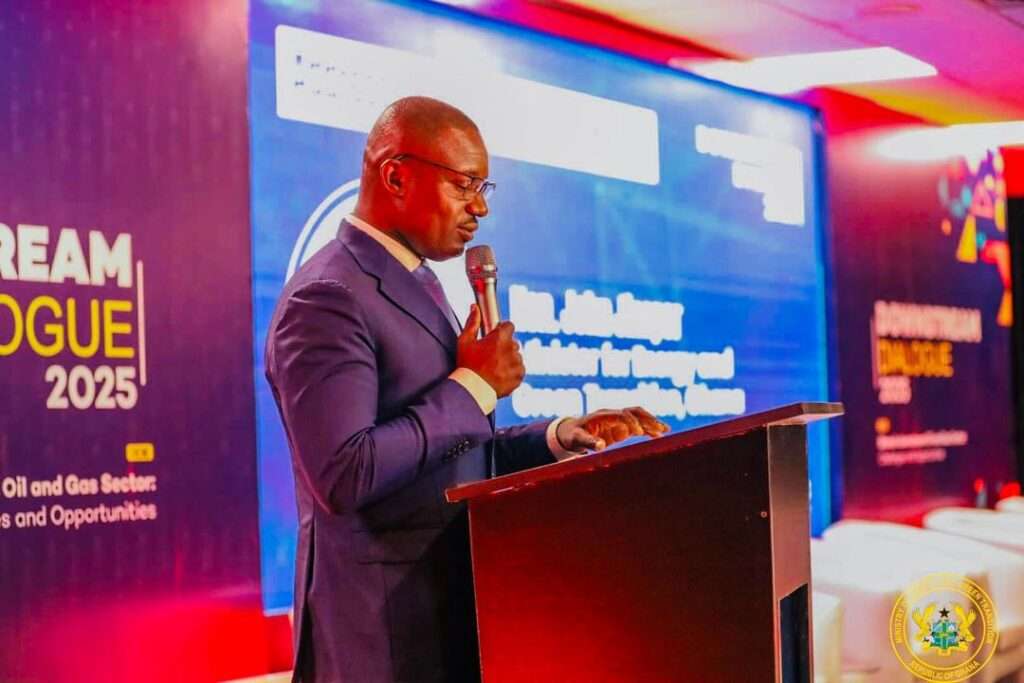
    Hon. John Jinapor, Minister of Energy and Green Transition
    Hon. John Jinapor, Minister of Energy and Green Transition

    In light of the significant policy shift, Joshua Batsa Narh emphasized the importance of stakeholder dialogues in shaping effective oil and gas policies.  

    “Stakeholder dialogues are a cornerstone of effective policy-making.

    “They ensure that technical, economic, and social priorities are balanced, fostering trust and alignment among all parties involved.” 

    Joshua Batsa Narh, Executive Chairman of the Energy Chamber Ghana and Director at Wingfield Group

    Ghana’s withdrawal of the Unitization Directives, following extensive consultations with industry players, is an example of how such dialogues can influence policy decisions.  

    According to Mr. Narh, “industry players like ENI and Springfield possess critical technical expertise,” and consultations help ensure that policies align with operational realities, avoiding unworkable mandates. 

    To enhance engagement with government bodies, Mr. Narh recommended a proactive approach by companies. “Move beyond crisis-driven interactions,” he advises.  

    Companies should establish regular technical workshops, joint committees, and policy feedback loops to maintain an ongoing dialogue with regulators. Additionally, “investing in long-term relationships” with government entities is crucial for building trust and fostering collaboration. 

    As industry players adjust their strategies in response to the policy change, both opportunities and challenges lie ahead.  

    For ENI, the decision offers operational flexibility but comes with risks related to resource management and regulatory uncertainty.  

    For Springfield, the shift presents an opportunity for local capacity building, but the company must navigate financial pressures and potential scalability challenges.  

    As Ghana’s energy landscape continues to evolve, effective stakeholder dialogues and a clear regulatory framework will be key to ensuring the sector’s long-term success. 

  • Bright Simons Questions Springfield’s Bold Afina Oil Claims 

    Bright Simons Questions Springfield’s Bold Afina Oil Claims 

    Bright Simons, the renowned policy analyst and Honorary Vice President of the IMANI Centre for Policy and Education, has brought renewed attention to the long-standing contentious issue surrounding Springfield’s Afina oil find.  

    In a recent statement, Simons outlined critical technical, economic, and regulatory concerns that have kept the project embroiled in uncertainty.  

    “Afina is next door to already producing fields developed by 2 European companies, Eni & Vitol, at a cost of ~$6bn, funded partly with World Bank guarantees. Ghana itself has some liability exposure through letters of credit.” 

    Bright Simons, Renowned Policy Analyst and Honorary Vice President IMANI Centre Policy and Education

    Bright Simons revealed that the outgoing government attempted to force a merger between Springfield’s Afina block and the combined Sankofa – Gye Nyame field owned by Eni-Vitol.  

    This move was controversial as it would have given 55% of the combined area to Springfield, despite the fact that Afina had not yet proven commercially viable. 

    “This bizarre decision came before Springfield had even proved there was enough oil in it find to be commercially viable.

    “The matter went to international arbitration and the government was told to stop joking and get Springfield to do what it has to do.” 

    Bright Simons, Renowned Policy Analyst and Honorary Vice President IMANI Centre Policy and Education

    Late last month, Springfield announced completion of Afina’s appraisal. In a significant public relations campaign, the company projected future production output figures that have drawn criticism from experts: 

    “In a massive PR binge it projected a future production output of 12,000 barrels of oil a day (bopd) for the single well and 50,000 bopd for the entire field,” Simons stated. “To appreciate these figures, note that Ghana produces ~130,000 bopd today.” 

    However, Bright Simons highlighted substantial discrepancies and gaps in Springfield’s claims. According to him, the company’s appraisal well flowed at a maximum rate of 4,500 bopd, a figure significantly below the projected 12,000 bopd.  

    Notably, this higher estimate was based on a mini-drill stem test (mini-DST), which is considered a less rigorous method for estimating production potential compared to the industry-standard techniques used in Ghana’s larger fields. 

    Calls for Improved Transparency and Technical Guidance 

    Industry experts point out that re-entering an appraisal well for flow tests is only the beginning of any serious appraisal program. Unless the initial well proves exceptionally prolific, further drilling may be necessary to confirm field projections. 

    “IMANI and ACEP have blamed GNPC for much of this confusion. It should become the professional national oil company it was meant to be and provide proper technical guidance to all stakeholders.” 

    Bright Simons, Renowned Policy Analyst and Honorary Vice President IMANI Centre Policy and Education

    The lack of technical information provided by Springfield to regulatory bodies has also raised concerns. According to sources, Ghana’s petroleum regulators have not been supplied with any technical information regarding the Afina project. 

    “This lack of transparency and the questionable nature of the production projections raise serious questions about the validity of Springfield’s claims and the potential impact on Ghana’s oil industry,” Simons concluded. 

    The Springfield oil find saga reflects both the opportunities and challenges of Ghana’s oil sector. While the potential of Afina remains uncertain, it has exposed critical gaps in governance and regulatory oversight.  

    As Bright Simons aptly noted, the path forward requires technical rigor, transparency, and a commitment to professional management. Without these, Ghana risks squandering its oil potential and damaging its reputation as an attractive destination for energy investments. 

  • Dragging Eni/Springfield Unitisation Deadlock into 2022 Unfortunate- Petroleum Expert

    Dragging Eni/Springfield Unitisation Deadlock into 2022 Unfortunate- Petroleum Expert

    Dr Yusif Sulemana, a petroleum expert and senior oil production specialist at the Petroleum Development of Oman, has described as unfortunate the drag in the unitisation deadlock between Eni and Springfield into 2022, indicating that while in-depth dialogue is needed, that is not enough to put the issue to rest but credible data remains the panacea.

    Both parties have taken on extreme postures; while Eni believes the two fields are not straddling, Springfield believes otherwise. Although some field data has been provided by Springfield, that has not yielded any positive results. It has been ‘stubbornly’ difficult to get a credible third-party assessment of the unitisation of the Afina and Sankofa fields.

    Indeed, negotiations are far advanced and the President of the Republic has indicated willingness to ensure that the supposed unitisation impasse is resolved. However, this appears not to have materialized and is expected to drag into the coming year.

    The proposed unitisation between Eni and Springfield Group is the second unitisation in the last five years of commercial production of oil in the country. In 2017, Kosmos Energy and Tullow Oil plc engaged in the unitisation of the Jubilee field but the processes involved did not escalate into an Eni/Springfield styled impasse.

    Then, the unitisation cost of about US$1.9 million was agreed upon to integrate the Teak, Hyedua and Mahogany discoveries into the Jubilee field’s production and floating vessel in order to extend the field’s lifespan and increase its commercial reserves.

    In fact, no one ever thought the proposed unitisation impasse would go as far as into its second year since the unitisation directive was issued in April 2020 by the then Minister of Energy including the multiple court issues witnessed in the past year.

    Provide Static and Dynamic Data to Solve Unitisation Deadlock

    According to Dr Sulemana, ample data should be sought after by both parties and as the data justifies the need for unitisation or not, that would help in the agreement, he said. Indicatively, on account of data, two things must be done: “a static data and a dynamic data”.

    “A seismic data has to be available to actually prove that these two reservoirs are connected but that may not be enough. Yet still, the fact of making this data available does not guarantee that the two fields are straddling. Because sometimes, some reservoirs are connected but there is no migration of fluid between the concession areas, that’s how critical unitising situations are. So, it is possible that a seismic data on the surface could show that the two blocks are connected, it is also possible that internally or downward the two fields are not communicating.

    “Secondly, we need to do fluid migration test which is classified as a dynamic data. In that case, we need to drill a well along the boundaries, especially at Springfield’s side. We need to drill the well, complete it and run a gauge through the well, monitor and potentially contract an independent party to also monitor; this could go a long way to bring matters to a rest.

    “Unitisation and court issues is not a good thing and I just would have wished that this issue was solved out of court. However, where it has reached, it is almost clear that the waters are getting muddied and if care is not taken it would impact both parties and at the end of the day Ghana would be the loser.”

    Dr Sulemana, Petroleum Expert

    Already, the stakes are high, given the fact that investments into the sector is dwindling, with climate change activists ‘spying’ on foreign investors and International Oil Companies (IOCs) to restrain possible investments into the sector.

    Without these steps taken, the coming year may result in another series of court issues or unfortunate incidences of either of the parties opting to exit, which action may also have implications on investor sentiments.

    Government must take these into consideration and help deal with the data issues related with the proposed unitisation. Ghana’s upstream oil and gas industry holds promise for the future, and these situations should not be allowed to mar the good fortunes within the sector.

    READ ALSO: BoG Describes Togbe Afede’s Debt, Interest Rate Analyses as ‘Oversimplification’ of Relationships

  • Eni, Vitol and Springfield Unitisation Impasse Likely to Drag Into 2022

    Eni, Vitol and Springfield Unitisation Impasse Likely to Drag Into 2022

    The ongoing impasse between Eni SpA and Springfield, having dragged for the most part of the year is unlikely to see the dust settle anytime soon, and may linger into 2022 as negotiations between Eni and the government remain inconclusive.

    These negotiations started off following a court directive that required Eni’s grievances are settled out of court, after Eni SpA filed an application to nullify the unitisation directives issued by the Ministry of Energy.

    Both parties- Eni SpA and Springfield have hurled each other to the courts to have the unitisation agreed upon; however, from all indications Eni continues to push against the directive.

    Despite having been awarded exploration and production license on the Tano Basin offshore block in July 2019, ENI and its partner Vitol have had to tussle with Springfield and the Ministry of Energy on the proposed unitisation since 2020.

    It all began in April 2020, when the then Minister of Energy, Mr John Peter Amewu, in accordance with Section 34(1) of the Petroleum (Exploration and Production) Act, 2016 (Act 919), directed ENI and Springfield to execute a unitization with respect to the Sankofa field in the OCTP and Afina discovery in the WCTP contract areas.

    Equity, Key in Unitisation Agreements

    While unitisation has been practised across the world for years, and has been found as a possible means by which oil companies and host countries can maximize the benefits from existing oil fields, the issues transcend just this; equity lies at the heart of the success of unitisation agreements. Concerns raised by Eni SpA have to do with doubts about the credibility of Springfield’s data on its Afina discovery.

    Already, the stakes are high, given the fact that investments into the sector is dwindling, with climate change activists ‘spying’ on foreign investors and IOCs to restrain possible investments into the sector.

    Without managing this situation in the most careful manner, an escalated situation could end up in the oil company exiting the country’s upstream petroleum sector, following Exxon’s exit style. Besides, Eni SpA is named among the list of top five European IOCs having no intentions to develop unsanctioned reserves in the country. And is currently divesting some of its oil businesses into renewables.

    Dr Yusif Sulemana, a Petroleum expert is cited to have said that “there is a greater potential that it could repel investors actually. But it all depends on how we as a nation handle the situation because it is a delicate situation.

    “We have other players who are closely monitoring and government should try and be a referee in this case. The stakes are high in this situation. And so, once the stakes are high everybody will be looking into this situation to see how it’s going to be resolved.”

    Dr Yusif Sulemana,

     It would be regrettable to lose such an oil giant in the country’s upstream oil and gas sector, as that will mean that the country will be left with Tullow Oil Plc as the only dedicated oil giant in the upstream sector.

    Should that happen, this may delay the national oil company’s operatorship role as the nation seeks to ride on the back of existing operators such as Eni SpA, and others to gradually drive this agenda.

    READ ALSO: Ignore Media Publication on GHS241M E-Levy Transaction Services- Ministry of Finance

  • President Akuffo-Addo promises to solve ENI/Springfield dispute amicably

    President Akuffo-Addo promises to solve ENI/Springfield dispute amicably

    The President of the Republic, Nana Addo Dankwa Akuffo-Addo has pledged to provide an amicable solution to Eni Ghana and Springfield’s unitization impasse that has escalated into a series of court arbitrations in the past couple of months.

    This comes at a time when several discussions held to resolve the situation has not yielded the intended outcome— the unitization of the two oil companies on the grounds of neighbouring discoveries located in their contract areas.

    Recent happenings tied to the unitization has seen Eni Ghana go ahead to seek reliefs from the proposed unitization from a London Tribunal. A move which experts have indicated, if not addressed, may put the country in a tight corner­.  

    In the quest to tackle the issues, this has outstretched over a year, yet the government is still insistent on the unitization due to the benefits in it for the country. This includes an estimated US$8 billion that the government can accrue from revenues should both companies agree to unitize.

    Meanwhile, in his request to the President of the Republic, the Paramount Chief of Eastern Nzema Traditional Council, Awulae Amihere Kpanyinli III, called on the President to address the existing issue between the two companies. A request which the President responded positively indicating that he is personally committed to ensuring that the issue is resolved amicably.

    “I am still very upset that matters we have been discussing have become the subject of arbitration with notice of arbitration coming in.”

    President Akuffo-Addo
    President gives assurance to solve the issue

    The President stressed that prior meetings have been held between himself and the parties involved, all geared towards arriving at a common ground to deal with the matter without any litigation.

     “I have had two separate meetings with the key figures involved from our side and on the side of Eni to try and find a common ground that will enable us to deal with this matter without litigation. It hasn’t happened so far.

    “But I want to assure you that we would continue to discuss and find an amicable solution. Therefore, let me say that the request by the President of the Nzemamanle Council, Awulae Amihere Kpanyinli III, is a request that sits very well with me and I will be doing my very best to make sure it happens.”

    President Akuffo-Addo

    The President gave these assurances during a speech at the ‘Ellembelle Business Expo’, to which he was the Special Guest of Honour, under the theme ‘Harnessing Our Investment Opportunities for a Sustainable Job Creation in Ellembelle’.   

    The backdrop to these ensuing events between the two companies began in April 2020. At a time when the then Minister of Energy, Mr John Peter Amewu, in accordance with Section 34(1) of the Petroleum (Exploration and Production) Act, 2016 (Act 919), directed ENI and Springfield to execute a unitization with respect to the Sankofa field in the OCTP and Afina discovery in the WCTP contract areas.

    Although this unitization directive is purported to have been grounded in the fact that the Sankofa Cenomanian Reservoir extends into the WCTP Block 2 contract area, Eni Ghana believes otherwise, thus its current litigation.

    READ ALSO: President announces 1st much-awaited nomination of MMDCEs

  • The Ruling is a welcome Vindication of Springfield’s Position – Springfield CEO

    The Ruling is a welcome Vindication of Springfield’s Position – Springfield CEO

    Kevin Okyere, CEO and founder of Springfield Ghana has described the ruling by Commercial Division of the Accra High Court as a “welcome vindication of Springfield’s position on the issue of unitization and a positive result.”

    According to Mr. Okyere, Springfield is always looking forward to working with Eni as the operator of the unitized field in maximizing the production and the economic benefits for all stakeholders, including the Government and citizens of Ghana.

    The recent ruling forms part of the substantive case involving ENI and Springfield which is currently pending before the Accra High Court. Springfield, which operates the Afina oil field which is near to ENI Sankofa offshore field, had asked the court to preserve revenue from Sankofa until a deal is reached to combine the projects and each gets a share.

    However, the court has ordered that 30% of all revenues accruing to ENI from exploration and production activities from the Sankofa field be preserved in an interest-bearing account until the substantive case is determined.

    The court said its decision would protect the interests of Springfield while allowing Sankofa, which produces over 50,000 barrels of oil per day, to continue operating and cover costs.

    Meanwhile, Kennedy Noonoo, Corporate Affairs Manager of Springfield who was also reacting to the preliminary ruling also stated that “they [Springfield] have welcomed the ruling”. He further suggested that he is confident the final court ruling will allow for effective protection of the geological structure of the greater Sankofa oil field.

    “The ultimate split of the Greater Sankofa field, that is Afina and Sankofa, between ENI and Springfield, has already been decided upon by science. Therefore, the ruling in our opinion is very much welcome. The final court determination will allow the resource owner, Ghana, with the operators in both blocks to protect the integrity of the geological structure.

    We also think the ruling will ensure that the development and management of the Greater Sankofa field are consistent with world-class practices with the ultimate aim of maximization of petroleum extraction.”

    However, when ENI Ghana was contacted for their views on the ruling, they stated that they have taken note of the ruling of the High Court and is waiting to receive the full detailed ruling of the Court and review same in order to establish the impact it could have on their current operations.

    ENI Ghana also added that they “fully expect to take the appropriate steps necessary in order to protect their operations in the country, including appealing against this ruling.”

    ENI has however maintained that further appraisal of Springfield’s Afina field needs to be done to determine its economic viability before a unitization program is embarked upon.

    But according to Springfield, “ENI has not only refused to comply with the unitization order by the then Minister Peter Amewu, but has gone on to produce petroleum from the straddling contract areas which include their Afina field, thereby denying Springfield of enjoying the revenue that will accrue from the production activity,” hence their lawsuit.

    READ ALSO: Competition in Oil Marketing Companies Must Benefit All – Engen Ghana MD