
• About
  • Advertise
  • Privacy Policy
  • Contact
Saturday, May 16, 2026
  • Login
The Vaultz News
  • Top Stories
  • News
    • General News
    • Education
    • Health
    • Opinions
  • Economics
    • Economy
    • Finance
      • Banking
      • Insurance
      • Pension
    • Securities/Markets
  • Business
    • Agribusiness
    • Vaultz Business
    • Extractives/Energy
    • Real Estate
  • World
    • Africa
    • America
    • Europe
    • UK
    • USA
    • Asia
    • Around the Globe
  • Innovation
    • Technology
    • Wheels
  • Entertainment
  • 20MOBPL2DNew
  • Jobs & Scholarships
    • Job Vacancies
    • Scholarships
No Result
View All Result
The Vaultz News
  • Top Stories
  • News
    • General News
    • Education
    • Health
    • Opinions
  • Economics
    • Economy
    • Finance
      • Banking
      • Insurance
      • Pension
    • Securities/Markets
  • Business
    • Agribusiness
    • Vaultz Business
    • Extractives/Energy
    • Real Estate
  • World
    • Africa
    • America
    • Europe
    • UK
    • USA
    • Asia
    • Around the Globe
  • Innovation
    • Technology
    • Wheels
  • Entertainment
  • 20MOBPL2DNew
  • Jobs & Scholarships
    • Job Vacancies
    • Scholarships
No Result
View All Result
The Vaultz News
No Result
View All Result
in Banking

More POS Terminals deployed Amid COVID-19

thevaultzby thevaultz
November 23, 2020
Reading Time: 3 mins read
Financial Inclusion: Are we really creating an enabling environment?

Point of Sales (POS) Terminal

The deployment of Point of Sales (POS) terminals ‘a computerized replacement for a cash register to process debit and credit cards’ has increased to 10,278 in October 2020 from 8,687 in October 2019, reducing frequent visits to the banking hall.

This means a total of 1,591 Point of Sale Terminal have been deployed since October last year, translating into a year-on-year increase of 18.3 percent and implying a rise in the accessibility to cashless modes of payment by customers.

On a monthly basis, the deployment of point of sales terminals also surged marginally by 0.8 percent from 10,195 recorded in the month of September this year.

This is according to the latest summary of financial and economic data released by the Bank of Ghana.

ADVERTISEMENT

In the same vein, 105 additional Automated teller Machines (ATMs) have been distributed since October last year increasing the number of ATMs from 2,117 to 2,222 by the end of October 2020, representing an upsurge of approximately 5 percent yearly, the Bank of Ghana mentioned.

The availability of such payment terminals will probably reduce the number of persons queuing at the banking hall and may go a long way to support the fight against the coronavirus pandemic which hit the shores of Ghana early March this year. This is because with fewer persons, monitoring and ensuring that required safety protocols are observed is easier.

Also, the number of debit cards issued have also shot up to 4.8 million cards in the month of October 2020 as against 4.2 million cards recorded in the same period last year, representing an increase in debit card requests by 14.3 percent on a yearly basis as well as 4.4 percent higher than the total number of 4.6 million debit cards issued in September 2020, the Bank of Ghana revealed.

Likewise, the Bank of Ghana summary of financial and economic data shows that credit cards and prepaid cards surged year-on-year with credit cards rising by 10.4 percent from 29 thousand in October 2019 to settle at 32 thousand in October 2020. Prepaid cards increased sharply by about 58 percent to 540 thousand by the end of October this year from 342 cards issued last year.

Although prepaid cards issued keep increasing every month, credit cards remained unchanged since August this year, the Bank of Ghana remarked.

Cumulatively, an additional 100 thousand persons enrolled on the E-zwich platform from December last year making cumulative enrollment 3.1 million. By the beginning of the third quarter, this hit 3.2 million, representing a marginal upsurge of 3.2 percent and remains unchanged up to the end of October 2020.

Simultaneously, total transactions value for E-zwich also augmented from GHS 602.8 million recorded in October 2019 to 872 million in October 2020, indicating a year-on-year increase of 44.7 percent, the Bank of Ghana added.
BoG rev
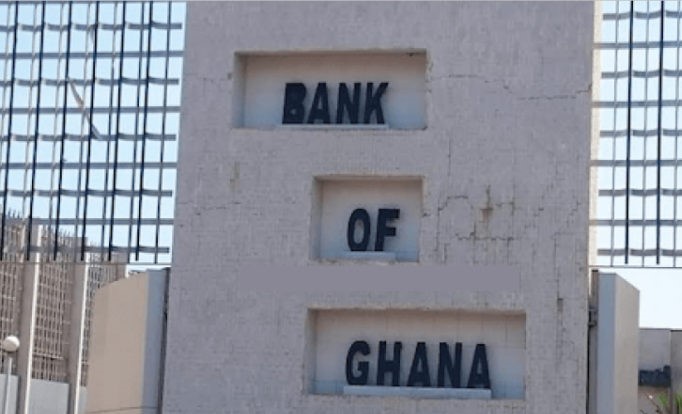
The Bank of Ghana

In contrast, the total number of transactions keep on fluctuating throughout the period under review and has decreased significantly by approximately 88 percent from 1152 thousand recorded in October 2019 to 613 thousand in October 2020.

The Bank of Ghana posits that the Gh-link card has also witnessed a substantial increase of about 26.7 percent in total transactions value rising from GHS 23.6 million recorded in October 2019 and reaching up to GHS 29.9 million by end of October 2020. However, total number of transactions remains at 71 thousand.

ADVERTISEMENT

For Ghipss Instant Pay (GIP), both total transactions value and number escalated. With total transactions value increasing from GHS 236.5 million in October 2019 to a whooping GHS1.07 billion. Similarly, total number of transactions shot up from 310 thousand to 748 thousand in the same period, the Bank of Ghana opined.

Sign Up to Our Newsletter

Fresh updates, Straight to your inbox

Tags: ATMBank of GhanaBanking sectorBanksE-zwichGh-linkGhIPSSPOSprepaid card
Share2Tweet1ShareSendSend
Please login to join discussion
Previous Post

French ex-President Nicolas Sarkozy stands trial for corruption

Next Post

The IMF lends US$16.1 billion to 49 low-income countries as at September 2020

Related Posts

Ghana Defies Odds With Record Financial Growth
Banking

Ghana Defies Odds With Record Financial Growth

May 16, 2026
Fidelity Demands Africa Own Its Digital Future At a time when Africa’s digital economy is accelerating at an unprecedented pace, Fidelity Bank Ghana has delivered one of the strongest messages yet on the continent’s technological future. The bank made a bold and urgent case for Africa to stop depending on foreign controlled digital systems and begin building its own infrastructure capable of retaining value, strengthening currencies, and driving long term economic sovereignty. As one of the key sponsors of the 3i Africa summit, Fidelity Bank did not just show up to participate. It arrived with a message that resonated deeply across conference halls and policy discussions. Fidelity Bank emerged as one of the loudest voices championing a future where African nations control the very digital rails that power their economies. Digital Infrastructure Is The New Economic Power One of the defining moments of the summit came during a high level panel discussion on digital public infrastructure, where Adeline Aryee delivered a statement that immediately captured the attention of participants. She declared that if Africa builds its own digital rails, it naturally retains the value created by those systems. Her message was clear and uncompromising. In previous decades, national infrastructure was measured by roads, bridges, ports, and airports. Today, the true engines of economic power are payment platforms, identity systems, financial technology ecosystems, and digital marketplaces. According to Aryee, digital public infrastructure is no longer a luxury. It is now a strategic national asset. Her remarks struck at the heart of one of Africa’s most pressing economic concerns. Despite growing digital adoption, many transactions across the continent still pass through foreign payment systems, resulting in value leakage and continued pressure on local currencies. Ghana’s Success Story Becomes A Continental Blueprint Aryee highlighted Ghana’s progress in financial inclusion, mobile payments, and digital banking, describing the country as an emerging model for other African economies. Over the years, Ghana has invested heavily in domestic payment systems such as GhIPSS and its flagship platform, Gh-link. These systems have significantly expanded access to financial services while promoting digital transactions across urban and rural communities. Yet Aryee argued that inclusion alone is no longer enough. The next chapter for Africa, she insisted, must focus on ownership. She questioned why local transactions continue to depend on foreign rails when domestic infrastructure already exists. According to her, such dependence creates unnecessary external exposure and limits the continent’s ability to fully capture the economic benefits of its growing digital market. Her comments triggered intense debate among summit participants, many of whom acknowledged the urgent need for policy reforms and infrastructure investments. Market Driven Innovation Takes Center Stage Beyond infrastructure, Fidelity Bank also made a strong case for innovation that begins with real market needs. During the Ecosystem Roundtable on platforms, talent, and digital markets, Prince Osei Hyeaman-Addai shared insights from the bank’s years of digital financial innovation. He stressed that successful digital products are not built in boardrooms or based on assumptions. Instead, they are created by listening carefully to the market and understanding customer pain points. According to him, the market itself reveals the problems that need solving, the type of platform required, and the path toward scalable growth. His comments reflected a growing shift in African fintech circles, where customer centered design is becoming essential for product adoption and long term relevance. Trust And Credibility Remain The Real Currency Prince also emphasized that technology alone does not guarantee success. In his view, trust, credibility, and strong operational structures remain the real foundations of successful innovation. He noted that while investor interest in African fintech continues to rise, startups must prove they can deliver sustainable solutions, maintain transparency, and build products that respond to local realities. This perspective reflects Fidelity Bank’s own journey in digital transformation. Over the years, the bank has built strategic collaborations with leading fintech players, including IT Consortium, helping pioneer wallet to bank integrations and mobile financial solutions in Ghana. These partnerships have helped position Fidelity as one of Ghana’s most innovation driven financial institutions. A Defining Moment For Africa’s Digital Future Fidelity Bank’s participation at the 3i Africa Summit 2026 was more than a corporate appearance. It was a strategic declaration. At a time when Africa is racing to build competitive digital economies, the bank’s message was impossible to ignore. Africa cannot simply consume technology created elsewhere. It must own the infrastructure, shape the platforms, and capture the value generated by its digital future. As conversations from the summit continue to ripple across financial and policy circles, one thing is becoming increasingly clear. Africa’s next economic revolution may not be built on oil, gold, or minerals. It may be built on digital rails designed, owned, and powered by Africans. READ ALSO: IMF Ghana Review Ends in Dramatic Cliffhanger Fidelity Demands Africa Own Its Digital Future At a time when Africa’s digital economy is accelerating at an unprecedented pace, Fidelity Bank Ghana has delivered one of the strongest messages yet on the continent’s technological future. The bank made a bold and urgent case for Africa to stop depending on foreign controlled digital systems and begin building its own infrastructure capable of retaining value, strengthening currencies, and driving long term economic sovereignty. As one of the key sponsors of the 3i Africa summit, Fidelity Bank did not just show up to participate. It arrived with a message that resonated deeply across conference halls and policy discussions. Fidelity Bank emerged as one of the loudest voices championing a future where African nations control the very digital rails that power their economies. Digital Infrastructure Is The New Economic Power One of the defining moments of the summit came during a high level panel discussion on digital public infrastructure, where Adeline Aryee delivered a statement that immediately captured the attention of participants. She declared that if Africa builds its own digital rails, it naturally retains the value created by those systems. Her message was clear and uncompromising. In previous decades, national infrastructure was measured by roads, bridges, ports, and airports. Today, the true engines of economic power are payment platforms, identity systems, financial technology ecosystems, and digital marketplaces. According to Aryee, digital public infrastructure is no longer a luxury. It is now a strategic national asset. Her remarks struck at the heart of one of Africa’s most pressing economic concerns. Despite growing digital adoption, many transactions across the continent still pass through foreign payment systems, resulting in value leakage and continued pressure on local currencies. Ghana’s Success Story Becomes A Continental Blueprint Aryee highlighted Ghana’s progress in financial inclusion, mobile payments, and digital banking, describing the country as an emerging model for other African economies. Over the years, Ghana has invested heavily in domestic payment systems such as GhIPSS and its flagship platform, Gh-link. These systems have significantly expanded access to financial services while promoting digital transactions across urban and rural communities. Yet Aryee argued that inclusion alone is no longer enough. The next chapter for Africa, she insisted, must focus on ownership. She questioned why local transactions continue to depend on foreign rails when domestic infrastructure already exists. According to her, such dependence creates unnecessary external exposure and limits the continent’s ability to fully capture the economic benefits of its growing digital market. Her comments triggered intense debate among summit participants, many of whom acknowledged the urgent need for policy reforms and infrastructure investments. Market Driven Innovation Takes Center Stage Beyond infrastructure, Fidelity Bank also made a strong case for innovation that begins with real market needs. During the Ecosystem Roundtable on platforms, talent, and digital markets, Prince Osei Hyeaman-Addai shared insights from the bank’s years of digital financial innovation. He stressed that successful digital products are not built in boardrooms or based on assumptions. Instead, they are created by listening carefully to the market and understanding customer pain points. According to him, the market itself reveals the problems that need solving, the type of platform required, and the path toward scalable growth. His comments reflected a growing shift in African fintech circles, where customer centered design is becoming essential for product adoption and long term relevance. Trust And Credibility Remain The Real Currency Prince also emphasized that technology alone does not guarantee success. In his view, trust, credibility, and strong operational structures remain the real foundations of successful innovation. He noted that while investor interest in African fintech continues to rise, startups must prove they can deliver sustainable solutions, maintain transparency, and build products that respond to local realities. This perspective reflects Fidelity Bank’s own journey in digital transformation. Over the years, the bank has built strategic collaborations with leading fintech players, including IT Consortium, helping pioneer wallet to bank integrations and mobile financial solutions in Ghana. These partnerships have helped position Fidelity as one of Ghana’s most innovation driven financial institutions. A Defining Moment For Africa’s Digital Future Fidelity Bank’s participation at the 3i Africa Summit 2026 was more than a corporate appearance. It was a strategic declaration. At a time when Africa is racing to build competitive digital economies, the bank’s message was impossible to ignore. Africa cannot simply consume technology created elsewhere. It must own the infrastructure, shape the platforms, and capture the value generated by its digital future. As conversations from the summit continue to ripple across financial and policy circles, one thing is becoming increasingly clear. Africa’s next economic revolution may not be built on oil, gold, or minerals. It may be built on digital rails designed, owned, and powered by Africans. READ ALSO: IMF Ghana Review Ends in Dramatic Cliffhanger Fidelity Demands Africa Own Its Digital Future
Banking

Fidelity Demands Africa Own Its Digital Future

May 15, 2026
Absa Bank Ghana Empowers Academic City University College With Money Skills
Banking

Absa Bank Ghana Empowers Academic City University With Money Skills

May 14, 2026
Access Bank Strengthens Ashanti With Strategic Investment
Banking

Access Bank Strengthens Ashanti With Strategic Investment

May 14, 2026

Sign Up to Our Newsletter

Fresh updates, Straight to your inbox

Recent News

Honourable Rockson-Nelson Etse Kwami Dafeamekpor, MP for South Dayi Constituency And Majority Chief Whip

I Don’t Think Government Was Notified Over MP Arrest — Dafeamekpor

May 16, 2026
Kwadwo Poku, NPP Communications Member And Energy Expert

If True Then Disturbing to Ghana’s Image — Kwadwo Poku

May 16, 2026
Ghana Defies Odds With Record Financial Growth

Ghana Defies Odds With Record Financial Growth

May 16, 2026
Andy Burnham, Mayor of Greater Manchester

Burnham Cleared for Westminster Return as Starmer Faces Growing Pressure

May 16, 2026
Ayine aand Dame

When the State’s Former Chief Attorney Becomes the Accused’s Counsel: Ghana Must Shut the Revolving Door

May 15, 2026
Next Post
IMF credit facility to member countries

The IMF lends US$16.1 billion to 49 low-income countries as at September 2020

The Vaultz News

Copyright © 2025 The Vaultz News. All rights reserved.

Navigate Site

  • About
  • Advertise
  • Privacy Policy
  • Contact

Follow Us

Welcome Back!

Login to your account below

Forgotten Password?

Retrieve your password

Please enter your username or email address to reset your password.

Log In
No Result
View All Result
  • Top Stories
  • News
    • General News
    • Education
    • Health
    • Opinions
  • Economics
    • Economy
    • Finance
      • Banking
      • Insurance
      • Pension
    • Securities/Markets
  • Business
    • Agribusiness
    • Vaultz Business
    • Extractives/Energy
    • Real Estate
  • World
    • Africa
    • America
    • Europe
    • UK
    • USA
    • Asia
    • Around the Globe
  • Innovation
    • Technology
    • Wheels
  • Entertainment
  • 20MOBPL2D
  • Jobs & Scholarships
    • Job Vacancies
    • Scholarships

Copyright © 2025 The Vaultz News. All rights reserved.

This website uses cookies. By continuing to use this website you are giving consent to cookies being used. Visit our Privacy and Cookie Policy.

Discover the Details behind the story

Get an in-depth analysis of the news from our top editors

Enter your email address