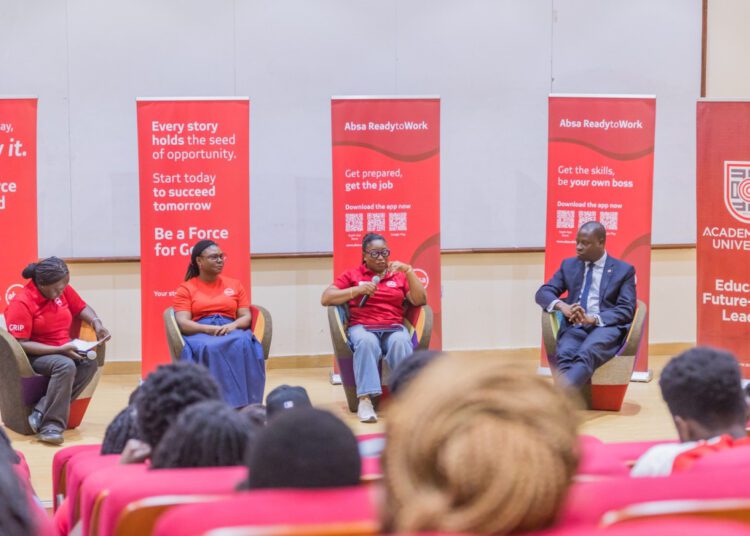
Absa Bank Ghana has reinforced its commitment to youth empowerment by engaging students of Academic City University College in an insightful career development and financial literacy session.
The engagement, held under the bank’s Ready to Work citizenship programme, brought together students and professionals in an interactive discussion designed to prepare young people for the realities of the working world.
The initiative forms part of the bank’s broader effort to equip the next generation with the practical knowledge, career guidance, and financial management skills needed to thrive in an increasingly competitive economy.
The session focused on helping students make informed decisions about their future careers while understanding the importance of financial discipline and long-term planning.
Building Careers With Purpose
During the panel discussion, members of the finance team from Absa Bank Ghana shared practical experiences from their professional journeys, offering students firsthand insight into career growth, workplace expectations, and the importance of personal development.
Students were encouraged to identify their strengths, passions, and interests, and to align them with opportunities in emerging sectors of the economy. Panelists highlighted how career choices often determine income potential, financial security, and overall quality of life.
They also urged students to remain adaptable in a rapidly changing job market, where technology, innovation, and global trends continue to redefine professional opportunities.
According to the speakers, career success is no longer based solely on academic performance. Employers are increasingly looking for critical thinking, communication skills, emotional intelligence, teamwork, and problem-solving abilities.
Students were therefore advised to invest in personal growth, build strong professional networks, and continuously upgrade their skills to remain relevant in the job market.
Financial Literacy Takes Center Stage
Beyond career development, the session placed significant emphasis on financial literacy, a topic many young people often overlook until they enter the workforce.
The finance professionals explained that financial habits developed during university years can significantly influence future financial stability. Students were introduced to essential money management principles such as budgeting, saving, investing, and responsible spending.
The panel stressed that earning money alone does not guarantee financial security. Rather, the ability to manage resources wisely and make disciplined financial decisions determines long-term financial success.
Students were encouraged to start building emergency savings, track their expenses, and avoid unnecessary debt as they prepare for independent living after graduation.
The conversation also touched on lifestyle inflation, a common challenge among young professionals who increase spending as their income grows. The panelists advised students to focus on long-term financial goals rather than short-term consumption.
Interactive Learning Experience
One of the highlights of the event was the active participation from students. Participants engaged the panel with thoughtful questions about career transitions, workplace culture, salary negotiations, entrepreneurship, and strategies for building professional confidence.
Many students expressed curiosity about how to stand out in a competitive job market, especially as fresh graduates with limited work experience.
In response, the speakers emphasized the value of internships, volunteer opportunities, mentorship, and practical exposure. They encouraged students to take advantage of opportunities that provide real-world experience while still in school.
The session created an open environment where students could freely share concerns, seek guidance, and gain clarity about their future career journeys.
Leadership Commitment to Youth Development
Speaking on the initiative, Executive Director for Finance at Absa Bank Ghana, Kush Mkushi, reaffirmed the bank’s dedication to empowering young people with the tools they need for success.
He noted that career decisions and financial habits are closely connected, making it essential for students to develop both professional and financial awareness early in life.
According to him, the Ready to Work programme is designed to bridge the gap between academic learning and workplace readiness by giving young people practical knowledge that supports employability and financial resilience.
He explained that empowering young people goes beyond classroom education and requires practical engagement with industry professionals who can share real experiences and relevant guidance.
Investing in Ghana’s Future Workforce
As Ghana continues to build a competitive workforce, initiatives like this highlight the critical role private sector institutions can play in shaping the future of young professionals.
By investing in career mentorship and financial education, Absa Bank Ghana is not only supporting individual students but also contributing to the broader national agenda of youth empowerment, economic resilience, and sustainable development.
For many students at Academic City University College, the session served as a powerful reminder that career success and financial freedom begin with informed choices, disciplined habits, and a willingness to keep learning.
As the world of work evolves, such partnerships between academia and industry are becoming increasingly important in preparing graduates for meaningful and successful careers.
READ ALSO: Commodity Markets Tremble as Rising Food Costs Trigger Global Economic Anxiety