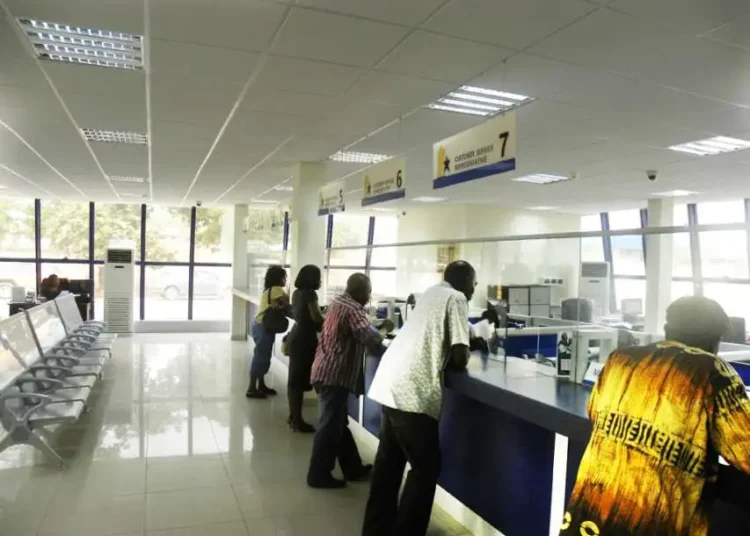
The banking sector in Ghana is showing clear signs of renewed strength, with industry players emerging from years of economic pressure and entering what analysts describe as a new phase of consolidation, resilience, and sustainable growth.
Fresh data released by the Ghana Association of Banks reveals that the country’s banking industry closed 2025 on a much stronger footing, supported by improved capital buffers, healthier balance sheets, stronger loan recovery efforts, and rising customer confidence.
After navigating through debt restructuring challenges, macroeconomic instability, inflationary pressures, and heightened credit risks in recent years, banks are now demonstrating that the worst may be behind them. The latest financial indicators suggest the sector is gradually moving beyond survival mode and positioning itself for a more stable and growth driven future.
Capital Strength Reaches New Heights
One of the most significant indicators of the sector’s recovery is the sharp improvement in the Capital Adequacy Ratio, a critical measure used to assess a bank’s financial strength and ability to absorb unexpected losses.
According to the latest industry analysis, the sector’s Capital Adequacy Ratio rose from 14 percent in 2024 to 17.5 percent in 2025. This notable improvement reflects stronger capital reserves and increased resilience among banks operating in the country.
Even more remarkable is the performance of the ratio excluding regulatory reliefs. This figure climbed from 11.3 percent to 17.5 percent, suggesting that banks are increasingly relying on their own financial strength rather than temporary regulatory support mechanisms.
This development sends a strong signal to investors, depositors, and the wider financial market that banks are rebuilding internal buffers and strengthening their capacity to withstand economic shocks.
Loan Quality Improves Significantly
Another major positive development within the sector is the decline in non-performing loans, which has been one of the banking industry’s biggest concerns over the past few years.
The report shows that non-performing loans fell from 21.8 percent to 18.9 percent. While still relatively elevated, the decline points to better credit monitoring and stronger recovery strategies by banks.
More importantly, when loss-category loans are excluded, non-performing loans dropped sharply from 8.5 percent to just 5 percent.
This sharp decline highlights improved credit risk management practices across the industry. It also indicates that banks are becoming more selective in lending decisions and are taking stronger measures to recover troubled loans before they deteriorate further.
For businesses and borrowers, this may translate into more disciplined lending conditions, but also a healthier financial system capable of supporting long term economic activity.
Industry Assets Record Strong Expansion
The improved financial health of banks is also reflected in the rapid growth of industry assets.
Total banking sector assets expanded by 21.5 percent, rising from GH¢367.8 billion in 2024 to GH¢446.9 billion in 2025.
This growth reflects stronger balance sheet performance and an expanding financial footprint across the economy. Rising assets generally indicate improved operational capacity and enhanced ability to support lending and investment activities.
For the sector, this growth also reinforces the narrative that banks are no longer simply defending their positions, but actively rebuilding and expanding.
Deposits Rise as Public Confidence Returns
Perhaps one of the strongest indicators of banking sector recovery is the increase in customer deposits.
According to the report, deposits rose by 17.8 percent, climbing from GH¢276.2 billion in 2024 to GH¢325.3 billion in 2025.
This growth suggests that public trust in the banking system is gradually returning. During periods of economic uncertainty, customers often become cautious about where they keep their funds. Rising deposits therefore signal renewed confidence in the sector’s stability and security.
For banks, stronger deposit growth provides a larger funding base, enabling them to support lending activities and expand financial services to households and businesses.
Credit Growth Signals Economic Recovery
The report also indicates that banks are gradually increasing credit support to the economy.
Total advances rose by 16 percent, increasing from GH¢95.7 billion in 2024 to GH¢111 billion in 2025.
This growth suggests that banks are regaining confidence in extending credit to businesses and households. Increased lending is often viewed as a key indicator of economic recovery, as it supports business expansion, job creation, consumer spending, and investment activities.
For Ghanaian businesses, particularly small and medium sized enterprises, this development could create new opportunities for growth and expansion.
A Sector Moving Toward Stability
Taken together, the latest indicators present a banking sector that is steadily rebuilding after years of economic turbulence.
Stronger capital buffers, improved asset quality, rising deposits, and expanding credit activity all point to a sector that is moving away from crisis management and toward long term stability.
While challenges remain, including global economic uncertainties and domestic fiscal pressures, the latest numbers suggest that Ghana’s banks are better positioned than they have been in recent years.
For customers, businesses, and investors, this recovery offers renewed confidence that the banking sector is once again becoming a reliable pillar of economic growth.
If current trends continue, 2025 may be remembered as the year Ghana’s banking industry truly exited survival mode and began building a stronger financial future.
READ ALSO: No More Law Entrance Exams under Legal Education Act – Dafeamakpor