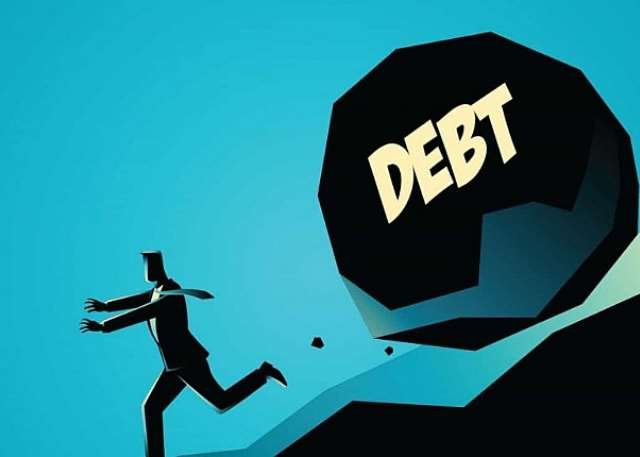
Ghana’s domestic borrowing has climbed sharply in the opening months of 2026, with the government raising approximately GH¢120.2 billion from the Treasury bill market between January and April.
The figure, drawn from auction data published by Bank of Ghana, highlights the scale of government financing activity and provides a clear picture of shifting investor sentiment, changing interest rate dynamics, and the Treasury’s evolving borrowing strategy.
Although the amount borrowed appears significant, a closer analysis suggests the government’s approach has been less about aggressive debt accumulation and more about strategic liquidity management within a changing interest rate environment.
Strong Start to the Year
The first quarter of 2026 was characterised by strong investor demand for government securities. Treasury bill auctions consistently attracted bids far above the government’s target, signaling abundant liquidity in the financial system and sustained confidence in short-term government instruments.
From January through mid-March, the Treasury recorded 11 consecutive oversubscribed auctions. This period reflected heightened demand from institutional investors, commercial banks, asset managers, and other market participants seeking relatively safe investment opportunities.
The peak came in mid-February when investors submitted bids worth GH¢22.67 billion against a government target of GH¢6.42 billion. Such oversubscription illustrated both confidence in government securities and the limited availability of competing investment instruments offering comparable risk-adjusted returns.
The strong demand also allowed the government to front-load a substantial portion of its borrowing needs early in the year, taking advantage of favorable market conditions.

Investor Appetite Begins to Cool
While the first quarter delivered strong momentum, market conditions began to shift significantly from late March into April.
Auction data shows that demand weakened considerably, with the market recording six consecutive undersubscribed auctions. One of the clearest examples came during Tender 2002, where investor bids of GH¢5.31 billion fell short of the government’s GH¢7.57 billion target by nearly 30 percent.
This sudden change in demand was not necessarily a reflection of rising credit concerns. Instead, it appears to have been driven largely by declining yields, which reduced the attractiveness of Treasury bills for investors.
As returns compressed, investors became more selective, particularly those with longer investment horizons seeking higher yields.
Yield Compression Alters Market Behaviour
One of the defining features of the Treasury bill market in 2026 has been the sharp decline in yields.
At the start of the year, the 91-day Treasury bill carried an average yield of 11.12 percent, while the 364-day bill offered 12.93 percent. These returns made government securities highly attractive in a market where risk management remained a priority.
By the end of April, however, rates had declined significantly. The 91-day bill fell to 4.92 percent, while the 364-day instrument dropped to 10.20 percent.
This sharp decline changed investor behavior across the yield curve.
Lower yields meant investors had less incentive to lock funds into longer-term government paper. Instead, many shifted toward shorter-duration instruments, preserving flexibility while maintaining exposure to sovereign debt.

Shifting Preferences Across Tenors
The changing rate environment triggered a notable shift in investor preferences.
Earlier in the year, demand for longer-term Treasury bills remained strong. In January alone, the 364-day bill attracted bids worth GH¢15.18 billion.
However, by the end of April, demand for the same tenor had dropped sharply to approximately GH¢3.12 billion.
In contrast, investor interest shifted toward shorter maturities.
During the final auction of April, the 91-day bill attracted GH¢2.8 billion in bids, with GH¢2.7 billion accepted by the Treasury. The 182-day bill recorded GH¢717.6 million in bids, while the 364-day bill attracted only GH¢960.1 million.
This movement reflects investor caution in an environment where yields are falling and expectations around future rate movements remain uncertain.
Treasury Focuses on Cost Management
Despite weaker demand in April, the government did not aggressively chase borrowing targets.
Instead, auction results indicate a disciplined issuance strategy focused on controlling financing costs.
In several auctions, the Treasury rejected sizeable portions of submitted bids, even when doing so meant falling short of its borrowing targets. This suggests authorities were unwilling to accept higher borrowing costs simply to meet funding objectives.
Such discipline indicates a deliberate effort to manage the domestic debt portfolio more efficiently.
By rejecting expensive bids and selectively accepting lower-cost offers, the government appears focused on preserving fiscal sustainability while meeting immediate financing requirements.
What This Means for Ghana’s Debt Outlook
The accumulation of GH¢120.2 billion in domestic debt within four months raises important questions about fiscal management and debt sustainability.
On one hand, the large borrowing figure reflects ongoing financing pressures and the government’s continued dependence on the domestic market.
On the other hand, the declining yields and disciplined bid acceptance suggest improving market confidence and stronger macroeconomic stability.
If inflation continues to moderate and interest rates remain on a downward path, the government could continue refinancing debt at lower costs.
However, weaker investor demand in recent weeks serves as an early warning sign that market appetite cannot be taken for granted.
Going forward, policymakers will need to balance financing needs, investor confidence, and debt sustainability carefully to avoid renewed pressure on domestic borrowing costs.
All in all, Ghana’s domestic debt story is not simply about how much has been borrowed. It is increasingly about how strategically that borrowing is being managed.
READ ALSO: Banks Exit Survival Mode With Strong Buffers