
National Petroleum Authority (NPA), has announced the inclusion of 268 fuel stations, eight storage depots, and two major refineries in a strategic rollout of the government’s 24-hour economy programme.
This targeted selection of infrastructure across the Greater Accra, Ashanti, Western, and Northern regions serves as the pilot phase for a policy designed to transform the downstream petroleum sector into a round-the-clock powerhouse.
By initiating this phased implementation, the National Petroleum Authority (NPA) intends to evaluate the resilience of existing systems while refining operational models to ensure a “safe and sustainable” transition to 24-hour service delivery.
he chosen regions represent the industrial and commercial hubs of Ghana, where the demand for energy products is highest, making them ideal testing grounds for the initiative’s broader goals of modernizing fuel distribution and enhancing national productivity.
“This programme will be rolled out in phases beginning with selected facilities across four regions of Ghana namely; Greater Accra, Ashanti, Western and Northern regions. We are looking at covering 268 fuel stations, eight depots and operating in two oil refineries.”
Godwin Edudzi Tameklo, NPA CEO

Driving Efficiency in the Energy Value Chain
The expansion of the petroleum sector into a multi-shift system is expected to alleviate long-standing logistical bottlenecks that often occur during traditional daytime business hours.
Presidential Advisor on the 24-Hour Economy initiative, Goosie Tanoh, noted that the pilot is a calculated move to “unlock productivity” and bolster the nation’s total economic output.
By operating refineries and depots through the night, the industry can achieve a more fluid supply chain, reducing the pressure on transportation networks and ensuring that fuel is readily available for both industrial and domestic consumers without the delays of a standard 8-to-5 schedule.

Beyond the immediate logistics, the 24-hour model provides a unique opportunity to maximize the utilization of capital-intensive infrastructure.
Refineries, which are most efficient when operating continuously, will no longer be hampered by the limitations of a single-shift workforce, thereby lowering the unit cost of production and improving the “operational efficiency” of the entire downstream industry.
Economic Impact and Job Creation in the Downstream Sector
By requiring additional personnel for night-time operations at the 268 fuel stations and eight depots, the sector is poised to absorb a significant number of skilled and semi-skilled workers.
This increased employment not only provides direct income for thousands of Ghanaian families but also stimulates the auxiliary economy, including security services, catering, and transport, all of which must scale up to support a nocturnal workforce.
Furthermore, the continuous availability of energy products is a fundamental requirement for other sectors such as manufacturing and logistics to successfully transition to 24-hour cycles.
With the NPA ensuring that fuel distribution is “transformative” and “sufficient,” industrial plants can run night shifts without the risk of fuel shortages, effectively doubling or tripling their output capacity.
This synergy between the energy sector and the wider economy is critical for stabilizing the national currency and improving Ghana’s competitiveness on the global market.
Strategic Monitoring and Regulatory Safety
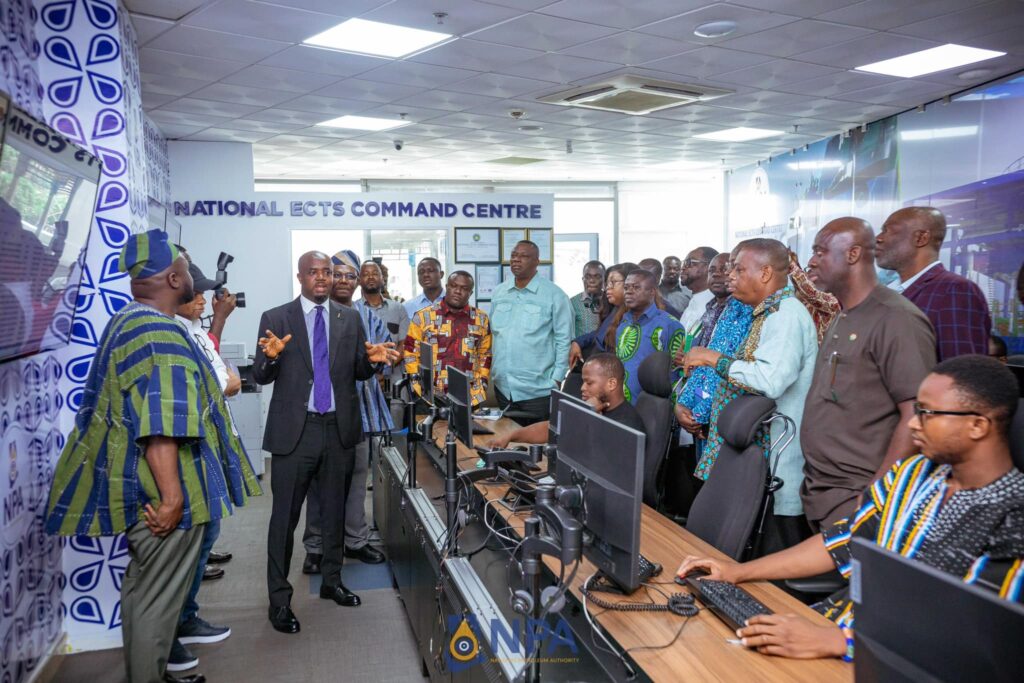
While the NPA begins this pilot, the focus remains heavily on maintaining rigorous safety standards across the four selected regions.
The CEO emphasized that the phased approach is essential for identifying potential risks in nighttime fuel handling and ensuring that regulatory oversight remains robust.
The “transformative impact” envisioned by the government depends on the ability of the NPA to provide a secure environment where operators and consumers feel safe participating in the nighttime economy.

The collaboration between the NPA and the 24-Hour Economy Authority marks a significant milestone in Ghana’s industrial policy.
By leveraging the downstream petroleum industry as an anchor, the government is laying the groundwork for a more resilient and industrially competitive nation.
As the pilot progresses, the data gathered from these 268 stations and two refineries will provide the blueprint for a nationwide expansion, eventually cementing the 24-hour economy as the new standard for Ghanaian productivity.
READ ALSO: Ghana Tourism Authority Opens Call for Event Proposals for December in GH 2026