• About
  • Advertise
  • Privacy Policy
  • Contact
Friday, May 22, 2026
  • Login
The Vaultz News
  • Top Stories
  • News
    • General News
    • Education
    • Health
    • Opinions
  • Economics
    • Economy
    • Finance
      • Banking
      • Insurance
      • Pension
    • Securities/Markets
  • Business
    • Agribusiness
    • Vaultz Business
    • Extractives/Energy
    • Real Estate
  • World
    • Africa
    • America
    • Europe
    • UK
    • USA
    • Asia
    • Around the Globe
  • Innovation
    • Technology
    • Wheels
  • Entertainment
  • 20MOBPL2DNew
  • Jobs & Scholarships
    • Job Vacancies
    • Scholarships
No Result
View All Result
The Vaultz News
  • Top Stories
  • News
    • General News
    • Education
    • Health
    • Opinions
  • Economics
    • Economy
    • Finance
      • Banking
      • Insurance
      • Pension
    • Securities/Markets
  • Business
    • Agribusiness
    • Vaultz Business
    • Extractives/Energy
    • Real Estate
  • World
    • Africa
    • America
    • Europe
    • UK
    • USA
    • Asia
    • Around the Globe
  • Innovation
    • Technology
    • Wheels
  • Entertainment
  • 20MOBPL2DNew
  • Jobs & Scholarships
    • Job Vacancies
    • Scholarships
No Result
View All Result
The Vaultz News
No Result
View All Result
in Banking

Strengthening Defense Against Cyber Threats- Fidelity Bank’s Proactive Approach to Combatting Fraud

Maynard Championby Maynard Champion
December 26, 2023
Reading Time: 3 mins read
Fidelity Demands Africa Own Its Digital Future At a time when Africa’s digital economy is accelerating at an unprecedented pace, Fidelity Bank Ghana has delivered one of the strongest messages yet on the continent’s technological future. The bank made a bold and urgent case for Africa to stop depending on foreign controlled digital systems and begin building its own infrastructure capable of retaining value, strengthening currencies, and driving long term economic sovereignty. As one of the key sponsors of the 3i Africa summit, Fidelity Bank did not just show up to participate. It arrived with a message that resonated deeply across conference halls and policy discussions. Fidelity Bank emerged as one of the loudest voices championing a future where African nations control the very digital rails that power their economies. Digital Infrastructure Is The New Economic Power One of the defining moments of the summit came during a high level panel discussion on digital public infrastructure, where Adeline Aryee delivered a statement that immediately captured the attention of participants. She declared that if Africa builds its own digital rails, it naturally retains the value created by those systems. Her message was clear and uncompromising. In previous decades, national infrastructure was measured by roads, bridges, ports, and airports. Today, the true engines of economic power are payment platforms, identity systems, financial technology ecosystems, and digital marketplaces. According to Aryee, digital public infrastructure is no longer a luxury. It is now a strategic national asset. Her remarks struck at the heart of one of Africa’s most pressing economic concerns. Despite growing digital adoption, many transactions across the continent still pass through foreign payment systems, resulting in value leakage and continued pressure on local currencies. Ghana’s Success Story Becomes A Continental Blueprint Aryee highlighted Ghana’s progress in financial inclusion, mobile payments, and digital banking, describing the country as an emerging model for other African economies. Over the years, Ghana has invested heavily in domestic payment systems such as GhIPSS and its flagship platform, Gh-link. These systems have significantly expanded access to financial services while promoting digital transactions across urban and rural communities. Yet Aryee argued that inclusion alone is no longer enough. The next chapter for Africa, she insisted, must focus on ownership. She questioned why local transactions continue to depend on foreign rails when domestic infrastructure already exists. According to her, such dependence creates unnecessary external exposure and limits the continent’s ability to fully capture the economic benefits of its growing digital market. Her comments triggered intense debate among summit participants, many of whom acknowledged the urgent need for policy reforms and infrastructure investments. Market Driven Innovation Takes Center Stage Beyond infrastructure, Fidelity Bank also made a strong case for innovation that begins with real market needs. During the Ecosystem Roundtable on platforms, talent, and digital markets, Prince Osei Hyeaman-Addai shared insights from the bank’s years of digital financial innovation. He stressed that successful digital products are not built in boardrooms or based on assumptions. Instead, they are created by listening carefully to the market and understanding customer pain points. According to him, the market itself reveals the problems that need solving, the type of platform required, and the path toward scalable growth. His comments reflected a growing shift in African fintech circles, where customer centered design is becoming essential for product adoption and long term relevance. Trust And Credibility Remain The Real Currency Prince also emphasized that technology alone does not guarantee success. In his view, trust, credibility, and strong operational structures remain the real foundations of successful innovation. He noted that while investor interest in African fintech continues to rise, startups must prove they can deliver sustainable solutions, maintain transparency, and build products that respond to local realities. This perspective reflects Fidelity Bank’s own journey in digital transformation. Over the years, the bank has built strategic collaborations with leading fintech players, including IT Consortium, helping pioneer wallet to bank integrations and mobile financial solutions in Ghana. These partnerships have helped position Fidelity as one of Ghana’s most innovation driven financial institutions. A Defining Moment For Africa’s Digital Future Fidelity Bank’s participation at the 3i Africa Summit 2026 was more than a corporate appearance. It was a strategic declaration. At a time when Africa is racing to build competitive digital economies, the bank’s message was impossible to ignore. Africa cannot simply consume technology created elsewhere. It must own the infrastructure, shape the platforms, and capture the value generated by its digital future. As conversations from the summit continue to ripple across financial and policy circles, one thing is becoming increasingly clear. Africa’s next economic revolution may not be built on oil, gold, or minerals. It may be built on digital rails designed, owned, and powered by Africans. READ ALSO: IMF Ghana Review Ends in Dramatic Cliffhanger Fidelity Demands Africa Own Its Digital Future At a time when Africa’s digital economy is accelerating at an unprecedented pace, Fidelity Bank Ghana has delivered one of the strongest messages yet on the continent’s technological future. The bank made a bold and urgent case for Africa to stop depending on foreign controlled digital systems and begin building its own infrastructure capable of retaining value, strengthening currencies, and driving long term economic sovereignty. As one of the key sponsors of the 3i Africa summit, Fidelity Bank did not just show up to participate. It arrived with a message that resonated deeply across conference halls and policy discussions. Fidelity Bank emerged as one of the loudest voices championing a future where African nations control the very digital rails that power their economies. Digital Infrastructure Is The New Economic Power One of the defining moments of the summit came during a high level panel discussion on digital public infrastructure, where Adeline Aryee delivered a statement that immediately captured the attention of participants. She declared that if Africa builds its own digital rails, it naturally retains the value created by those systems. Her message was clear and uncompromising. In previous decades, national infrastructure was measured by roads, bridges, ports, and airports. Today, the true engines of economic power are payment platforms, identity systems, financial technology ecosystems, and digital marketplaces. According to Aryee, digital public infrastructure is no longer a luxury. It is now a strategic national asset. Her remarks struck at the heart of one of Africa’s most pressing economic concerns. Despite growing digital adoption, many transactions across the continent still pass through foreign payment systems, resulting in value leakage and continued pressure on local currencies. Ghana’s Success Story Becomes A Continental Blueprint Aryee highlighted Ghana’s progress in financial inclusion, mobile payments, and digital banking, describing the country as an emerging model for other African economies. Over the years, Ghana has invested heavily in domestic payment systems such as GhIPSS and its flagship platform, Gh-link. These systems have significantly expanded access to financial services while promoting digital transactions across urban and rural communities. Yet Aryee argued that inclusion alone is no longer enough. The next chapter for Africa, she insisted, must focus on ownership. She questioned why local transactions continue to depend on foreign rails when domestic infrastructure already exists. According to her, such dependence creates unnecessary external exposure and limits the continent’s ability to fully capture the economic benefits of its growing digital market. Her comments triggered intense debate among summit participants, many of whom acknowledged the urgent need for policy reforms and infrastructure investments. Market Driven Innovation Takes Center Stage Beyond infrastructure, Fidelity Bank also made a strong case for innovation that begins with real market needs. During the Ecosystem Roundtable on platforms, talent, and digital markets, Prince Osei Hyeaman-Addai shared insights from the bank’s years of digital financial innovation. He stressed that successful digital products are not built in boardrooms or based on assumptions. Instead, they are created by listening carefully to the market and understanding customer pain points. According to him, the market itself reveals the problems that need solving, the type of platform required, and the path toward scalable growth. His comments reflected a growing shift in African fintech circles, where customer centered design is becoming essential for product adoption and long term relevance. Trust And Credibility Remain The Real Currency Prince also emphasized that technology alone does not guarantee success. In his view, trust, credibility, and strong operational structures remain the real foundations of successful innovation. He noted that while investor interest in African fintech continues to rise, startups must prove they can deliver sustainable solutions, maintain transparency, and build products that respond to local realities. This perspective reflects Fidelity Bank’s own journey in digital transformation. Over the years, the bank has built strategic collaborations with leading fintech players, including IT Consortium, helping pioneer wallet to bank integrations and mobile financial solutions in Ghana. These partnerships have helped position Fidelity as one of Ghana’s most innovation driven financial institutions. A Defining Moment For Africa’s Digital Future Fidelity Bank’s participation at the 3i Africa Summit 2026 was more than a corporate appearance. It was a strategic declaration. At a time when Africa is racing to build competitive digital economies, the bank’s message was impossible to ignore. Africa cannot simply consume technology created elsewhere. It must own the infrastructure, shape the platforms, and capture the value generated by its digital future. As conversations from the summit continue to ripple across financial and policy circles, one thing is becoming increasingly clear. Africa’s next economic revolution may not be built on oil, gold, or minerals. It may be built on digital rails designed, owned, and powered by Africans. READ ALSO: IMF Ghana Review Ends in Dramatic Cliffhanger Fidelity Demands Africa Own Its Digital Future

In an era dominated by digital advancements, the banking sector finds itself at the forefront of technological innovation. While this transition has undoubtedly enhanced efficiency and customer experience, it has also ushered in a new era of challenges, prominently among them being the escalating cyber threats faced by financial institutions.

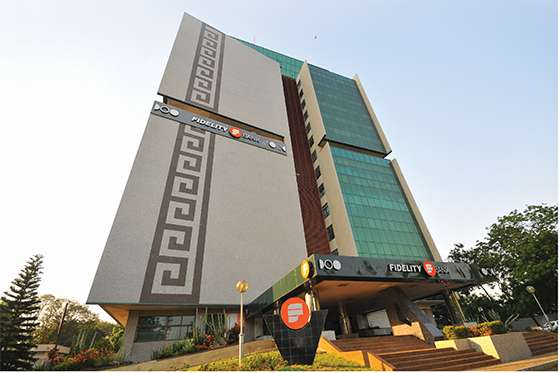
In response to this escalating prominence of digital banking platforms and the subsequent rise in cyber threats, Fidelity Bank, Ghana’s leading privately owned bank, initiated a dedicated week to fortify its defenses against fraud, empowering its staff as the primary line of defense.

Under the theme “Leveraging on Fraud Awareness and Education to Minimize Our Losses: The Role of Fidelity Bank Staff,” this comprehensive week united the expertise of Internal Audit, Internal Control, Operational Risk, Compliance, Financial Crime, Information Security, and Enterprise Risk. The collaborative effort, backed by Banking Operations and Physical Security, ensured a holistic approach to combatting fraud.

Throughout the week, engaging activities were strategically employed to heighten awareness and equip staff with practical skills to identify and deter fraudulent activities. The “Daily Fraud Titbits” initiative disseminated crucial insights on risk, fraud, and controls, enlightening staff on their pivotal role in ensuring both customer and bank security, with a focus on accountability and vigilance.

ADVERTISEMENT

In addition, interactive sessions such as “Lunch and Learn” facilitated open discussions about real-life scenarios and effective risk mitigation strategies. A digital library provided accessible resources, fostering a collaborative learning environment among the staff.

The “Time with Executive Management” forum offered employees a unique opportunity to engage in discussions with the executive team, addressing the top five proposals on risk policies and challenges. This proactive and collaborative approach underscores Fidelity Bank’s commitment to staying ahead in the evolving landscape of digital banking and safeguarding its customers against emerging cyber threats.

Orange Integrity Forum

The week culminated In the “Orange Integrity Forum,” a platform for sharing best practices, celebrating “anti-fraud heroes” within the bank, and outlining future initiatives to strengthen the bank’s safeguards against fraud.

Commenting on the initiative, Ransford Nana Addo Jnr, Head, Financial Crime at Fidelity Bank, said “It is a no-brainer that we, the staff, are first in line in the fight against fraud, and I believe that this week was more than just an event”.

He noted that it was a declaration of their steadfast commitment to protecting its customers and the institution from the ever-evolving threat of fraud.

“So, by empowering our staff with knowledge and fostering a culture of vigilance, we strive to uphold the highest standards of integrity and security for our valued customers, and we are poised to build a stronger, more resilient bank for the future.”

Ransford Nana Addo Jnr

The successful completion of Fraud, Risk, and Control Week marks a significant milestone in the bank’s ongoing mission to provide secure and reliable financial services. However, Fidelity Bank’s dedication to fraud prevention goes beyond awareness-raising.

The bank continuously invests in cutting-edge technology, robust risk management frameworks, and stringent compliance measures to safeguard its customers and maintain its position as a leader in Ghana’s financial landscape. This commitment is furthered by the recent addition of multi-factor authentication to the Fidelity Mobile App, providing an extra layer of security for customer accounts.

Banks are more often than not, confronted with a multitude of risks ranging from traditional malware and phishing attacks to sophisticated ransomware and supply chain vulnerabilities. The adaptability of cybercriminals requires constant vigilance and proactive measures.

As banks continue to leverage technology for growth and innovation, the battle against cyber threats remains ongoing. A proactive, adaptive, and collaborative approach is paramount to overcoming the threats of cybersecurity, safeguarding both the integrity of financial institutions and the trust of their customers.

ADVERTISEMENT

READ ALSO: Traversing Ghana’s Fiscal Landscape Post-Approval of the 2023 Appropriation Bill

Sign Up to Our Newsletter

Fresh updates, Straight to your inbox

Tags: Fidelity BankfraudOrange Integrity ForumRiskStrengthening Defense Against Cyber Threats- Fidelity Bank’s Proactive Approach to Combatting Fraud
Share2Tweet1ShareSendSend
Please login to join discussion
Previous Post

President Akufo-Addo’s Christmas Message: A Call For Unity, Hope, And Prosperity

Next Post

Reaffirming Landlord Title At Rapperholic Rebirth

Related Posts

Dr. Asiama Pushes for Borderless African Financial Markets
Banking

Dr. Asiama Pushes for Borderless African Financial Markets

May 21, 2026
Ghana’s Banking Sector Showing Strong Recovery Signs- BoG
Banking

Ghana’s Banking Sector Showing Strong Recovery Signs- BoG

May 21, 2026
Mobile Money Transactions Surge to Record GH¢493.2bn
Banking

Mobile Money Transactions Surge to Record GH¢493.2bn

May 21, 2026
Group CEO & President of MTN Signals Shift from USSD to Smartphone-Driven Financial Services
Banking

Group CEO &  President of MTN Signals Shift from USSD to Smartphone-Driven Financial Services

May 20, 2026

Sign Up to Our Newsletter

Fresh updates, Straight to your inbox

Recent News

GN BANK

NPP Did Not Collapse GN Bank, Bannor Clarifies Position

May 22, 2026
GSE Freezes as Financial Stocks Slip Again

GSE Freezes as Financial Stocks Slip Again

May 22, 2026
GN BANK

Counsel Signals Major Steps Toward GN Bank’s Return After Court Victory

May 22, 2026
Ofcom

Ofcom Under Pressure Over Royal Mail Performance

May 22, 2026
Dr. John Osae-Kwapong, Democracy and Development Fellow, CDD-Ghana, and Project Director, the Democracy Project

No More Constitutional Reforms?

May 21, 2026
Next Post
Ghanaian rapper, Sarkodie

Reaffirming Landlord Title At Rapperholic Rebirth

The Vaultz News

Copyright © 2025 The Vaultz News. All rights reserved.

Navigate Site

  • About
  • Advertise
  • Privacy Policy
  • Contact

Follow Us

Welcome Back!

Login to your account below

Forgotten Password?

Retrieve your password

Please enter your username or email address to reset your password.

Log In
No Result
View All Result
  • Top Stories
  • News
    • General News
    • Education
    • Health
    • Opinions
  • Economics
    • Economy
    • Finance
      • Banking
      • Insurance
      • Pension
    • Securities/Markets
  • Business
    • Agribusiness
    • Vaultz Business
    • Extractives/Energy
    • Real Estate
  • World
    • Africa
    • America
    • Europe
    • UK
    • USA
    • Asia
    • Around the Globe
  • Innovation
    • Technology
    • Wheels
  • Entertainment
  • 20MOBPL2D
  • Jobs & Scholarships
    • Job Vacancies
    • Scholarships

Copyright © 2025 The Vaultz News. All rights reserved.

This website uses cookies. By continuing to use this website you are giving consent to cookies being used. Visit our Privacy and Cookie Policy.

Discover the Details behind the story

Get an in-depth analysis of the news from our top editors

Enter your email address