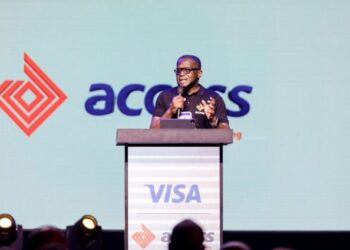
The Governor of the Bank of Ghana, Dr. Johnson Pandit Asiama, has issued a powerful call for Africa to urgently dismantle financial barriers and create seamless cross-border financial markets capable of driving the continent’s next wave of economic growth.
Speaking at the opening of the ACI Financial Markets Association World Congress 2026 in Accra, Dr. Asiama warned that African economies that fail to integrate their financial systems could lose relevance in an increasingly interconnected global economy.
His remarks come as African countries intensify efforts to deepen regional trade, attract global investment and modernise outdated payment systems that continue to slow business activities across the continent. “Markets that are not connected will not compete,” the Governor stated.
The statement immediately set the tone for the high-profile conference, which attracted financial market leaders, central bankers, investors and policymakers from across the globe.
Africa’s Financial Barriers Under Spotlight
Dr. Asiama highlighted the growing mismatch between rapidly globalising capital flows and fragmented African financial systems, arguing that the continent risks missing enormous opportunities if countries continue operating in isolation.
According to him, businesses and investors across Africa still face significant challenges when transferring funds across borders due to regulatory differences, slow payment systems and duplicated compliance requirements.
He stressed that while technology is transforming financial markets globally, Africa must move quickly to create integrated systems that support trade and investment across jurisdictions.
The Governor revealed that Ghana is already working closely with regional partners to advance harmonised payment rails, fintech licence passporting and broader financial market integration across the continent.
Industry analysts say these initiatives could dramatically improve the ease of doing business in Africa while reducing transaction costs for companies operating across multiple countries.
Dr. Asiama noted that financial institutions should be able to expand across African markets without facing excessive regulatory burdens that limit growth and innovation.
Fast and Seamless Payments Key to Growth
One of the key highlights of Dr. Asiama’s address was his vision for a future where cross-border payments within Africa become as smooth as domestic transactions.
“A payment initiated in Accra should clear in Abidjan or Lagos as easily as it clears in Kumasi,” he said.
The statement captured the broader ambition of African leaders seeking to remove long-standing barriers that continue to hinder intra-African trade and investment.
Financial experts attending the conference pointed out that many African businesses still rely heavily on foreign intermediary banks to process transactions between neighbouring countries, resulting in delays, high fees and inefficiencies.
As Africa pushes forward with the implementation of the African Continental Free Trade Area, experts believe efficient payment systems will become critical to unlocking the full potential of the continent’s massive market.
The Governor maintained that regional financial integration is no longer a distant aspiration but a necessary strategy for survival in a rapidly evolving global economy.
Warning to Economies Lagging Behind
Dr. Asiama warned that countries unwilling to modernise and integrate their financial systems risk being left behind as investors increasingly seek markets with efficient and connected financial infrastructure.
According to him, the future of financial markets will not be determined solely by domestic reforms but by how effectively countries collaborate to create seamless regional systems.
The Governor’s comments come amid growing global competition for investment capital, with many emerging economies accelerating financial sector reforms to attract international investors.
Observers believe Ghana’s leadership role in these discussions could further strengthen its reputation as one of West Africa’s leading financial centres.
The conference also highlighted the growing influence of fintech innovation in reshaping Africa’s financial landscape. Digital payment platforms, mobile money services and blockchain technology are increasingly transforming how businesses and consumers transact across the continent.
Delegates at the event stressed that African regulators must work together to create policies that encourage innovation while maintaining financial stability.
Ghana Positioning for Continental Leadership
Dr. Asiama expressed confidence that Ghana and other emerging economies are beginning to play a more active role in shaping global financial market policies instead of merely adopting external decisions.
“A growing number of emerging economies, Ghana among them, are no longer countries to which financial market policy happens. We are countries in which financial market policy is being designed.”
Dr. Johnson Pandit Asiama
His remarks were widely interpreted as a sign of Africa’s growing confidence in influencing the future direction of global finance.
Analysts say stronger African financial integration could open massive opportunities for banks, fintech companies, investors and entrepreneurs across the continent.
With pressure mounting for Africa to build more resilient and competitive economies, many believe the push for borderless financial markets could become one of the continent’s most transformative economic shifts in decades.
READ ALSO: New Mango Price Floor Targets Exploitative Buyers