John Browne, the former CEO of British Petroleum (BP), has voiced support for Labour’s stance on halting new North Sea oil and gas drilling licenses.
Browne, often called the “Sun King” during his tenure from 1995 to 2007, emphasized the necessity for UK political parties to present “serious plans for the country’s green energy transition” ahead of the upcoming general election.
Browne’s remarks advocate for the next government to stop new North Sea oil and gas projects. He said that such action would “reinforce our intention to get to net zero and show timely leadership.”
This viewpoint aligns closely with Labour’s commitment to ending new fossil fuel exploration, contrasting sharply with the Conservative party’s strategy of continuing annual licensing rounds to maximize the UK’s aging oil reserves.
Despite advocating for an end to new drilling, Browne acknowledged the UK’s ongoing need for oil and gas.
He suggested that the country should continue to utilize existing North Sea projects but refrain from initiating new ones. According to him, the economic viability of exploiting the remaining limited resources is questionable compared to purchasing oil and gas on the global market.


Browne’s stance challenged the Conservative party’s claims that further North Sea exploration would enhance the UK’s energy security and reduce gas bills. Energy experts have also widely debunked these claims.
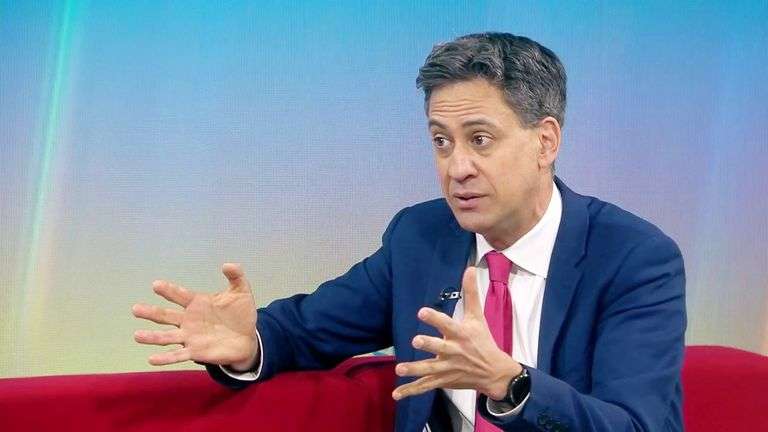
Echoing this sentiment, Labour’s shadow Climate Secretary, Ed Miliband, highlighted that Browne’s perspective aligns with other energy authorities, including the International Energy Agency and the Climate Change Committee.
Miliband stressed that new oil and gas licenses are not the optimal path for Britain, advocating instead for the development of clean energy industries.
“Lord Browne’s intervention adds his voice to the chorus of energy experts, including the International Energy Agency and the Climate Change Committee, who make clear that new oil and gas licenses are not the right choice for Britain.
“The only way to boost our energy security, strengthen our economy, protect our climate, and ensure long-term, good jobs here in Britain is by managing existing licenses while sprinting to develop the clean energy industries of the future.”
Ed Miliband
Labour’s Energy Policy Plan
Labour’s energy policy includes a proposal to intensify the windfall tax on North Sea oil and gas profits, directing the proceeds towards funding a publicly owned green energy company.
The proposed entity, GB Energy, is set to receive an initial capital infusion of £8.3 billion throughout the parliamentary term to foster new green technologies and community energy projects.
Having transitioned from his fossil fuel career, Browne established a climate investing venture with General Atlantic in 2021.
He advocates using the revenue from the UK’s remaining oil and gas production to “accelerate the transition” to renewable energy sources.
This entails significant investments in wind and solar energy, along with infrastructure, including long-term storage solutions, to ensure these supplies reach the market effectively.
Browne’s call for halting new North Sea drilling licenses underscores a pivotal moment in the UK’s energy policy debate.
His backing of Labour’s green energy initiatives, coupled with his criticism of further fossil fuel exploration, adds weight to the argument for a swift transition to renewable energy sources.
As the general election approaches, the former BP chief’s insights could influence both public opinion and the political discourse surrounding the UK’s energy future.