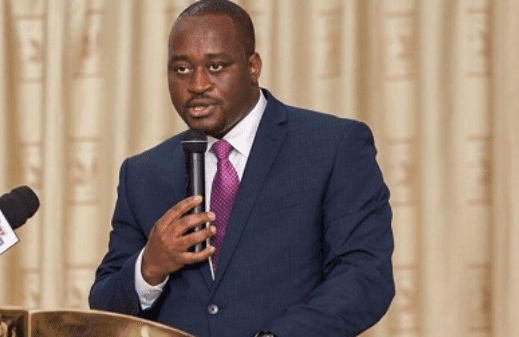
Ghana’s economic reset is showing clear signs of progress at both macroeconomic and microeconomic levels, according to reflections shared by economist and political risk analyst, Dr. Theo Acheampong.
His assessment of the 2025 Mid-Year Fiscal Policy Review paints a cautiously optimistic picture of the country’s economic outlook—backed by data, policy reforms, and market performance.
Dr. Acheampong noted that macroeconomic indicators such as real GDP growth, inflation, interest rates, and exchange rates are trending positively. Fiscal performance, especially in terms of revenue and expenditure, is largely within acceptable bounds.
However, he raised concerns about the notable drop in capital spending, questioning whether it will recover once audits of various contracts are completed.
“The Mid-Year Budget reports that Ghana’s economy expanded by 5.3 % in Q1 2025, up from 4.9 % in Q1 2024. Growth was broad-based: agriculture grew 6.6 % and accounted for 26.4 % of Q1 growth, services grew 5.9 % and contributed 47.9 %, with ICT growth at 13.1 %. Industrial output rose 3.4 %, with manufacturing up 6.6 %. Non-oil GDP grew 6.8 % in Q1 2025, the highest since 2018.”
Dr. Theo Acheampong
The review also pointed to a marked decline in inflation over the period. Consumer price inflation decreased from 23.8% in December 2024 to 13.7% by June 2025.
Food inflation saw a drop from 27.8% to 16.3%, while non-food inflation fell from 20.3% to 11.4%. The government has set a target of reducing overall inflation to 11.9% by the end of 2025.
Dr. Acheampong believes that Ghana can meet the inflation target of 8 ± 2% if fiscal and monetary discipline continues.
He anticipates that the Bank of Ghana will ease its tight policy stance and lower the policy rate by at least 200 to 300 basis points, given recent cedi appreciation.
Accordingly, he emphasized the importance of economic reset being anchored not only in fiscal prudence—which he acknowledged has improved since 2024—but also in deep structural reforms.
He described the latter as “the most difficult and elusive” challenge since the 1980s.
Key policy programs like the 24-Hour Economy initiative, Accelerated Export Diversification Programme, and the Big Push infrastructure plan are expected to help maintain and potentially exceed current economic growth targets.
According to him, for 2025, the government is targeting ≥ 4% real GDP growth and ≥ 4.8% non-oil GDP growth.
He noted that supporting the cedi is a strategic priority. Measures include the establishment of GoldBod, fiscal consolidation, FX forward auctions, and expanded local production under the export diversification and 24-hour economy initiatives. “IMF July 2025 report notes that the BoG has also intensified FX interventions, which have helped with the cedi’s appreciation.”
Debt Levels Fall as Economic Reset Takes Hold
Dr. Theo Acheampong also noted progress in medium-term debt management. Public debt fell from GH¢726.7 billion in December 2024 to GH¢613 billion by June 2025—a drop of GH¢113.7 billion. The debt-to-GDP ratio also improved, falling from 61.8% to 43.8%.
This decline is attributed largely to cedi appreciation and the successful domestic and external debt restructuring under the G20 Common Framework and related agreements.

“The IMF July report highlights the need for continued debt management reforms, checks on borrowing by SOEs, and strengthened debt transparency.
“Overall, Ghana’s US$3 billion programme with the IMF remains on track; the completion of the fourth review in July 2025 unlocked a US$367 million disbursement, bringing total disbursements to US$2.3 billion.”
Dr. Theo Acheampong
The US$3 billion IMF-supported program remains on course, with Ghana receiving a US$367 million disbursement after completing its fourth review in July 2025. This brings total disbursements to US$2.3 billion.
According to Dr. Acheampong, Ghana has achieved a primary fiscal surplus, with credit rating upgrades and stronger capital market signals reflecting “growing investor confidence.”
However, he warned that sustaining the disinflation trend and currency stability will require continued fiscal discipline, strategic management of FX inflows, and careful oversight of GoldBod operations.
He also stressed that while macro stability is improving, much more needs to be done in the areas of productivity, job creation, and poverty eradication.

Ambitious policies like the 24-Hour Economy and Big Push hold promise but must be supported with responsible financing and effective implementation.
Ghana’s fiscal anchors—enshrined in the Public Financial Management (Amendment) Act, 2025 (Act 1136)—require a positive primary balance of at least 1.5% of GDP and a public debt ratio not exceeding 45% of GDP. “Good progress in the first six months of 2025. More needs to be done.”
The reflections shared by Dr. Acheampong present a cautiously upbeat narrative.
The economic reset is advancing steadily, but sustaining momentum will require continued political will, strong institutional oversight, and inclusive growth strategies that prioritize people as much as numbers.
READ ALSO: Ghana’s Energy Sector “Bleeding” with $1.5 Billion Annual Shortfall