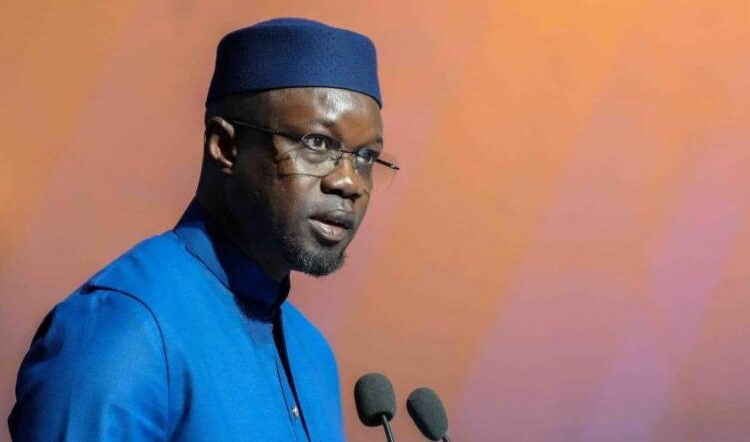
Senegal’s Prime Minister Ousmane Sonko has introduced a sweeping new economic recovery agenda, pledging that 90% of its funding will come from internal resources to reduce dependency on external borrowing.
The announcement, made Friday in Dakar, signals a shift in fiscal policy as the West African country grapples with the dual reality of strong economic growth and a crippling debt scandal inherited from the previous administration.
“We will only seek external partners for the asset recycling portion,” Sonko stated during his address, emphasizing the government’s commitment to domestic resource mobilization over foreign loans. His remarks came amid growing pressure to restore fiscal credibility following recent revelations of concealed national debts.
Despite Senegal’s record-breaking 12.1% GDP growth in the first quarter of 2025, its highest since 1961, its fiscal landscape remains deeply troubled. The International Monetary Fund (IMF) projected the country would lead sub-Saharan Africa’s growth this year with an 8.4% surge, largely powered by the start of oil and gas production from the Greater Tortue Ahmeyim and Sangomar fields. These gains, along with infrastructure investments, have diversified the economy and increased export revenue.
However, that growth story has been overshadowed by the discovery of $7 billion in hidden debt, primarily accumulated through opaque deals involving state-owned enterprises and infrastructure projects during former President Macky Sall’s tenure. The IMF’s exposure of these off-the-books liabilities earlier this year triggered a suspension of its $1.8 billion loan program with Senegal and sparked investor unease.
“We are at a crucial moment,” Sonko said, urging fiscal transparency and accountability. Credit rating agencies have since downgraded Senegal’s sovereign debt twice in six months, while bond yields have spiked, external grants have declined sharply, by over 70% year-on-year, and borrowing costs have risen.
Senegal’s Hidden Debt Crisis Still Looms
The IMF has demanded thorough audits and clear fiscal reporting before reopening any financial support program. With public debt now nearing 100% of GDP, much higher than the previously reported 74%, restoring credibility is a top priority. Investors have reacted with caution, and concerns continue to mount about Senegal’s long-term financial health.
Meanwhile, political consequences have followed swiftly. Opposition figures are calling for full investigations into the financial management under the previous regime. Former President Sall has defended his record, claiming his administration took steps toward financial transparency. Still, critics argue that the damage has already been done.
To stabilize the economy, the government has rolled out a 25-year development framework, Vision 2050, aimed at achieving sustainable growth and reducing the fiscal deficit. While inflation has been reined in and key sectors are performing well, the success of Vision 2050 will depend on robust governance reforms.
Currently, Senegal is facing a difficult balancing act—maintaining growth momentum while overhauling its fiscal policies to regain international trust. With the IMF watching closely and markets jittery, the coming months will test the government’s ability to implement meaningful reforms.
Analysts say Senegal’s resource potential still positions it well for long-term development, but only if it can learn from past missteps. Transparent leadership, disciplined spending, and continued infrastructure investment will be key pillars in steering the country back to stable ground.
READ ALSO: Google, Huawei To Train 200,000 Ghanaians to Drive Govt’s Digital Transformation