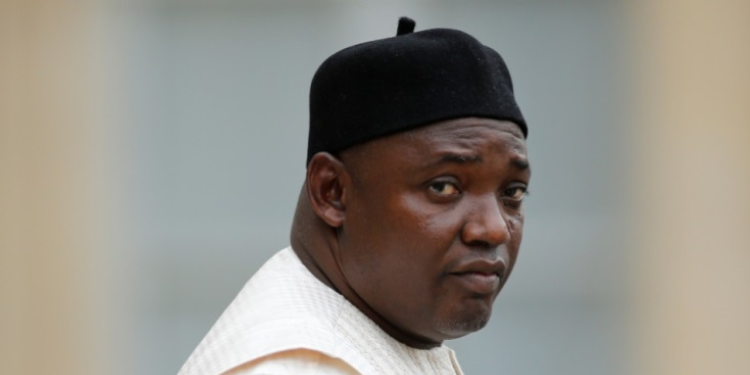
Gambia’s President Adama Barrow has urged citizens to remain calm over prolonged power cuts, stating that the country is not alone in facing an electricity crisis that has affected several parts of West Africa.
Barrow’s appeal comes after protests erupted in the capital, Banjul, and surrounding areas, as growing public frustration over persistent electricity shortages spilled onto the streets.
Residents revealed that some blackouts have lasted as long as 48 hours, leaving households without electricity during a period of intense heat and placing additional pressure on families and businesses already struggling with the effects of unreliable power supplies.
“When you lie down in the heat and the dark, believe that you are not alone in that darkness,” Barrow stated, acknowledging the hardship while pledging that power supplies would improve by next month.
The president’s remarks came as his government faced growing pressure to explain why the country’s electricity system has been unable to meet demand despite efforts to supplement domestic generation with imported electricity from neighbouring countries.
The Gambia relies partly on electricity imports, including supplies from Guinea and neighbouring Senegal, leaving the country’s power system exposed not only to domestic generation and maintenance problems but also to developments within the wider regional electricity network.
That vulnerability has become more visible in recent months. Gallo Saidy, Chief of the National Water and Electricity Company (Nawec), stated reduced electricity imports from the regional grid had contributed to the shortages.
He attributed part of the decline to lower rainfall this year, which had reduced the amount of electricity available through the regional network.
The current shortages have been compounded by unusually high temperatures. Nawec warned in August that soaring temperatures had triggered a surge in electricity consumption, placing additional pressure on an already constrained system. A technical problem affecting a major generating unit supplying imported power further aggravated the situation.
For ordinary Gambians, however, the technical and regional explanations offer little relief when households are left without electricity for extended periods.
Barrow acknowledged these difficulties stating, “I know that the fans have stopped turning, children work in the dark, mothers throw away stale food, and the heat is unbearable by day and by night.“
The government’s acknowledgement of the crisis has therefore coincided with an increasingly visible sense of public anger. Protesters burned tyres and blocked roads in Banjul and surrounding areas. In the Westfield area, police used tear gas to disperse crowds as demonstrators moved towards the headquarters of Nawec.
Some protesters reportedly chanted “Barrow must go” transforming what began as anger over electricity shortages into a broader expression of dissatisfaction with the government.
Demonstrators also gathered outside the vice-president’s residence in Farato, while banners at an office of Barrow’s ruling National People’s Party were damaged.
Blackouts Become a Political Crisis
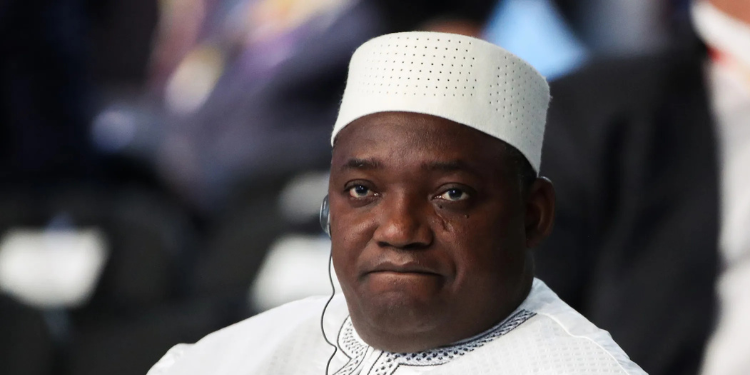
The escalation is particularly significant because it comes only months before a presidential election expected in December, in which Barrow is seeking a controversial third term. The power crisis therefore risks becoming more than an infrastructure problem: it could become a politically consequential issue capable of shaping public perceptions of the government’s record and its ability to provide essential services.
Barrow’s response has been to acknowledge the shortcomings while appealing against destructive protests. He warned that damage to public infrastructure would worsen an already fragile situation by diverting scarce resources towards repairs rather than electricity generation.
The President also described the electricity crisis as both a “national security issue” and an “emergency, acknowledging shortcomings in government planning, power generation and maintenance.
Barrow noted a new 24-megawatt generating unit was being installed at the Brikama power station and would be commissioned by the end of next month. He also stated that the country would receive new generators during the week following his visit to facilities operated by the national energy utility.
In addition, a contract has been awarded for a 50MW solar power plant in Soma, although no completion date has yet been provided.
For the Gambia government, the challenge is therefore twofold. It must restore power while convincing citizens that the crisis is being addressed through a credible and sustainable plan rather than temporary measures designed to ease political pressure.
READ ALSO: Fiscal Council Puts Ghana’s Debt Anchor Under Independent Watch