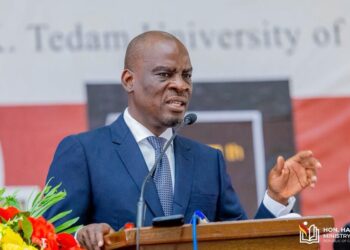
The BECE placement system needs careful review as parents and schools navigate the competition for places in senior high schools, Professor Anthony Donkor, a faculty member at the University for Development Studies, has indicated. The education expert linked some of the difficulties facing private schools to the existing placement arrangement, which he argued creates an uneven distribution of opportunities after pupils complete basic education.
Speaking in an exclusive interview with the Vaultz News, Professor Donkor revealed that the placement structure gives public school candidates a 75 percent share while private school candidates receive 25 percent. He noted that the arrangement can affect the chances of private school pupils securing their preferred choices even when they perform strongly in the Basic Education Certificate Examination.
The professor further explained that the pressure becomes visible after placement results are released. Parents and pupils who expect admission into their preferred schools can face disappointment when the allocation system directs them towards lower choices, creating additional pressure for families already trying to secure suitable schools for their children.
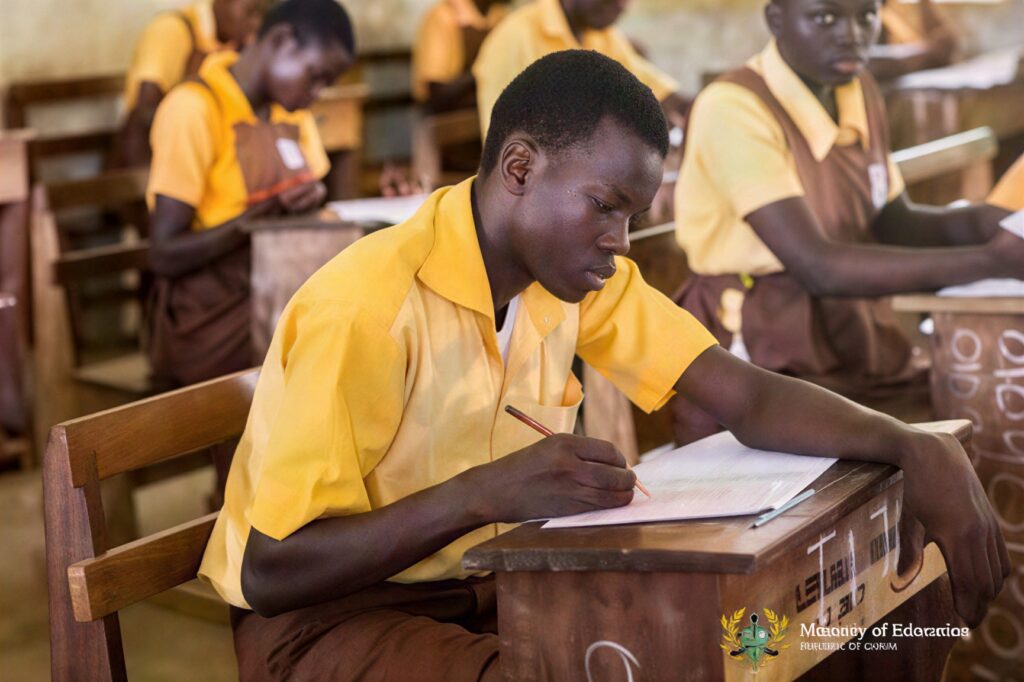
According to the education expert, the issue goes beyond individual examination performance because placement is also shaped by the allocation structure. Thus, a pupil’s BECE result alone does not always determine the school eventually secured through the Computerised School Selection and Placement System.
The situation also creates difficulties for private basic schools whose enrolment depends heavily on parents keeping their children within the private education system. Professor Donkor explained that some pupils leave private schools after completing primary education when placement opportunities favour public institutions.
This movement, he suggested, places financial pressure on private schools because their operations depend largely on school fees. When enrolment falls, schools can struggle to meet the cost of employing teachers across the required subjects.
The Implications On A School
Analysing the situation from the perspective of school management, the Professor explained that a Junior High School needs teachers for subjects including Mathematics, English, Science, Social Studies and Religious and Moral Education. A school with fewer than ten pupils can therefore face a difficult financial calculation when it still needs several teachers to provide subject based instruction.
The consequence, he noted, can be persistent losses for private schools. Some institutions may continue operating despite the financial strain while others could eventually consider withdrawing from the sector.
Parents are also directly affected by these pressures because school choice becomes closely connected to the placement outcome. When a child fails to secure a preferred school, families may have to consider alternative institutions, creating additional financial and logistical demands.
Referencing the experiences of private schools, Professor Donkor indicated that the challenge has affected institutions beyond his immediate environment. Schools in other communities have also encountered difficulties when enrolment levels fall while staffing requirements remain high.

The education expert therefore called for policymakers to examine the implications of the placement arrangement for both public and private education. Such a review, he suggested, should consider how the system can provide pupils with fair opportunities while allowing private schools to remain viable.
Remote Postings Require Promised Facilities And Meaningful Incentives
Professor Anthony Donkor also urged the government to provide adequate facilities alongside incentives for teachers posted to remote communities. The Faculty of Education Professor argued that financial motivation alone cannot enable teachers to deliver effectively where essential working facilities are unavailable.
He explained that teachers who accept postings to underserved communities need the tools required to perform their duties. Therefore, any policy designed to attract educators to remote areas should combine incentives with practical support.
Professor Donkor stressed that the quality of facilities available in urban schools should guide efforts to improve conditions in rural communities. He argued that providing comparable resources would give teachers a stronger basis for accepting postings and working effectively after arrival.
“The teachers are not magicians. They can’t go there and the facilities are not there. There’s nothing they can do if these are not put in place.”
Professor Anthony Donkor
The Professor’s position places implementation at the centre of teacher deployment. Once teachers are posted to communities, their ability to teach depends partly on whether classrooms, learning materials and other essential resources are available.
Referencing the proposed incentives, the education expert welcomed the principle behind rewarding teachers who accept difficult postings. He, however, emphasised that such promises must be matched with the facilities communicated to the teachers.
This means that recruitment and deployment should form part of a wider planning process. Authorities would need to determine what each receiving school requires before teachers are sent there.
The approach could also help address differences between urban and rural education. Teachers are more likely to deliver effectively when they arrive at schools with the basic conditions required for teaching and learning.
Analysing the issue from the perspective of educational equity, Professor Donkor’s argument suggests that remote communities deserve access to functional facilities that allow teachers to work effectively. Sending qualified educators to underserved areas without the necessary resources can limit the impact of the deployment programme.
The education expert therefore urged government to honour commitments connected to teacher incentives. Where authorities promise facilities alongside financial motivation, both elements need to reach the schools for the policy to achieve its intended purpose.
Such support is also important for teacher retention. A teacher who accepts a remote posting may be willing to serve in the community, yet the absence of essential facilities can make the assignment considerably more difficult.
Thus, the success of remote teacher deployment depends on preparation before posting. Schools should be assessed, facilities should be provided and teachers should receive the support required to perform their duties.
The Professor’s recommendation also speaks to the wider question of rural educational development. Improving teacher distribution can have limited impact if the schools receiving those teachers remain poorly equipped.
On this basis, government investment needs to cover both people and infrastructure. Incentives can encourage teachers to accept postings while facilities can give them the capacity to turn their professional skills into meaningful classroom outcomes.
READ ALSO: Fiscal Council Puts Ghana’s Debt Anchor Under Independent Watch