UK Conservative Party leader Kemi Badenoch has called for Britain to strengthen its defences against emerging security threats, warning that advances in drone and missile technology are creating a “new type of warfare” that could put critical national infrastructure at greater risk of attack.
Kemi Badenoch has argued that Britain can no longer rely on its geographical position to shield it from emerging forms of warfare as the nature of global threats changes rapidly.
She made the case while defending the Conservatives’ proposal for a new national air defence capability, noting that the UK needed systems capable of countering drones and missiles before hostile actors could exploit vulnerabilities on British territory.
Speaking in an interview, Badenoch highlighted that she had been listening to leaders including Ukrainian President Volodymyr Zelensky and had become increasingly convinced that the security environment facing Britain was different from that of previous decades.
She argued that developments in Ukraine, recent attacks involving drones and missile strikes in the Middle East, demonstrated how technology was altering the way military threats could be deployed.
“What we are seeing with drone technology is that people can get close enough to fire drones at the UK,” Badenoch added.
She pointed to attacks affecting Cyprus as an indication of how drones could be deployed from relatively close distances, raising concerns about the vulnerability of British military and strategic assets overseas.
The Conservative leader stated similar threats could eventually emerge much closer to Britain itself, including from areas near the English Channel.
She warned that hostile actors could potentially approach close enough to launch drones and missiles against “critical national infrastructure.”
Badenoch explained that UK currently lacked the type of capability required to counter some of the threats being seen elsewhere, arguing that the country needed to begin preparing immediately.
The Conservative Party has proposed establishing Britannia Shield, a new air and missile defence system supported by a planned £1 billion annual investment over the next 10 years.
The proposed £10 billion programme is intended to provide Britain with a mobile interception capability against drones, missiles and other aerial threats, with the Conservatives arguing that the system would protect critical infrastructure across the country as well as British assets overseas.
Badenoch compared the proposed capability with Israel’s Iron Dome but stressed that Britain would not simply copy the Israeli system.
She stated Israel faces “daily threats” while the security challenges confronting Britain are different and require a system tailored to the country’s specific circumstances.
Badenoch described Britannia Shield as broadly comparable to the “same type of thing” as Iron Dome when pressed on how it would function, pointing to the use of “mobile” interceptors.
She also indicated that the party planned to assess similar systems being adopted elsewhere in Europe.
Moreover, Badenoch also criticised the Labour government for insufficient attention to defence, arguing that ministers should be preparing for emerging threats rather than waiting for them to materialise.
“I want our government to be doing something like this, but they’re not talking about defence at all,” she stated.
The party has committed to increasing defence spending to 3% of GDP by 2030, with Badenoch arguing that the Conservatives have already identified the resources necessary to finance their plans.
“We’re very worried, and we have found 3% of GDP to spend on defence by 2030,” she stated, adding that “this is more than anyone else is doing.”
The pledge, however, has prompted questions about how the Conservatives would finance their wider programme while maintaining other commitments.
Badenoch was challenged over the cost of the proposed air defence system alongside Conservative commitments relating to pensions and childcare.
She insisted that the £10 billion defence programme is affordable and that the party had identified savings that could be redirected towards national security.
The Conservatives have pointed to reductions in welfare spending, the reinstatement of the two-child benefit cap, restrictions on local housing allowances and the repurposing of funding associated with net-zero policies as potential sources of savings.
Badenoch also highlighted that the party is considering the use of “old research funds” as part of a sovereign defence fund.
She maintained that the Conservatives would not pursue tax cuts until there was sufficient money to fund them, presenting the approach as evidence that the party was prepared to make difficult fiscal decisions.
Badenoch Pushes Long-Term Approach
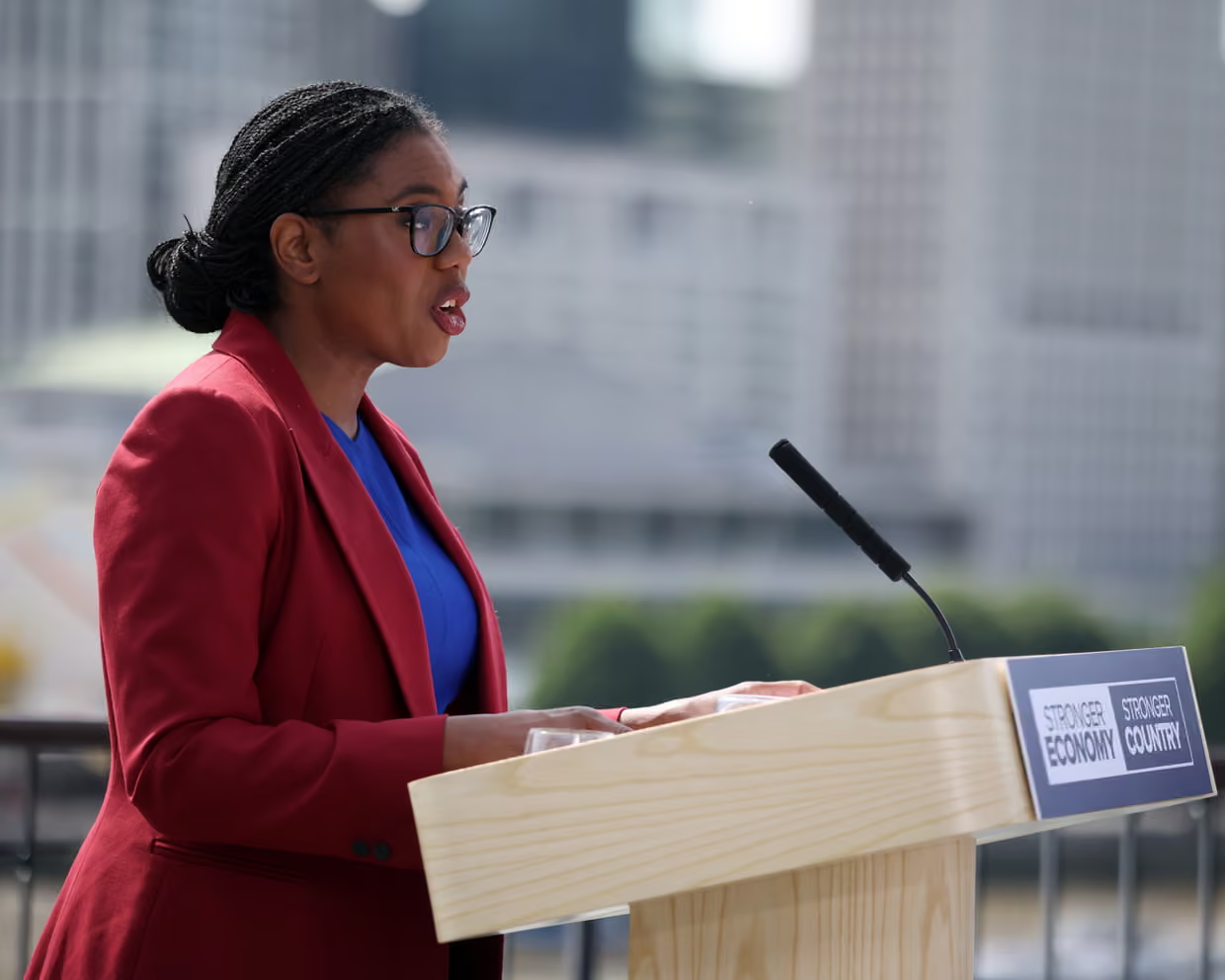
At the heart of Badenoch’s approach is an emphasis on preparing Britain for threats that may develop over the longer term, alongside a renewed focus on national security and economic discipline within the Conservative Party.
The Conservative leader stated that the party needed to demonstrate that it had changed since its defeat at the 2024 general election and that rebuilding public confidence would take time.
Rather than focusing exclusively on the next election, she argued that the Conservatives needed to establish what they would do if returned to government.
“We need to remember that government is not just about elections,” she stated, describing the current period as the “beginning, not the end.”
Badenoch indicated that she did not want to repeat the “mistakes” of previous Conservative leaders and argued that her approach was centred on setting out policies before the party returned to government.
READ ALSO: Trump Halts Taxpayer Funding for Campaign-Style TV Ads