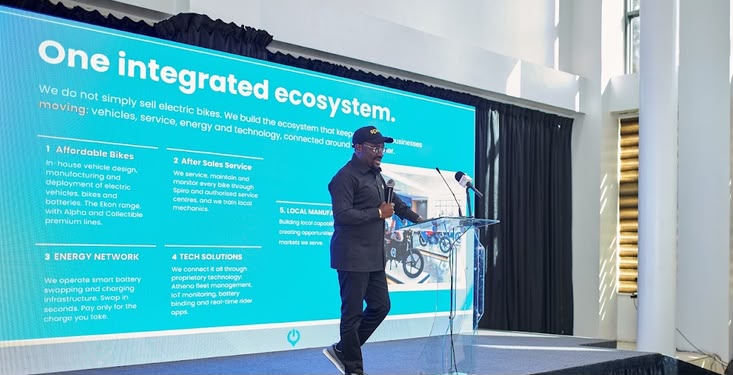
Ghana’s transport-energy equation could be heading for a significant shift as electric mobility company SPIRO prepares to enter the country with locally assembled electric motorcycles, battery-swapping infrastructure and a wider support network designed around commercial riders.
The planned entry is more than the arrival of another motorcycle brand. It places energy consumption, transport costs and local industrial development at the centre of Ghana’s emerging electric-mobility market, at a time when businesses remain highly exposed to the cost of conventional fuels.
SPIRO confirmed on October 5 that Ghana is among the markets it is preparing to enter as part of an expansion that will take the company into 20 new markets by 2027. The company says its Ghana model will combine motorcycle assembly, energy hubs, battery swapping, technician training, spare-parts supply and after-sales support.
From Fuel Dependence To Electric Mobility
The significance of SPIRO’s planned Ghana operation lies in the fact that it is targeting mobility as an energy system rather than simply selling electric vehicles.
For commercial riders, fuel is a recurring operating expense. Every increase in petrol prices feeds directly into the cost of keeping a motorcycle on the road, making energy efficiency an increasingly important consideration for businesses whose income depends on daily vehicle utilisation.
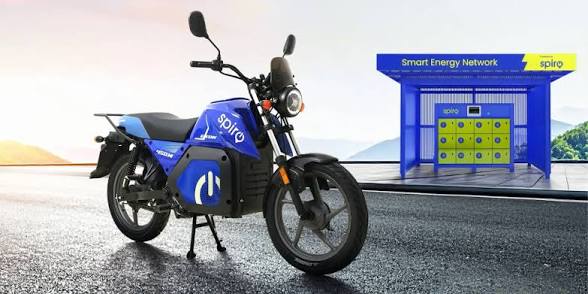
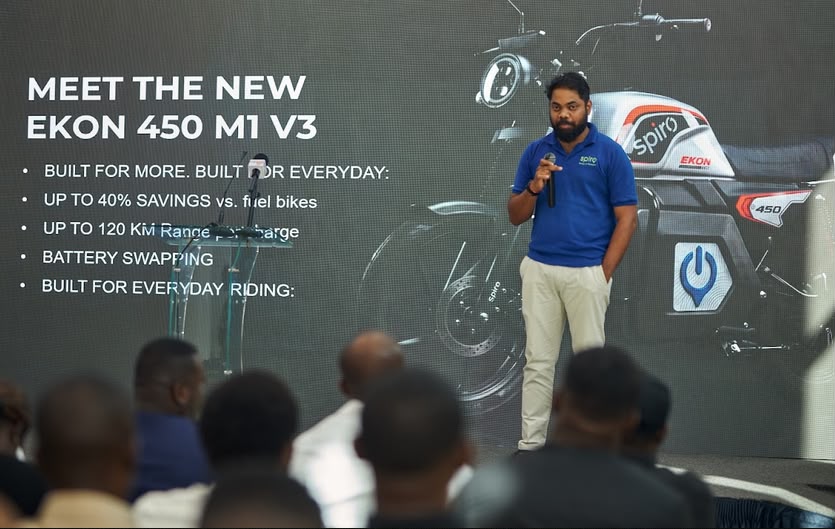
SPIRO says riders using its electric motorcycles can achieve operating-cost savings of up to 40%. The company’s battery-swapping model is particularly relevant to commercial transport because it avoids the long waiting periods associated with conventional charging: depleted batteries can be exchanged for charged ones at designated stations.
That creates a different relationship between transport and energy.
Rather than a rider repeatedly purchasing petrol to keep an engine running, electricity becomes the energy input while the battery network becomes part of the vehicle’s operating infrastructure.
The economic question, therefore, is not simply whether an electric motorcycle is cheaper than a petrol motorcycle to operate. It is whether the entire ecosystem, electricity supply, battery availability, swapping stations, maintenance, financing and vehicle acquisition, can be developed cheaply and reliably enough to make the transition commercially attractive.
SPIRO’s Managing Director, Maxwell Dodd, framed the opportunity in broader economic terms:
“Electric mobility is not simply about transportation. It is about empowering people, strengthening businesses, creating jobs and building a more resilient economy.”
For Ghana, that distinction matters. If electric mobility remains limited to imported vehicles, its energy benefits could be accompanied by another form of external dependence. Local assembly and technical training could instead allow part of the value created by the transition to remain within the domestic economy.
Local Assembly Could Deepen The Energy Transition
SPIRO says it intends to assemble its motorcycles in Ghana rather than rely solely on importing finished vehicles. It also plans to train technicians and establish spare-parts and customer-service systems for riders and fleet operators.
This introduces an industrial dimension to Ghana’s electric-mobility ambitions.

Local assembly creates an opportunity for Ghana to develop capabilities around electric drivetrains, battery systems, vehicle maintenance and related services. The deeper the local supply chain becomes, the greater the potential for electric mobility to generate economic activity beyond the sale of motorcycles.
SPIRO’s broader African operations provide an indication of the scale it is pursuing. The company says it now has more than 146,000 electric motorcycles and more than 2,500 battery-swapping stations across seven African markets, with more than 54 million battery swaps recorded. It also operates assembly facilities in Uganda, Kenya, Nigeria and Rwanda.
That experience could give Ghana access to lessons from markets where electric motorcycles are already being deployed commercially.
But the Ghanaian opportunity will depend on how much of that experience can be translated into a locally sustainable business model.
A battery-swapping network, for instance, requires substantial infrastructure investment and dependable electricity. It also requires standardised batteries, strategically located energy hubs and sufficient vehicle density to justify the infrastructure.
Without those conditions, the electric motorcycle itself may be efficient while the wider system remains commercially difficult to sustain.
The Infrastructure Question Comes First
SPIRO’s planned network of energy hubs is therefore as important as the motorcycles themselves.
The company says it will deploy battery-swapping infrastructure alongside its Ghana operations, allowing commercial riders to replace depleted batteries instead of waiting for conventional charging.
That model could be particularly useful for high-mileage commercial operators, for whom vehicle downtime has a direct income cost.
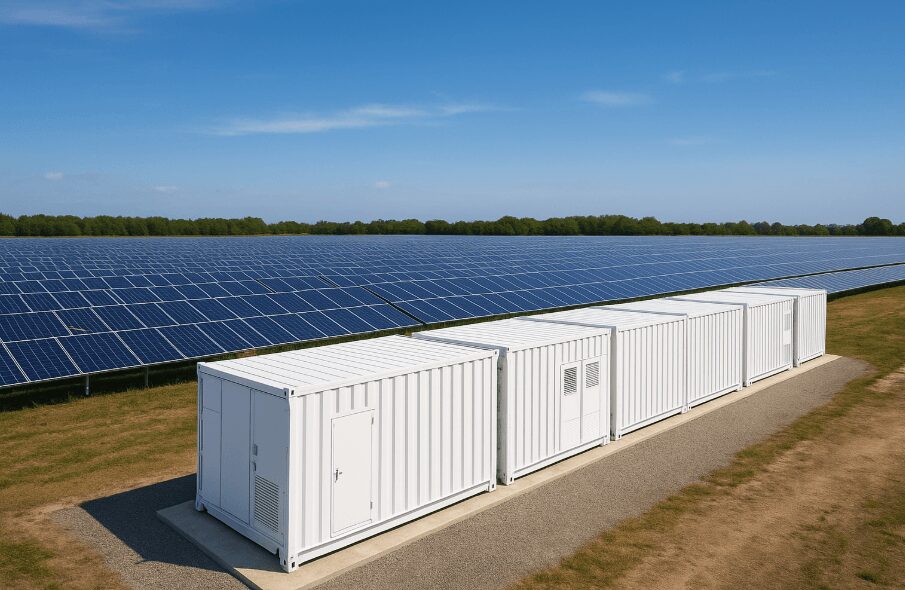
But it also means Ghana’s electricity system will increasingly become part of the economics of transport.
If electricity is unreliable or expensive, some of the anticipated operating-cost advantage of electric mobility could be weakened. Conversely, if battery-swapping stations can be supplied efficiently and electricity costs remain competitive, electrification could reduce the exposure of riders and delivery businesses to petroleum-price fluctuations.
SPIRO’s Chief Executive Officer for Mobility, Kaushik Burman, said the company sees Ghana as an important component of its continental strategy.
“Ghana represents an important new market for SPIRO and another step in our ambition to build a truly pan-African electric mobility platform.”
The company’s expansion also reflects a wider African shift towards mobility systems that are less dependent on imported petroleum. SPIRO has positioned its model around replacing fossil-fuel-powered transport with electric alternatives, while developing manufacturing, energy and service infrastructure around them.
For Ghana, the strategic value would therefore extend beyond reducing emissions.
It could also mean reducing the amount of foreign exchange required to power part of the transport economy with imported petroleum products.
Jobs Could Extend Beyond Motorcycle Assembly
The company is also presenting electric mobility as an employment opportunity.
SPIRO estimates that its broader ecosystem could support more than 200,000 direct and indirect jobs across its activities within three years, including mobility, energy, logistics, maintenance and entrepreneurship. However, that is a company-wide projection and does not represent a Ghana-specific employment commitment.
That distinction is important when assessing the potential domestic impact.
The immediate employment opportunities associated with Ghana could come from assembly, battery operations, technical maintenance, energy infrastructure, customer service and distribution. Over time, additional opportunities could emerge if local businesses begin supplying components and services to the electric-mobility ecosystem.
The real industrial opportunity would therefore be determined by how much local capability develops around SPIRO’s operations rather than simply how many motorcycles are sold.
Ghana’s Opportunity Goes Beyond The Motorcycle
SPIRO’s proposed entry comes as the company accelerates its continental expansion following significant investment. Earlier this year, it announced a US$215 million equity financing round to support electric mobility and battery-swapping infrastructure, while subsequent investment brought its reported funding for expansion higher.
The scale of that investment indicates that electric mobility is increasingly being treated as an infrastructure and energy opportunity rather than a niche transport experiment.
For Ghana, the challenge will be to ensure that this new market develops in a way that complements its wider energy transition.
The country could benefit from lower petroleum dependence, new technical skills, local assembly and additional demand for electricity. But those benefits will not occur automatically.
Affordability will remain decisive. Commercial riders must be able to acquire the motorcycles, access batteries conveniently and maintain the vehicles at a cost that makes economic sense. Infrastructure must expand ahead of demand without becoming prohibitively expensive.
SPIRO’s Ghana strategy consequently raises a larger policy question: whether Ghana can use the arrival of electric mobility companies to build an ecosystem in which transport electrification also advances local manufacturing, technical capacity and energy-sector development.
If it can, the transition would be about more than replacing petrol engines with electric motors.
It would be about changing where transport gets its energy, how that energy is supplied, and how much economic value Ghana can retain from the transition.
READ ALSO: Badenoch Calls for UK to Prepare for New Warfare Threats