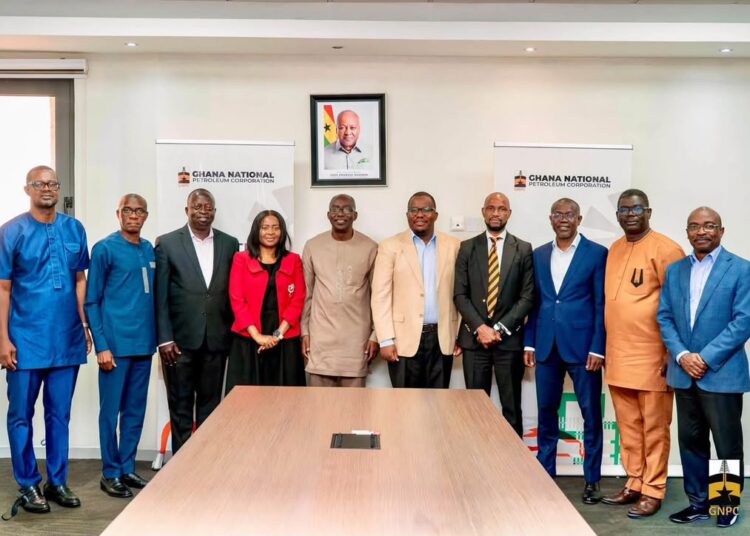
Ghana’s experience in building a petroleum industry is becoming a reference point for other African countries seeking to develop national oil institutions, with the Ghana National Petroleum Corporation (GNPC) hosting a delegation from the Eswatini National Petroleum Company (ENPC) for a technical study visit.
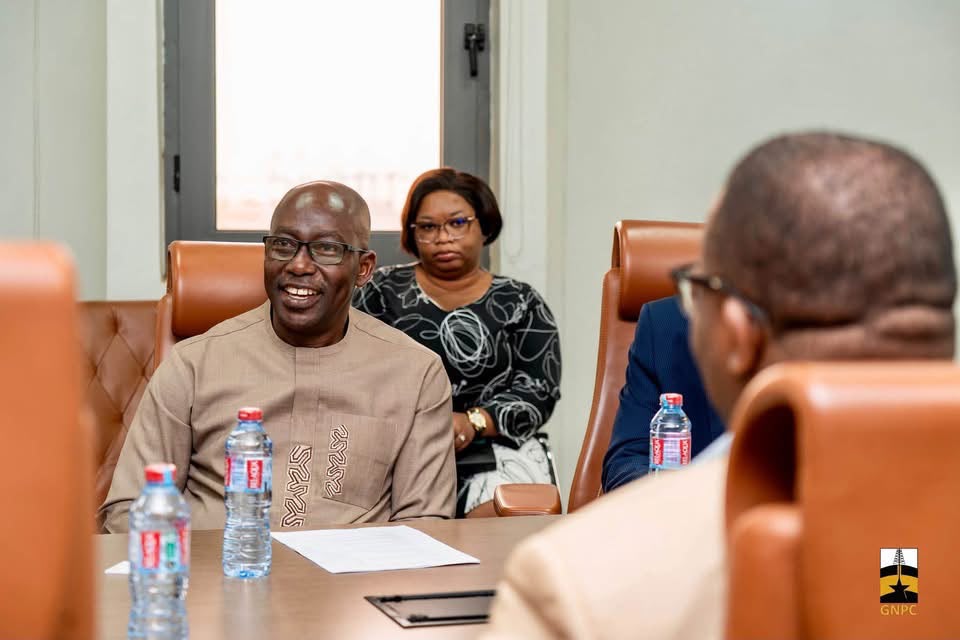
The three-member Eswatini delegation, led by ENPC Board Member Dumezweni Dlamini, engaged GNPC management under Chief Executive Kwame Ntow Amoah as the two national oil companies explored areas for institutional learning and future collaboration.
The engagement is significant beyond the diplomatic value of a peer-to-peer visit. For Eswatini, which is still developing the institutional architecture around its petroleum ambitions, Ghana offers an example of how a national oil company can evolve alongside a country’s petroleum industry and take on responsibilities extending beyond direct upstream participation.
Learning From Ghana’s Petroleum Evolution
The discussions focused on the development of GNPC, its operating model and the institutional changes that accompanied the growth of Ghana’s petroleum sector.
Rather than presenting Ghana’s experience as a finished model, the engagement provided an opportunity to examine how responsibilities have shifted as the industry has matured, including the relationship between policy, regulation, commercial participation and national petroleum interests.
GNPC said its formative years provided lessons that could be useful to ENPC as the Eswatini institution considers how to build its own capabilities.
For Ghana, the exchange also offers an opportunity to assess its own institutional development through the experience of another African national oil company.
GNPC Chief Executive Kwame Ntow Amoah said the Corporation was prepared to share the experience it had accumulated over decades as Eswatini develops its petroleum-sector institutions.
“GNPC is ready to share its technical expertise and support ENPC’s capacity development where required,” he said.
The approach reflects a broader shift in African energy cooperation, where technical knowledge is increasingly being shared between institutions on the continent rather than being sourced exclusively from international oil companies or external consultants.
Building Capacity Beyond Upstream Operations
A major area of discussion was GNPC’s participation in Ghana’s upstream petroleum sector.
However, the study visit also examined functions that have become increasingly important to Ghana’s wider energy system, particularly GNPC’s role as the National Gas Aggregator and its involvement in capacity development.

That distinction matters because the responsibilities of a national oil company can extend well beyond securing equity interests in producing fields.
GNPC’s experience demonstrates how an institution can become involved across different segments of the petroleum value chain as the domestic industry develops.
Its role in gas aggregation, for example, places the Corporation at the intersection of upstream production, gas supply and the wider energy system.
For ENPC, these experiences could provide lessons on how institutional responsibilities should evolve alongside the development of its own petroleum sector.
ENPC Chief Executive Nontombi Motsa described the engagement as an opportunity to draw from Ghana’s experience as the company works to build its own capabilities and determine the structures needed for its evolving petroleum industry.
The significance of that learning lies in avoiding the institutional gaps that can emerge when petroleum resources develop faster than the systems responsible for managing them.
A national oil company requires technical expertise, commercial capability and institutional clarity to translate petroleum opportunities into sustainable national value.
Without those foundations, resource development can create revenues without necessarily producing the broader industrial and economic benefits expected from the sector.
From Institutional Learning To African Cooperation
The GNPC-ENPC engagement also points to a wider question facing African energy producers: how much of the continent’s petroleum expertise can be retained and transferred within Africa itself?
Ghana has spent years developing technical and professional capacity around exploration, production, petroleum economics, gas management and energy-sector governance.

Sharing that experience with another African institution potentially allows knowledge accumulated in one petroleum market to become an asset for another.
This can be particularly important for countries at different stages of petroleum-sector development.
For Ghana, the relationship provides an avenue to demonstrate the institutional capabilities built since the country established itself as a commercial petroleum producer.
For Eswatini, the value lies in accessing practical lessons from an African country that has already navigated many of the institutional challenges associated with developing a petroleum industry.
Dumezweni Dlamini, who led the Eswatini delegation, participated in discussions on GNPC’s evolution and operating structure as part of the study visit.
The engagement therefore goes beyond a conventional courtesy visit. It represents an attempt to translate Ghana’s institutional experience into practical knowledge that can inform another country’s petroleum-sector development.
Collaboration Could Extend Across The Value Chain
GNPC said it would facilitate additional engagements for the Eswatini delegation with other institutions across Ghana’s petroleum value chain.
That could broaden the study beyond the Corporation itself and expose the delegation to the wider institutional ecosystem that supports Ghana’s petroleum industry.
The importance of such exposure is that national oil companies do not operate in isolation. Their effectiveness depends partly on how they interact with regulators, government institutions, commercial partners and other actors across the energy value chain.
For ENPC, understanding those relationships could be as important as understanding GNPC’s internal structure.
The engagement also creates a potential platform for future technical cooperation between the two institutions.
While no specific commercial transaction was announced, the willingness of both sides to exchange expertise establishes a basis for further institutional collaboration.
Ghana’s Experience Becomes A Continental Asset
The study visit comes at a time when African countries are increasingly looking to extract greater value from their energy resources while strengthening domestic technical and institutional capacity.
The challenge is not simply finding petroleum resources. It is developing institutions capable of managing those resources, attracting investment, negotiating effectively with commercial partners and ensuring that petroleum activity contributes to broader economic development.
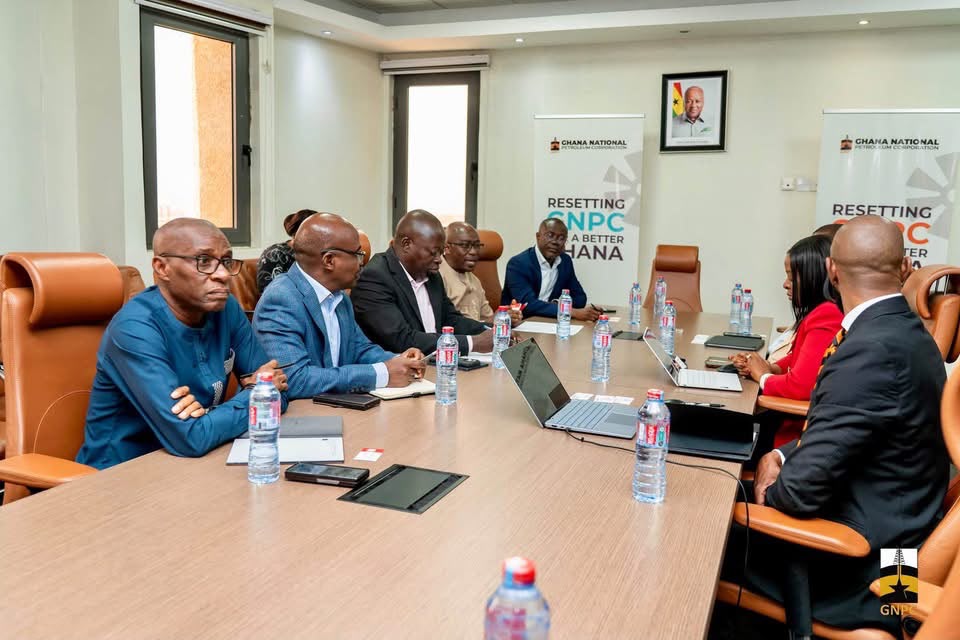
Ghana’s experience provides one African example of that process.
For Eswatini, the immediate priority is building institutional capacity as its petroleum sector evolves. For Ghana, sharing its experience creates an opportunity to turn decades of institutional learning into a form of regional energy diplomacy.
Kwame Ntow Amoah said the Corporation would continue to support the delegation’s engagements with relevant institutions in Ghana.
The practical outcome of the visit will ultimately depend on whether the knowledge exchanged translates into stronger systems and capabilities within ENPC.
But the broader message is already clear: Africa’s energy transition and resource development will require not only capital and infrastructure, but stronger African institutions capable of learning from one another.
In that sense, the GNPC-ENPC engagement represents a different kind of energy partnership, one built not around barrels or contracts, but around knowledge, institutional capacity and the ability of African energy companies to help build one another.
READ ALSO: Ghana’s Farm Employment Share Falls to 34.6% as Jobs Shift