Ghana National Petroleum Corporation (GNPC) has launched a strategic investment drive at the 2026 Offshore Technology Conference (OTC) in Houston, Texas, to secure critical global partnerships, adopt cutting-edge automated technologies, and firmly solidify the nation’s position at the center of international energy discussions.
Operating as one of the world’s most elite gatherings for offshore energy engineers and executives, the conference served as an ideal platform for the state enterprise to market emerging blocks and deepwater prospects.
The national oil company’s active presence underscored an aggressive push to reverse domestic production declines and attract sustainable, long-term capital into West Africa’s expanding maritime domain.
“GNPC’s participation at OTC 2026 reflects the Corporation’s commitment to positioning Ghana as an attractive destination for energy investment while cultivating strategic partnerships, promoting technology and knowledge exchange, and creating lasting value for the people of Ghana.”
Ghana National Petroleum Corporation (GNPC)
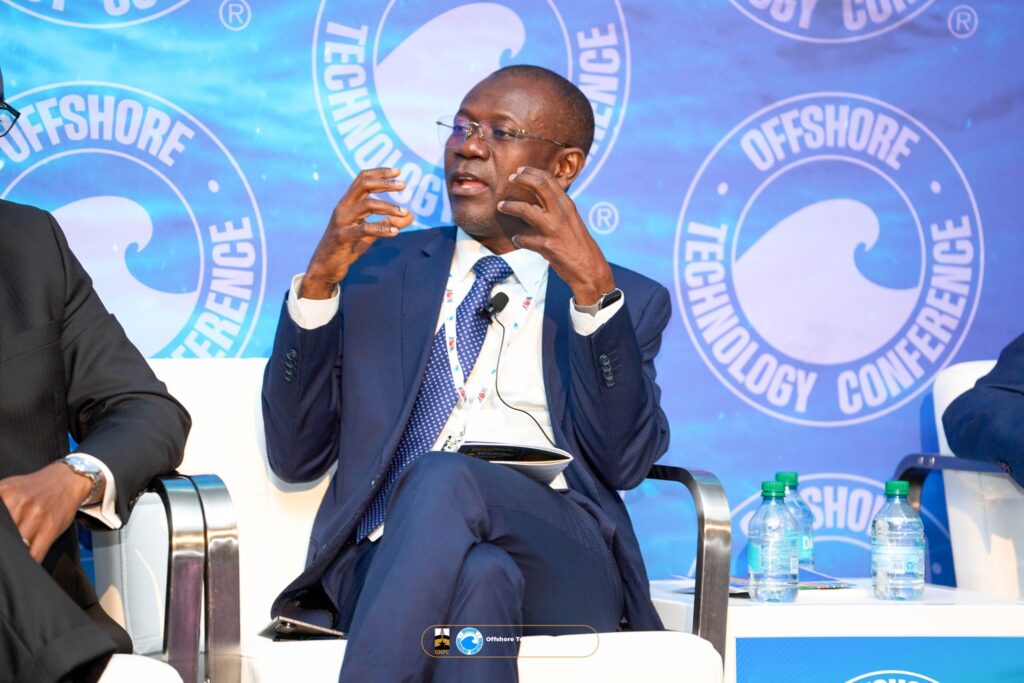
GNPC’s Deputy Chief Executive for Finance, Commercial and Administration, Mr. Hamis Ussif, delivered a compelling presentation at the Africa Energy Forum held on the sidelines of the event, showcasing the country’s vast hydrocarbon wealth and its structural readiness to accommodate modern, green-aligned upstream projects.
The corporation utilized its high-level technical delegation to network across specialized forums, notably participating in a key bilateral business breakfast organized by the Global Energy Network focused on the “US Energy Outlook.”
Through these combined platforms, the leadership actively benchmarked Ghana’s fiscal regimes against competing global basins, while holding deep-dive technical sessions with global engineering giants to modernize domestic offshore operations.
Strategic Interventions and Technical Alliances in Houston
A highly coordinated, high-level Ghanaian public-private delegation descended upon Houston to reinforce the state’s commercial messaging, indicating an integrated national resolve to protect investor interests and fast-track asset development.
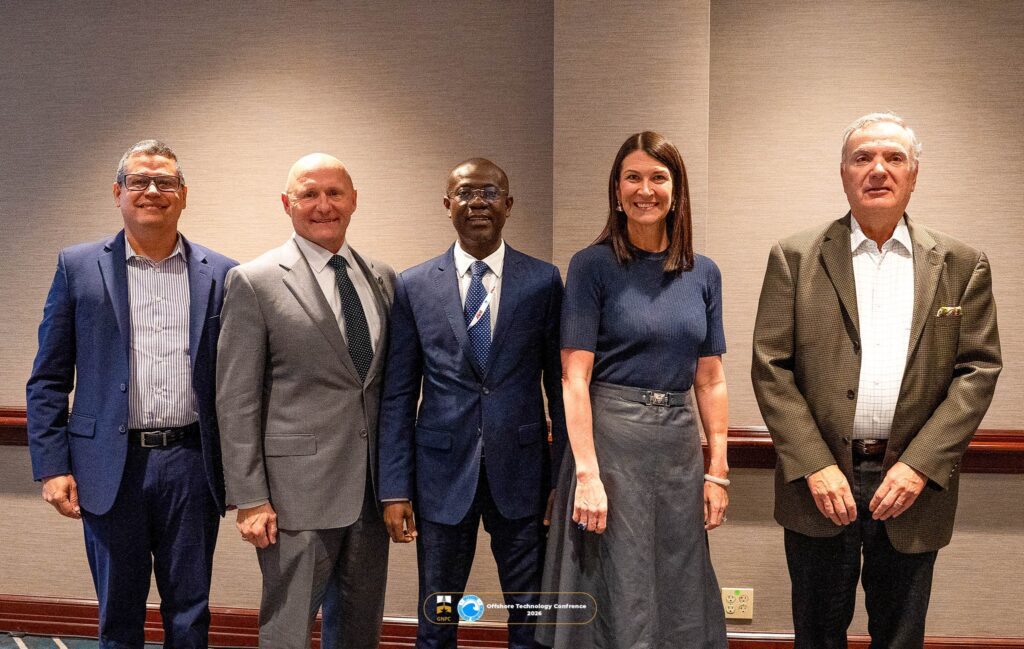
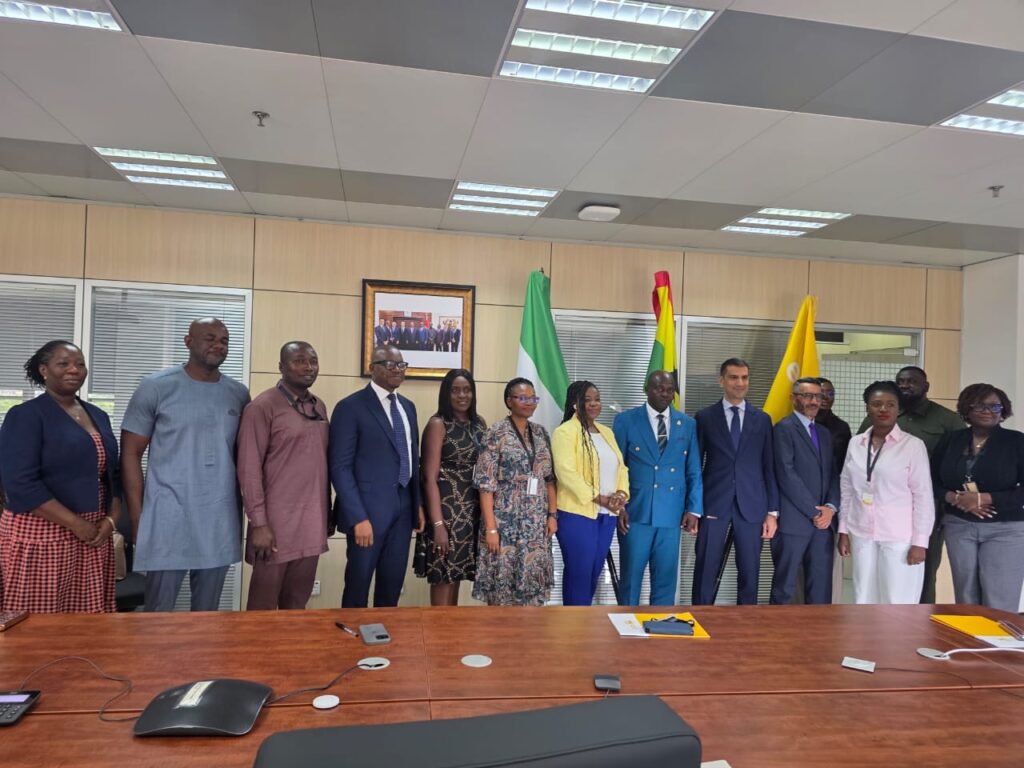
The state apparatus was fully represented by figures including Ghana’s Ambassador to the United States, active members of Parliament’s Select Committee on Energy, and senior executives from the Ghana Investment Promotion Centre (GIPC), the Tema Oil Refinery (TOR), and the National Petroleum Authority (NPA).
The urgency behind GNPC’s aggressive marketing campaign is deeply rooted in stark domestic economic data, as the country faces a critical transitional juncture marked by natural field depletion and deferred infrastructure spend.
National accounting figures show that crude oil production has dropped significantly from its historic peak of 71.4 million barrels in 2019 down to an estimated 36 million barrels, directly reducing state liquidity and squeezing allocations for the Annual Budget Funding Amount (ABFA).
To counteract this natural decline in maturing fields like Jubilee and TEN, Ghana requires massive infusions of foreign direct investment to finance ultra-deepwater exploration, unlock complex reservoirs, and introduce advanced secondary recovery technologies.
While the government recently secured approximately $3.5 billion in fixed capital commitments including a $2 billion framework for twenty new offshore wells and a $1.5 billion Memorandum of Intent with OCTP partners the entry into unexplored basins remains capital-intensive.
Millions in fresh exploration investments are needed to map out the frontier Accra-Keta and Voltaian basins, alongside the ultra-deep zones of the Tano Basin, which require specialized subsea architectures that only global consortia can deploy.
Furthermore, integrating these upstream assets with the state’s multi-megawatt Gas-to-Power programs requires extensive capital to build out secondary processing facilities, eliminating gas flaring while securing the nation’s long-term sovereign energy independence.
Maximizing Sovereign Value Through E&P Modernization
For GNPC, these international regulatory and commercial interventions extend far beyond the standard scope of basic corporate networking.
The entire Houston itinerary reflects a deliberate institutional mechanism intended to dramatically build up domestic technical capacities, slash high offshore operational overruns, and keep the West African producer perfectly synchronized with fast-moving global carbon-efficiency protocols.

By presenting clear farm-in terms and transparent acreage licensing rules directly to global oil majors, the corporation is successfully reducing the historical bottlenecks that previously slowed down major project final investment decisions (FIDs).
Ultimately, the footprints established throughout OTC 2026 demonstrate Ghana’s forward-looking approach to managing its sovereign natural endowments amid a changing global energy transition landscape.
By actively blending regulatory stability, technical innovation, and an investor-friendly business climate, GNPC is systematically de-risking its offshore basins for global financiers.
These continuous efforts ensure that the extraction of Ghana’s upstream petroleum resources will consistently yield sustainable fiscal returns, local industrial capacity, and enduring economic prosperity for the citizenries of Ghana.
READ ALSO: Mahama Ends Stand-Alone STEM Schools, Pushes Nationwide Access