
The future role of Ghana’s national oil company has come under renewed scrutiny as the Natural Resource Governance Institute (NRGI), in collaboration with the Ghana National Petroleum Corporation (GNPC), convened a national dialogue on how the Corporation can remain effective as Ghana’s petroleum sector enters a more challenging phase.
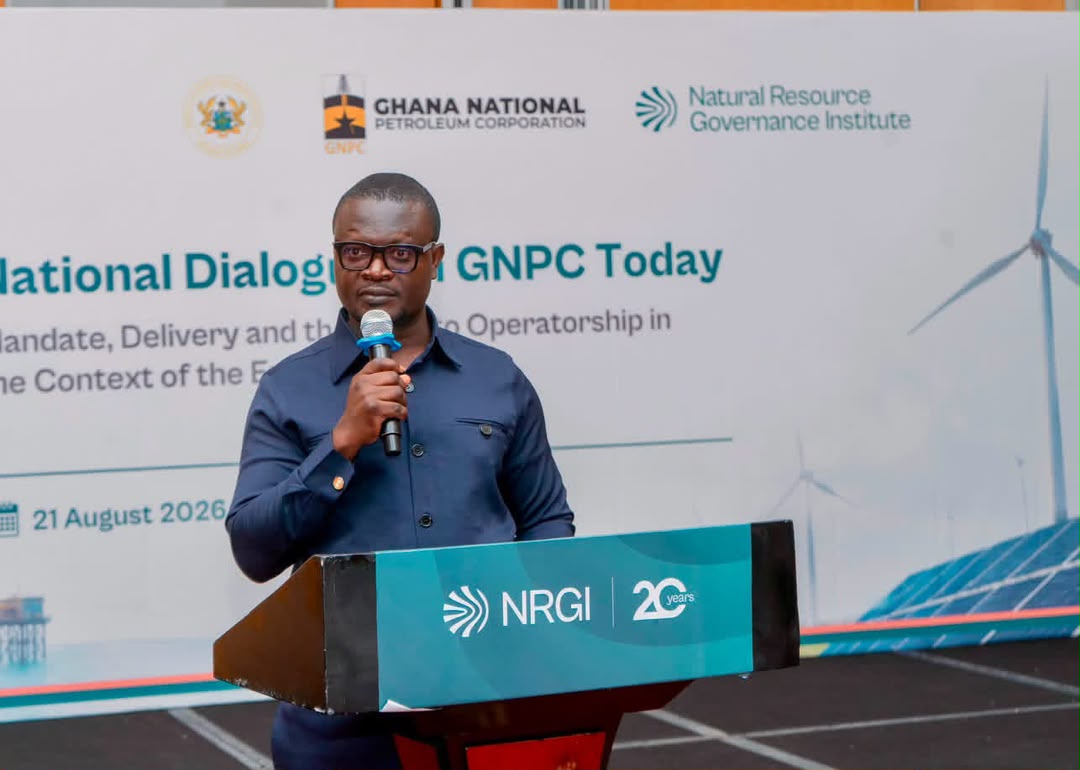
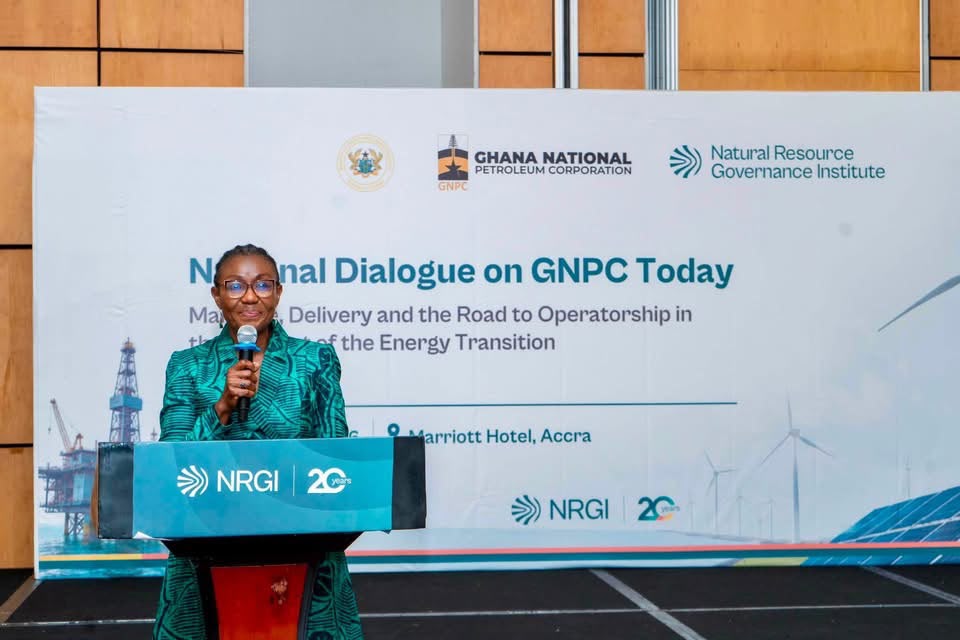
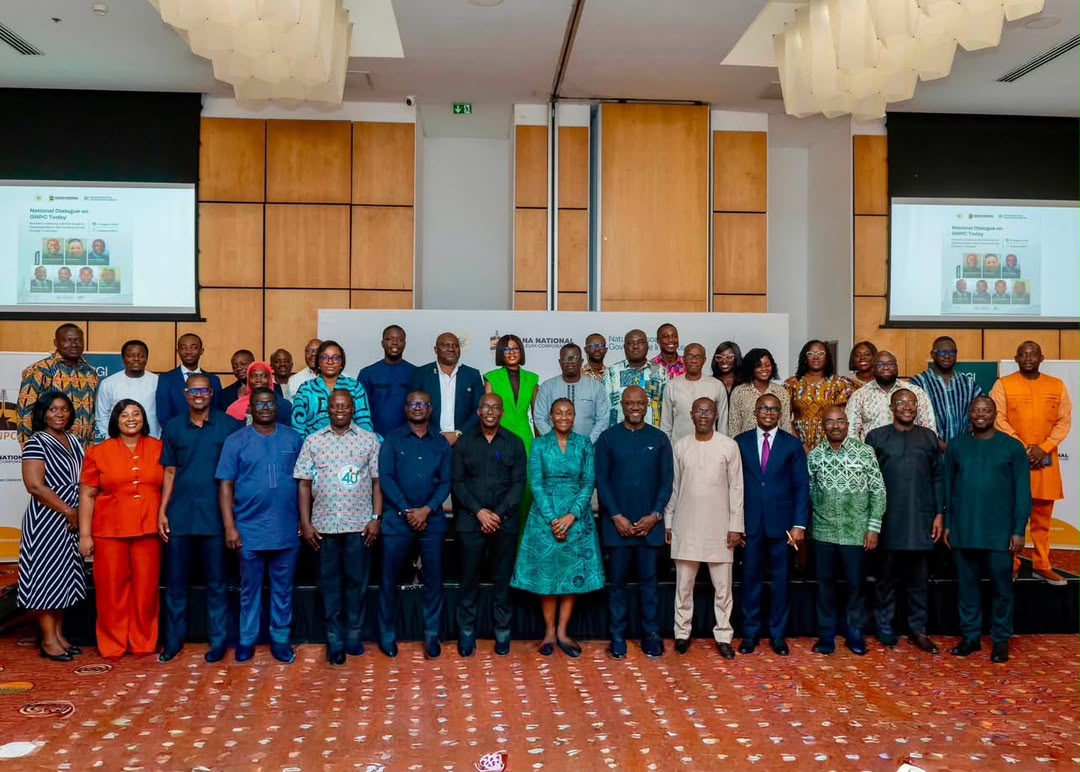
The “National Dialogue on GNPC Today: Mandate, Delivery, and the Road to Operatorship in the Context of Energy Transition” brought together government representatives, GNPC management, civil society organisations, energy-sector experts and other stakeholders to examine the Corporation’s evolving role and the choices facing Ghana as petroleum production declines and the energy transition gathers pace.
The engagement forms part of NRGI’s 20th anniversary activities, which are being used to examine the future of natural resource governance and the institutional choices required as countries navigate changing energy markets, fiscal pressures and the transition towards lower-carbon energy systems.
NRGI Africa Director Nafi Quarshie opened the engagement by placing the dialogue within the organisation’s broader effort to bring stakeholders together around Ghana’s natural-resource governance choices.
The engagement also builds on an earlier stakeholder conversation held in 2019, providing an opportunity to revisit some of the questions raised then against a substantially different petroleum and energy landscape.
That continuity is important. Ghana’s petroleum industry has moved from the optimism surrounding the early years of commercial production into a period characterised by declining output from producing fields, pressure to attract fresh exploration investment and growing questions about how the country’s national oil company should prepare for an energy system that will not remain permanently dependent on crude oil.
NRGI’s own framing of the dialogue identifies the decline in production from Ghana’s three producing fields, underexplored frontier basins and the Corporation’s ambition to move from a carried participant towards a technically capable and commercially oriented national oil company as central issues requiring national discussion.
GNPC’s Role Faces A Different Energy Reality
GNPC Chief Executive Kwame Ntow Amoah used the opening session to emphasise that the Corporation should be understood differently from an ordinary oil company.
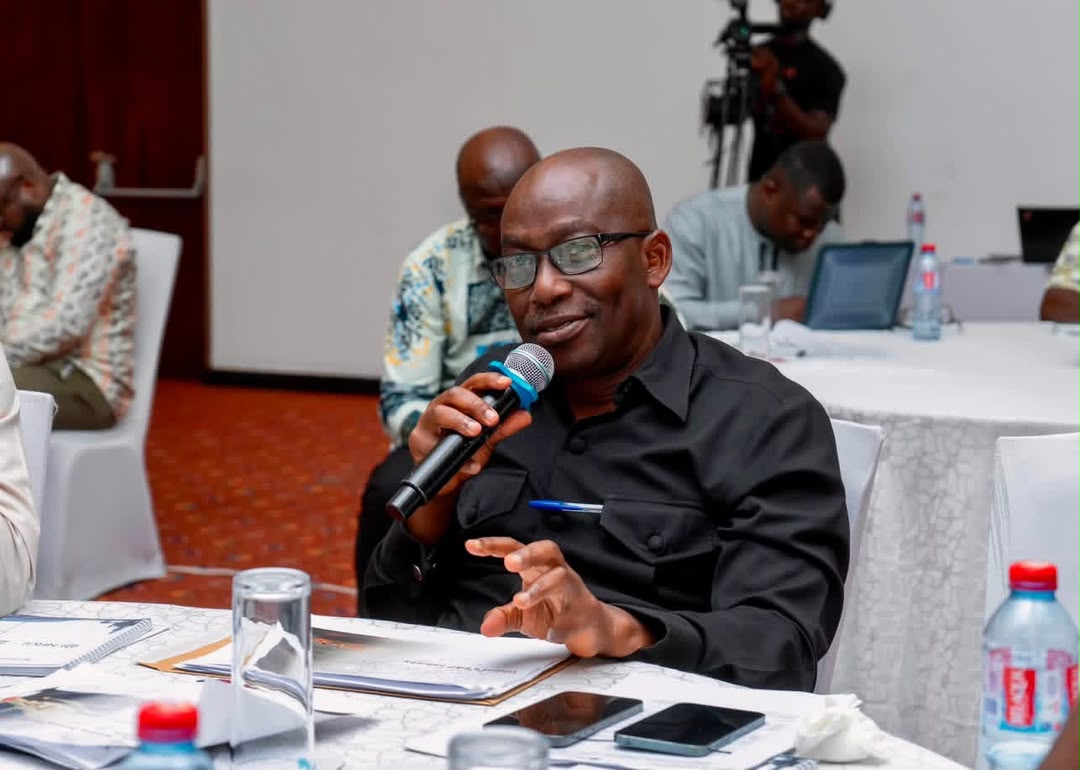
“GNPC is not just another oil company. As Ghana’s National Oil Company, our responsibility goes beyond the commercial cycle of any single project.”
GNPC Chief Executive Kwame Ntow Amoah
The argument goes to the heart of the national oil company model.
GNPC is the state vehicle for Ghana’s participation in petroleum exploration, development and production and has historically participated in upstream projects through carried interests.
The Corporation is now seeking to build the technical and commercial capacity necessary to take greater responsibility for operating petroleum assets.
The shift matters because Ghana can no longer rely indefinitely on the structure that characterised much of the early development of its petroleum industry.
International oil companies have historically brought substantial capital, technology and operational expertise into Ghana’s offshore sector, while GNPC retained an interest on behalf of the state.
Moving towards operatorship would give Ghana greater direct control over upstream activity, but would simultaneously expose the national oil company to greater financial, technical and operational risks.
The dialogue therefore comes at a point where the question is no longer simply whether GNPC should participate in petroleum development, but what capabilities and safeguards are required for the Corporation to operate successfully on behalf of the state.
From Participation To Operatorship
The Corporation’s transformation agenda places operatorship at the centre of its next phase.
GNPC has identified technology, financing, capacity and resilience as important pillars of its longer-term transformation, while the Corporation’s stated ambition is to become technically capable, commercially efficient and financially independent.
The move is already being tested through GNPC’s work in the Voltaian Basin, where the Corporation is the operator of Ghana’s onshore exploration programme and has committed to drilling its first well there by the end of 2026.
That makes the dialogue more than an institutional anniversary event.
It is effectively a national examination of whether Ghana has the financial architecture, technical skills, governance systems and commercial discipline necessary to move a national oil company into a more demanding phase of direct operatorship.
The financing question is particularly important. Exploration is capital intensive and inherently uncertain.
A national oil company cannot simply assume operatorship because the state wants greater control; it must demonstrate the ability to select projects carefully, manage costs, secure financing and withstand unsuccessful exploration campaigns without transferring excessive risks to the public balance sheet.
Energy Transition Adds A New Test
The energy transition creates another layer to the GNPC debate.
Ghana still relies significantly on petroleum and natural gas for energy security, government revenue and thermal power generation.
At the same time, global investment patterns are changing as investors increasingly assess fossil-fuel projects against climate policy, future demand and financing risks.
NRGI’s broader work on national oil companies recognises that NOCs are facing precisely this dilemma: they must manage existing petroleum assets and energy-security responsibilities while preparing for a future in which fossil-fuel demand and access to capital may become less certain.
GNPC’s own longer-term strategy reflects that tension, with low-carbon technologies and renewables appearing alongside its upstream ambitions.
That raises a fundamental question for Ghana: how does a national oil company built around petroleum remain commercially relevant when the national energy system itself is expected to diversify?
The answer cannot simply be to turn GNPC into a renewable-energy company overnight.
Doing so could undermine its core upstream mandate and Ghana’s remaining opportunity to maximise value from existing petroleum resources.
But remaining exclusively focused on crude oil would carry its own risk if the global energy market changes faster than the Corporation’s asset base.
The more credible approach is therefore likely to involve using petroleum as the financial and technical foundation for a carefully managed diversification strategy, while avoiding investments that merely expand GNPC’s exposure without a clear commercial or national-energy rationale.
Dialogue Designed To Challenge The Status Quo
The stakeholder format was central to the event.
NRGI’s stated objectives include examining GNPC’s operational and governance challenges, fiscal sustainability, subsidiary structures, accountability and progress towards operatorship, while considering how the Corporation’s transformation can fit Ghana’s fiscal realities and energy-transition priorities.
That brought civil society perspectives directly into a conversation that could otherwise remain largely within government and industry.
The engagement also reflects NRGI’s wider 20th anniversary focus on how resource-governance institutions can respond to a new era of energy and development challenges.
The organisation says its anniversary programme is intended to examine what has worked, what has not and what needs to change as countries look towards 2050.
For Ghana, that examination is particularly timely.
The country is simultaneously trying to arrest declining petroleum production, expand exploration, strengthen domestic participation, improve gas utilisation and maintain energy security while preparing for a lower-carbon future.
Those objectives can reinforce one another, but they can also compete for scarce capital and institutional capacity.
The GNPC Today dialogue therefore provides an important platform for confronting those trade-offs before they become more expensive.
The central issue is ultimately not whether GNPC should become bigger or more commercially active.
It is whether Ghana can build a national oil company capable of taking calculated upstream risks, protecting public value, operating commercially, remaining accountable to citizens and adapting before the energy transition makes adaptation unavoidable.
That is the conversation NRGI and GNPC have now placed before Ghana’s energy sector, and it is one that will become increasingly difficult to postpone as the country’s petroleum era evolves.
READ ALSO: Republic Bank, Enterprise Life Roll Out New Insurance Plans