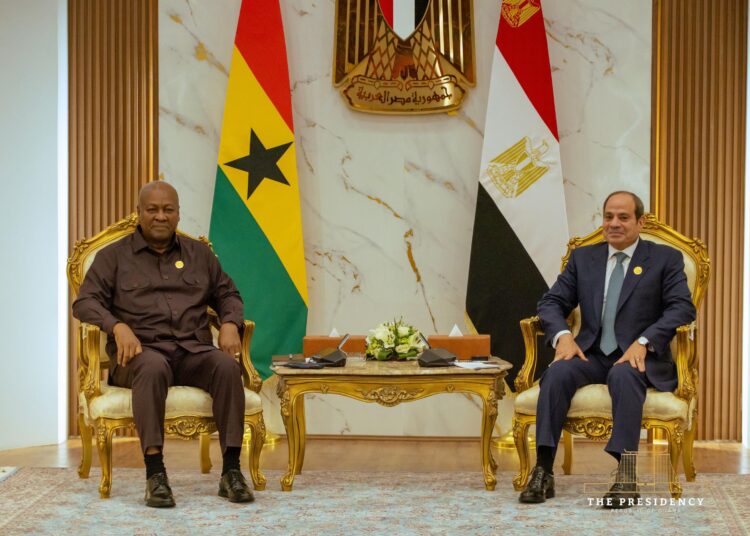
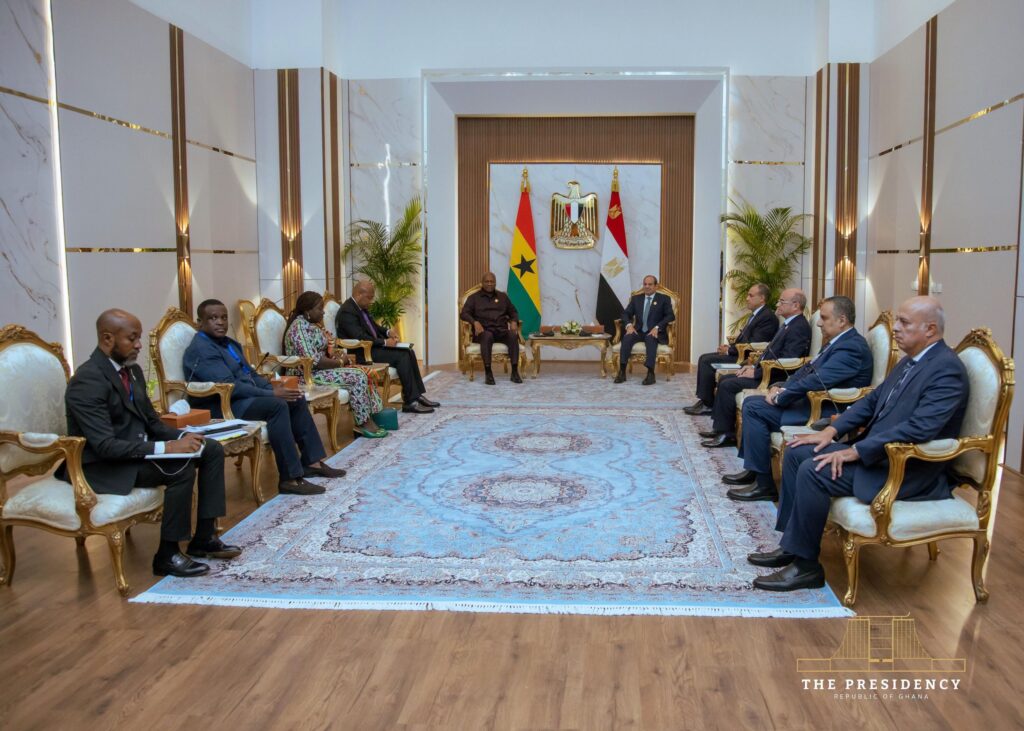
President John Dramani Mahama has held discussions with Egyptian President Abdel Fattah el-Sisi on strengthening bilateral relations and deepening cooperation across healthcare, defence, security and urban development.
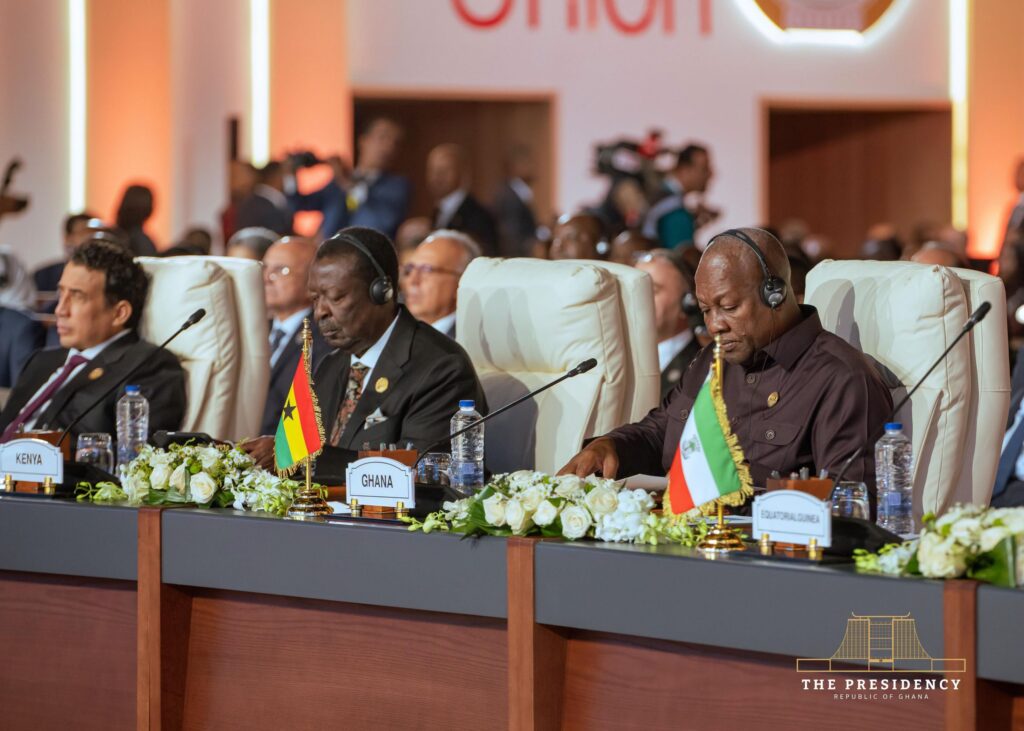
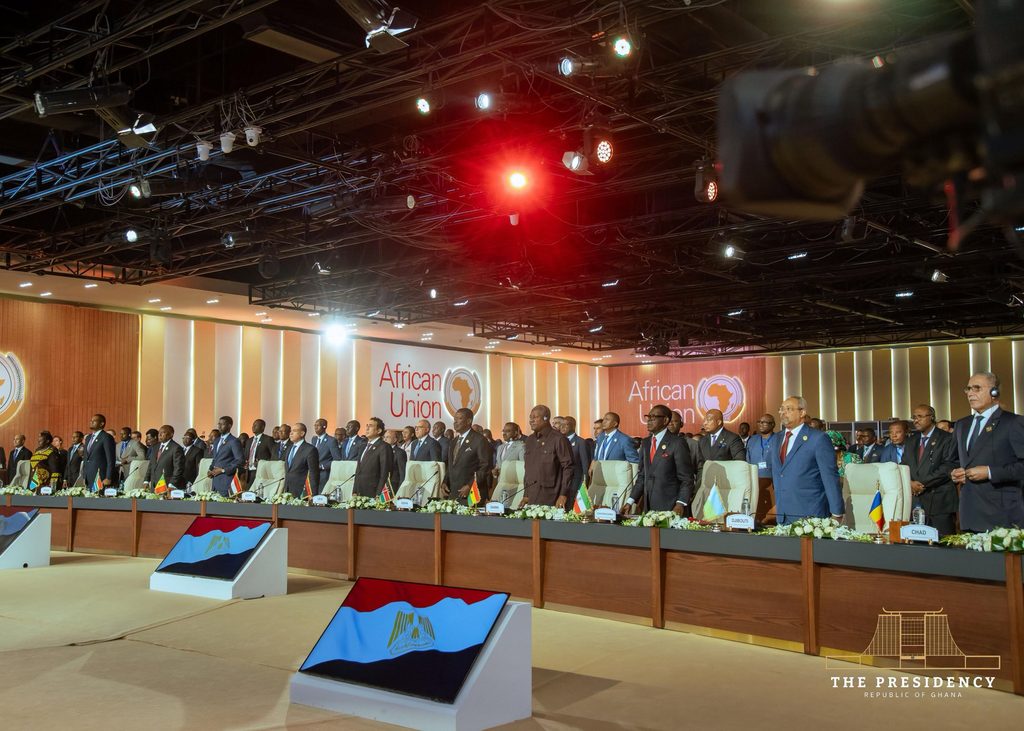
The meeting took place on the sidelines of the 8th African Union Mid-Year Coordination Summit, where the two leaders reaffirmed their commitment to advancing Ghana’s, Egypt’s and the wider African continent’s development priorities.
President Mahama said the discussions also revisited the historic pan-African relationship between Ghana and Egypt, highlighting the ties established by Ghana’s first President, Dr Kwame Nkrumah, and former Egyptian President Gamal Abdel Nasser.
According to President Mahama, the relationship between the two countries remains rooted in a shared commitment to African unity, development and self-determination.
He said Ghana and Egypt were committed to building on this historical foundation by strengthening practical cooperation in areas capable of delivering tangible benefits to their citizens and contributing to continental development.
Ghana Thanks Egypt for Support on Reparations
A key issue raised during the meeting was Egypt’s support for Ghana’s reparations resolution at the United Nations. President Mahama conveyed Ghana’s appreciation to President El-Sisi and the Egyptian government for what he described as their steadfast support for Ghana’s initiative at the United Nations.
The expression of gratitude reflects the importance Ghana attaches to building broader African support around efforts to address the historical consequences of slavery, colonialism and other forms of exploitation that have affected the continent and its people.
The two countries’ engagement therefore places their bilateral relationship within a wider pan-African framework, with cooperation extending beyond traditional diplomatic and economic interests.
Pharmaceutical Cooperation to Improve Healthcare Access
Healthcare emerged as another major area of cooperation, with Ghana and Egypt agreeing to streamline the registration of Egyptian pharmaceutical products in Ghana.
The arrangement is expected to facilitate the entry of Egyptian medicines into the Ghanaian market, potentially improving access to pharmaceutical products while creating opportunities for greater commercial engagement between businesses in both countries.
President Mahama said the initiative would also help attract investment into Ghana’s pharmaceutical and healthcare sector. The agreement comes as African countries continue to confront challenges surrounding access to medicines, pharmaceutical manufacturing capacity and dependence on imported healthcare products.
For Ghana, closer engagement with Egypt’s pharmaceutical industry could create opportunities for expanded supply chains, investment and knowledge exchange while supporting efforts to strengthen the country’s healthcare system.
Defence and Counter-Terrorism Cooperation
The discussions also covered defence and security cooperation, with President Mahama acknowledging Egypt’s advanced defence industry and experience in the security sector. The two leaders pledged to strengthen collaboration through intelligence sharing, capacity building and counter-terrorism initiatives.
They also committed to continued support for the Sahel-Gulf of Guinea Accord, an emerging regional security framework aimed at strengthening cooperation between countries facing the growing threat of terrorism and violent extremism.
The commitment is significant for Ghana and other Gulf of Guinea countries as security concerns in the Sahel continue to create wider regional risks.
Closer intelligence cooperation and capacity building between Ghana and Egypt could therefore contribute to efforts to strengthen national and regional preparedness against terrorism and other security threats.
Egypt’s Expertise to Support New Capital City
Urban development and housing also featured prominently in the discussions, with Ghana looking to Egypt’s experience as the country plans a new capital city and expands social housing.
President Mahama said Ghana was interested in leveraging Egypt’s technical expertise and experience gained from the development of its New Administrative Capital.
Egypt’s New Administrative Capital represents one of the country’s most significant modern urban development projects and offers experience that Ghana could draw upon as it considers the planning and development of a new administrative centre.
For Ghana, the proposed new capital city is expected to form part of longer-term efforts to address urban pressures, improve public infrastructure and support more efficient spatial development.
The President’s reference to Egypt’s experience suggests that technical cooperation could extend beyond diplomatic engagement to practical exchanges involving urban planning, infrastructure development, housing and public administration.
Renewed Ghana-Egypt Partnership
The meeting between Presidents Mahama and el-Sisi reinforces the longstanding relationship between Ghana and Egypt while expanding its focus towards practical cooperation.
From pharmaceuticals and healthcare to defence, counter-terrorism, housing and urban development, the areas identified by the two leaders cover sectors with direct implications for national development.
The historical connection between Nkrumah and Nasser also provides a political foundation for renewed cooperation, particularly as both countries continue to position themselves within broader African development and integration efforts.
President Mahama thanked President el-Sisi for Egypt’s warm hospitality and described the country as a steadfast partner to Ghana.
The discussions demonstrate Ghana’s interest in drawing on Egypt’s technical, industrial and institutional capabilities while deepening bilateral cooperation in areas aligned with the country’s development priorities.
For Egypt, stronger engagement with Ghana provides an opportunity to reinforce its longstanding ties with one of West Africa’s key economies and contribute to wider continental initiatives.
The renewed partnership could therefore translate the historic Ghana-Egypt relationship into practical cooperation capable of supporting healthcare access, regional security, investment, housing and sustainable development.