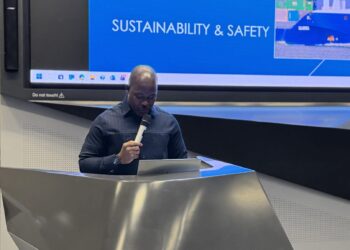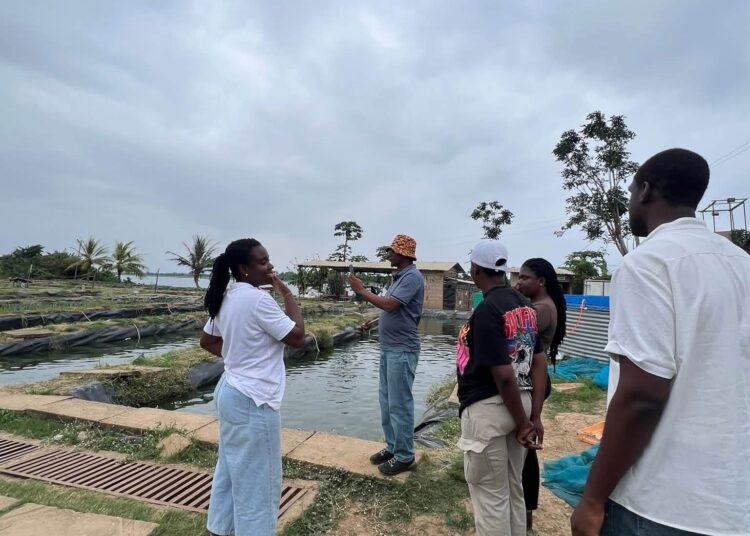
The Chamber of Aquaculture Ghana is deepening engagement between Ghana’s aquaculture industry and the 24Hr Authority as it facilitates a series of field visits designed to give policymakers first hand insight into the opportunities and challenges confronting fish farmers and aquaculture businesses.
The initiative brings the Aquaculture Project Team of the 24Hr Authority directly into farms and businesses, allowing members of the team to observe production activities, interact with operators and gather practical perspectives to inform future interventions for the sector.
As part of the ongoing exercise, the team spends three days engaging with Chamber members and other industry players in and around the Sogakope enclave.
The visits cover Fish & Feed Limited, Dongazy Farms and Flosell Farms, where the team interacts with farm operators and observes production processes while discussing the operational realities of running aquaculture enterprises.
The engagement also extends to Tropo Farms Ltd, where the team visits the company’s office in Accra for discussions on its operations and its perspectives on the development of Ghana’s aquaculture industry.
During the engagements, producers identify high energy and input costs, limited access to finance, land litigation, weak market demand, infrastructure constraints and environmental concerns as some of the major factors affecting production and expansion.
These challenges, industry players say, increase the cost of doing business and constrain the ability of aquaculture enterprises to scale up production and take advantage of growing opportunities in the domestic market.
“High energy and input costs remain a major concern for producers, while access to finance and land related challenges continue to affect the ability of businesses to expand.’’
The Chamber of Aquaculture
Highlighting Significant Opportunities in the Aquaculture Business
Despite these constraints, the visits highlight significant opportunities for strengthening the sector and improving the efficiency and resilience of aquaculture businesses.
Among the opportunities identified is the adoption of solar energy solutions to reduce energy costs and provide more reliable power for farm operations. Producers also point to species diversification as a means of expanding production options and responding to changing market opportunities.
Stronger collaboration among farmers is another area identified as important to the sector’s development, particularly through knowledge-sharing, joint problem-solving and collective approaches to some of the challenges affecting production.
The engagements also draw attention to the role of community development in creating sustainable conditions for aquaculture operations, especially in areas where fish farms contribute to local employment and economic activity.
The Chamber of Aquaculture Ghana says the field visits are important because they enable development partners and policymakers to understand the sector from the perspective of those operating within it.
Rather than relying solely on policy level discussions, the exercise provides an opportunity to identify challenges at the production level and explore interventions that are practical, targeted and responsive to the needs of businesses.
“The conversation is moving beyond policy. It is reaching the farms, the businesses and the people building Ghana’s aquaculture industry.”
The Chamber of Aquaculture
Aquaculture an Important Component of the Economy
Aquaculture remains an important component of Ghana’s agricultural and fisheries economy, supporting food production, employment and livelihoods while contributing to efforts to strengthen domestic fish supply.
However, the industry continues to face structural and operational constraints that require coordinated interventions from government, financial institutions, development partners and private-sector players.
The ongoing engagement with the 24Hr Authority therefore creates a platform for industry stakeholders to communicate these concerns directly while highlighting areas where targeted support can unlock greater productivity and investment.
The Chamber says the visitation programme will continue, with more members and businesses across the aquaculture value chain expected to engage with the 24Hr Authority team.
The next phase of the exercise is expected to further broaden the Authority’s understanding of the sector by exposing the team to different production models, business operations and value-chain activities.
For the Chamber, sustained collaboration between industry and policymakers is essential to building an enabling environment in which aquaculture enterprises can overcome production constraints, attract investment and expand their contribution to Ghana’s food and economic security.
The ongoing visits therefore serve as a practical bridge between policy and implementation, bringing the realities of Ghana’s aquaculture industry directly into conversations about future development interventions.
Creating Platforms for Industry Stakeholders
The ongoing engagement with the 24Hr Authority therefore creates a platform for industry stakeholders to communicate these concerns directly while highlighting areas where targeted support can unlock greater productivity and investment.
The Chamber says the visitation programme will continue, with more members and businesses across the aquaculture value chain expected to engage with the 24Hr Authority team.
The next phase of the exercise is expected to further broaden the Authority’s understanding of the sector by exposing the team to different production models, business operations and value chain activities.
For the Chamber, sustained collaboration between industry and policymakers is essential to building an enabling environment in which aquaculture enterprises can overcome production constraints, attract investment and expand their contribution to Ghana’s food and economic security.
The ongoing visits therefore serve as a practical bridge between policy and implementation, bringing the realities of Ghana’s aquaculture industry directly into conversations about future development interventions.
READ ALSO:COCOBOD, Stanbic Bank Deepen Partnership to Finance Cocoa Value Chain