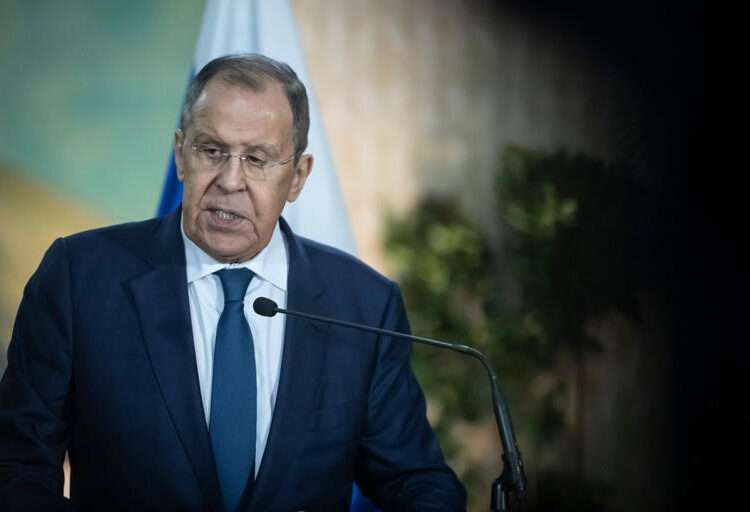
Russian Foreign Minister, Sergey Lavrov has reaffirmed Moscow’s opposition to any deployment of NATO military infrastructure in Afghanistan or neighbouring countries, warning that such a presence could fuel instability and conflict in the region.
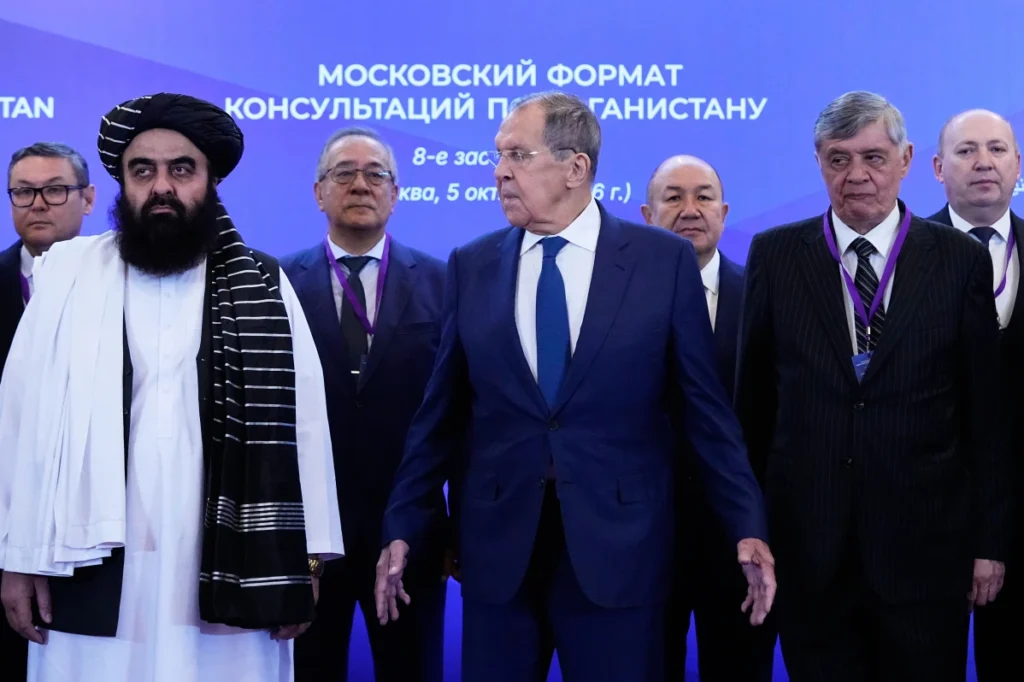
Lavrov made the remarks as Russia hosted the eighth meeting of the Moscow Format Consultations on Afghanistan, bringing together representatives from Afghanistan, China, India, Iran, Kazakhstan, Kyrgyzstan, Pakistan, Russia, Tajikistan and Uzbekistan.
The talks focused on Afghanistan’s political and security situation, regional cooperation and efforts to combat terrorism and drug trafficking. “Historical experience shows that such a presence is fraught with destabilization and escalating conflict,” Lavrov said, reaffirming Moscow’s view that NATO military infrastructure in Afghanistan and neighbouring states is “categorically unacceptable.”
His comments reflect Russia’s longstanding opposition to Western military involvement in Afghanistan, where US and NATO forces maintained a military presence for two decades before withdrawing in 2021. The Taliban seized control of Afghanistan in August that year following the withdrawal of US and NATO troops.
Lavrov also said that Russia would continue providing humanitarian assistance to Afghanistan while supporting efforts to strengthen the country’s capacity to combat terrorism and drug trafficking.
The Russian Foreign Minister welcomed Afghanistan’s Foreign Minister, Amir Khan Muttaqi to Moscow and congratulated him on what he described as the fifth anniversary of Afghanistan’s “liberation from the NATO contingent.”
“Five years is a short time to overcome the consequences of many decades of occupation, yet your government’s achievements are evident, and we welcome them.”
Sergey Lavrov
He praised the Taliban government’s efforts against the Islamic State group and other extremist organisations, as well as its campaign against drug trafficking. Lavrov also linked what he described as Afghanistan’s progress in combating terrorism and narcotics to ongoing military-technical cooperation between Moscow and Kabul.
Russia has deepened its engagement with the Taliban since the group returned to power. In July 2025, Moscow became the first country to formally recognise the Taliban government after removing the movement from its list of outlawed organisations.
The Kremlin has also used the Moscow Format consultations to maintain contact with the Taliban and other countries surrounding Afghanistan. The latest meeting provided an opportunity for regional powers to discuss security concerns at a time when tensions between Afghanistan and Pakistan have intensified.
The former Soviet Union itself fought a decade-long war in Afghanistan before withdrawing its troops in 1989. Moscow has since sought to expand its diplomatic influence in Central Asia and position itself as an important interlocutor on Afghanistan-related security issues.
Lavrov said that Russia’s interest was to strengthen Afghanistan’s counterterrorism capabilities and maintain cooperation with Kabul. He also stressed that Moscow would continue humanitarian support for the country.
The discussions took place amid continuing tensions between Afghanistan and Pakistan, with cross-border fighting persisting despite previous mediation efforts.
Pakistan has accused the Taliban government of allowing militants, particularly members of the Pakistani Taliban, or TTP, to operate from Afghan territory. Kabul has rejected the allegations and accused Pakistan of violating Afghan sovereignty through military strikes.
Recent Pakistani airstrikes in Afghanistan have further heightened tensions. Afghan authorities said the strikes killed civilians, including women and children, while Pakistan said its operations targeted militant positions.
Afghanistan’s Foreign Minister Muttaqi criticised Pakistan’s military operations during a briefing following the Moscow talks. He said that Afghan civilians had been killed in the attacks and questioned whether the strikes had eliminated individuals Pakistan considered security threats.

Despite Russia’s closer relationship with the Taliban, the Afghan government remains relatively isolated internationally, largely because of its restrictions on women and girls. Several countries have maintained diplomatic engagement with Kabul without formally recognising the Taliban government.
Moscow Ready To Help Defuse Tensions Between Afghanistan and Pakistan
Russian President Vladimir Putin’s envoy for Afghanistan, Zamir Kabulov, said that Moscow was prepared to assist Afghanistan and Pakistan in resolving their differences if both sides requested its involvement. “Russia stands ready to help end this conflict using all possible means and acting independently or together with other partners if both parties ask for it,” Kabulov told reporters.
Kabulov had previously said that the Moscow Format could provide an avenue for the two countries to seek a compromise over their disputes. The latest consultations therefore provided a platform for Russia to promote dialogue as fighting and accusations between the neighbours continue.
Afghan Foreign Minister Muttaqi has also said that problems between Afghanistan and Pakistan can be resolved through dialogue and diplomacy, signalling an emphasis on negotiations despite the recent escalation in cross-border violence.
The tensions have become one of the major security challenges facing the region, with both countries accusing the other of contributing to militant violence. Russia’s offer to assist comes as Moscow seeks to strengthen its role in regional diplomacy while maintaining close ties with Kabul.