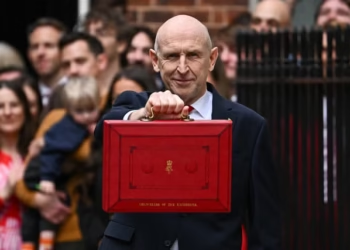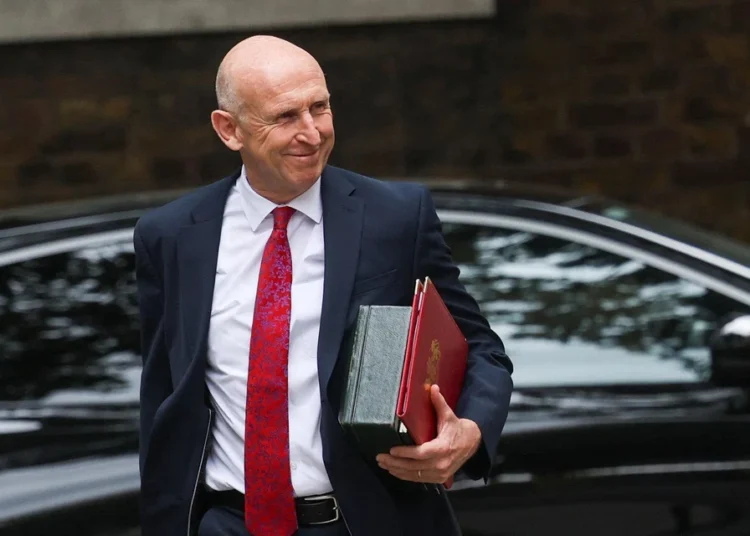
UK Chancellor John Healey has vowed to reduce government welfare spending before the next general election, after facing criticism from opposition parties that his first Budget failed to provide sufficient detail on reforms to address rising benefit costs.
Speaking in an interview following the Budget, the Chancellor described the current system as unsustainable and argued that helping more people into employment will reduce long-term welfare spending.
“There will be a reduction in the benefits bill, we’ll do that in a Labour way, and we’ll do that because it is simply not good for Britain or progressive to have a bigger and bigger benefits bill.”
John Healey
John Healey also ruled out “crude cuts,” but detailed proposals are not expected until the government publishes two reviews next month covering disability benefits and young people not in education, employment or training (NEET).
The Office for Budget Responsibility (OBR) forecasts that welfare spending will rise by £19 billion this year to £353 billion, before reaching £431 billion in 2031/32, driven primarily by health-related and pensioner benefit spending.
Healey Puts Employment at Centre of Welfare Reform
The chancellor maintained that the government has a “moral duty” to support the almost one million young people currently outside education, employment or training, arguing that helping them fulfil their potential would also strengthen the economy.
He noted that creating opportunities for young people to contribute economically would help bring down the welfare bill over the long term.
However, the government is yet to outline the full scope of its proposed reforms. The Chancellor informed MPs that a review of disability benefits, co-chaired by Labour Minister Sir Stephen Timms, and a separate review of young people led by Former Minister Alan Milburn will be published in November.
The government is expected to respond by the end of the year, publish a policy document outlining its proposals and introduce legislation next year.
The government has also pledged to reform the existing state pension triple lock from 2030, with further changes to the welfare system expected in the coming months.
Opposition Parties Criticise Lack of Budget Detail
Meanwhile, the budget pledge drew criticism from opposition leaders, who argued that the Budget did not adequately address the rising cost of welfare spending.
Conservative Party leader Kemi Badenoch accused Labour of prioritising welfare, arguing that the benefits bill was increasing by tens of billions of pounds under the government.
She described the country as “overspent, overborrowed, overtaxed, and drowning in an out-of-control welfare system,” adding that the Budget was “not bold enough.”
Liberal Democrat leader Sir Ed Davey also noted that welfare reform needed to focus on helping people into work while providing the care and support necessary for them to remain employed.
Helen Miller, Director of the Institute for Fiscal Studies, revealed that the government still faces “many difficult decisions” after leaving major issues, including disability benefits and support for young people, unresolved.
Also, Former Chancellor and Conservative MP Sir Jeremy Hunt criticised the lack of detail, arguing that the government had missed an opportunity to explain how it would move hundreds of thousands of young people from welfare into employment.
“I fear that the Chancellor and the Prime Minister have wasted the political capital that they have by putting off difficult decisions.”
Sir Jeremy Hunt
He added that delaying the decisions could make them more difficult to implement in a year’s time.
The Green Party’s Ellie Chowns mentioned that the Budget had failed to engage with the country’s real challenges, while Reform UK’s Robert Jenrick described it as an “exercise in fiddling while the economy burns.”
£100 Energy Support Announced Amid Cost Pressures
Beyond welfare reform, Healey announced a one-off £100 payment to help millions of households manage rising energy costs. The measure will be funded through a tax on bank profits and will apply to households in council tax bands A to D in England.
Wales has indicated that it will match the payment, while the Scottish government plans to replicate the measure.
The government will also scrap gas standing charges in England, Scotland and Wales during 2027, or as soon as possible afterwards. The fixed daily fees will instead be incorporated into the price of each unit of energy consumed, meaning households using more gas could face higher bills.
Healey acknowledged that the £100 payment will not eliminate the wider pressures on household energy costs, particularly as forecasts point to further increases in annual bills from January.
“There are experts who say at least this is going to help people get through the winter. There’s no way, if I’m honest with people and I want to be, that government can make payments that are going to remove all these price pressures that are driven by the war in the Middle East.”
John Healey
The reforms are taking place as the government faces pressure to balance support for households with efforts to control public spending.
READ ALSO: Three GSE Stocks Gain as Five Equities End in Red