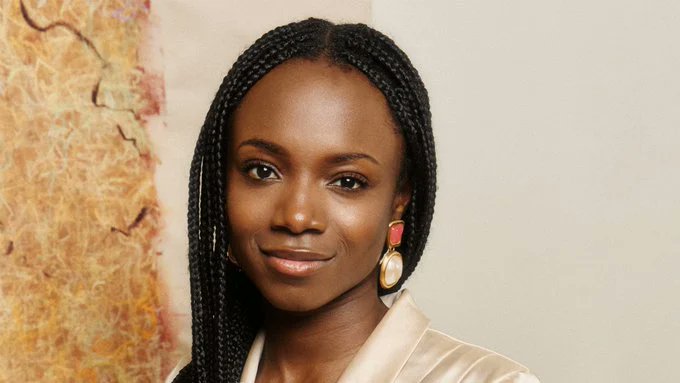
Nigerian-American engineer and entrepreneur Yinka Ogunbiyi has publicly demonstrated HaloBraid, described as the world’s first air-braiding or braid-assist robot, designed to help professional hairstylists complete braids significantly faster.
The device, developed by her startup Halo, handles the repetitive mid-shaft weaving portion of the braiding process after a stylist begins each braid by hand. Company statements and recent demonstrations indicate it can complete individual braids at up to five times the speed of traditional hand methods, potentially reducing overall appointment times by half or more while lessening physical strain on stylists.
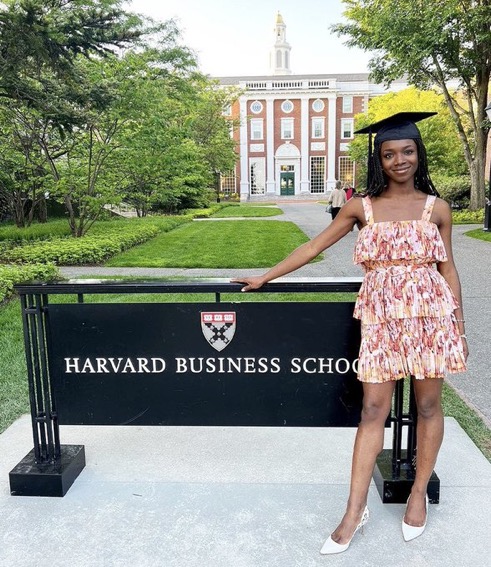
Ogunbiyi, a London-born biomechanical engineer who holds a joint Master of Science and Master of Business Administration degree from Harvard University, conceived the idea during the COVID-19 pandemic. Unable to visit a salon, she spent four days installing her own knotless braids at home.
The experience highlighted the time and physical demands of the process for both clients and professionals. She partnered with co-founder David Afolabi to develop the technology, surveying more than 2,200 braid wearers, interviewing hundreds of stylists, and iterating through hundreds of prototypes.
HaloBraid
HaloBraid functions as a collaborative robot, or cobot. The stylist sections the hair, applies products if needed, and creates the initial anchor knot. The hair is then fed into the device, which takes over the repetitive weaving along the length of the braid the stage that accounts for the majority of time and physical effort. The stylist returns to finish, trim, seal and style the ends according to the client’s preferences.
Machine learning is used to help the system match professional techniques and produce consistent results. The company reports that prototypes have completed thousands of braids and full hairstyles during testing.
The technology addresses long-standing challenges in the protective styling industry. Braiding sessions frequently last several hours, placing repetitive stress on stylists’ hands, wrists, shoulders and backs.
Clients, particularly those seeking knotless or box braids, often spend substantial time in salon chairs. Ogunbiyi has framed the innovation as a tool that supports rather than replaces human expertise, preserving the creative and cultural elements of braiding while automating the most labour-intensive segment.
Halo has raised more than $7 million in seed funding. The round was led by Seven Seven Six, the venture firm founded by Reddit co-founder Alexis Ohanian, with participation from AlleyCorp and Bling Capital. More than 7,000 professional salons have joined a waiting list ahead of commercial availability.
The company has indicated a phased rollout beginning with select professional salons in autumn 2026. Pricing details have not been fully disclosed, though Ogunbiyi has stated that stylists will not be required to purchase the device outright.
Celebrity hairstylist Vernon François has joined the company in a creative engineering capacity. The project earlier won Harvard’s President’s Innovation Challenge, securing non-dilutive funding that supported validation work.
Public Reaction
The demonstration shared widely on social media in late October 2026 generated significant interest, particularly among African and diaspora audiences familiar with the time and cost associated with professional braiding. Commentators noted potential benefits for solo stylists without apprentices and for salons seeking to increase daily client capacity without proportional increases in physical workload.
Braiding remains a culturally significant practice with deep roots across African and African diaspora communities. Protective styles serve both aesthetic and practical purposes, including hair health and convenience. Industry observers have long noted the relative lack of technological innovation in this segment of the beauty market compared with other areas of personal care.
HaloBraid represents one of the more visible attempts to apply robotics and engineering principles specifically to textured hair services.

As the commercial launch approaches, attention will focus on real-world performance in salons, training requirements for stylists, maintenance, and long-term effects on service pricing and accessibility. Ogunbiyi has emphasised that the goal is to make braiding more sustainable for professionals and more efficient for clients while retaining the human skill at the centre of the process.
The device’s ability to scale across different braid types, hair textures and salon environments will determine its broader impact on the industry.
READ ALSO: Ghana Wins Russian Support for BRICS Partner-Country Bid