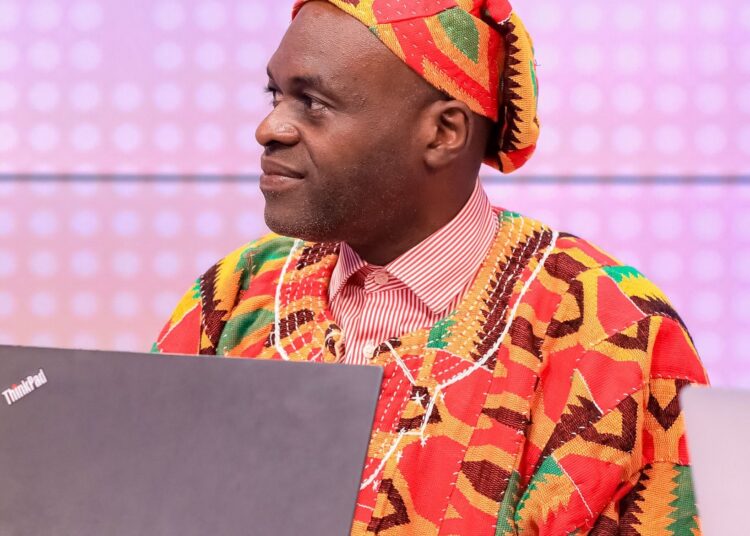
In the suit filed by the New Patriotic Party (NPP) concerning presidential term limits, Private Legal Practitioner Counsel Martin Kpebu has described the legal challenge as “largely unnecessary” arguing that Article 66(2) of the 1992 Constitution clearly limits a person to two terms as President.
However, he called on the Supreme Court to consider the suit and provide a definitive interpretation of the constitutional provision to help settle any lingering questions surrounding presidential term limits.
Counsel Kpebu expressed confidence that the two-term limit is sufficiently clear, adding that a ruling by the court could provide further legal certainty and help prevent similar disputes from arising in the future.
“But you know, the NPP wants to be cautious. I think that is the word. They believe in the idea that prevention is better than cure, which is why they have also taken the matter to the Supreme Court.”
Counsel Martin Kpebu
The private legal practitioner characterised the suit as a matter that may not require extensive litigation. He also noted that the NPP’s action was, to his knowledge, the fourth lawsuit concerning the issue, following three earlier cases.
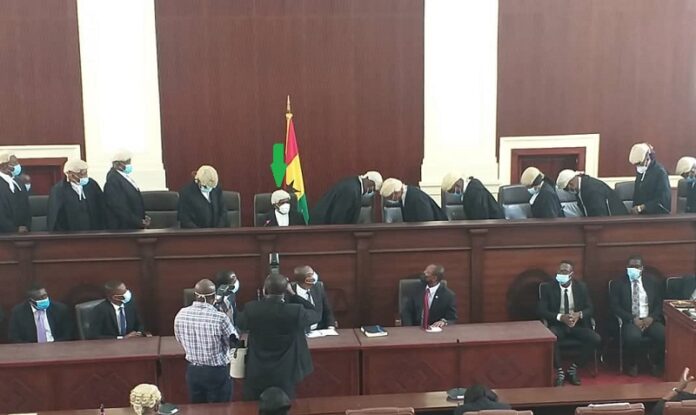
He indicated that, despite strong public opinions on the matter and Speaker of Parliament Alban Bagbin’s opposition to the suits, the Supreme Court should hear the case and provide a definitive interpretation of the constitutional provision. “Two terms are two terms,” he remarked, reinforcing his view that the constitutional provision does not require an elaborate reinterpretation to establish the presidential limit.
Turning to President John Dramani Mahama’s position, the lawyer commended the President for previously indicating that he was not interested in extending his political tenure beyond the constitutionally prescribed limit. He recalled hearing the President express that position during a visit to Singapore in September of the previous year.
Counsel Kpebu observed that such legal challenges have never been unprecedented, recalling that former President John Agyekum Kufuor also faced a similar debate and expressed no interest in pursuing another term.
The lawyer further cited the views expressed by Speaker Bagbin and legal academic Professor Stephen Kwaku Asare, noting that several prominent Ghanaians have endorsed the interpretation that the presidential limit remains two terms.
Consequently, Counsel Kpebu emphasised that Ghana’s democratic system should not be driven by the desire to keep a preferred candidate in office indefinitely. He expressed confidence that the Supreme Court could resolve the matter while the country continues to uphold constitutional governance and presidential term limits.
Counsel Kpebu Proposes Presidential Recall Reform For Ghana
Beyond the debate over presidential term limits, Private Legal Practitioner Counsel Martin Kpebu proposed constitutional reforms that would allow a political party to replace an underperforming president during the four-year mandate without necessarily holding another general election.
The lawyer argues that Ghana should consider adapting elements of parliamentary governance to make executive leadership more responsive to public expectations.
“So, within four years, we could have three different people serving as President. If the person who wins the general election takes office but fails to perform well, the party should be able to recall him and bring in someone else.”
Counsel Martin Kpebu
Counsel Kpebu posits that such a change could reduce the financial burden of organising another national election while allowing a governing party to introduce a replacement within the existing term. In addition, the central issue should be how Ghana can strengthen accountability without requiring citizens to wait until the next scheduled election to register their dissatisfaction.
Counsel Kpebu pointed to the United Kingdom’s parliamentary system as an example of how political leadership can change without a new general election. He cited the frequency of prime ministerial changes in Britain to illustrate his view that Ghana could consider “a more flexible approach to executive leadership while retaining its presidential vote.”
“We should rather be amending the Constitution to make it easy for a party that has won power to be able to recall the president,” he proposed, outlining the constitutional direction he believes deserves further consideration. He acknowledged that Ghana operates a hybrid system of governance, combining elements of presidential and parliamentary arrangements. Subsequently, the lawyer suggested that the country could examine whether aspects of parliamentary practice could be adapted to improve executive accountability within its own constitutional framework.
Owing to the cost associated with general elections, Counsel Kpebu also urged constitutional reformers to explore alternatives that would not require the country to return to the polls whenever a governing party sought to replace its president. He called for the proposal to be considered alongside the work of the Constitutional Review Commission.
READ ALSO: UG Scholar Calls For Stronger Diaspora Repatriation Policies