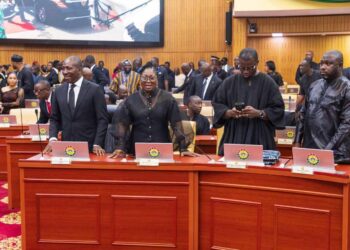
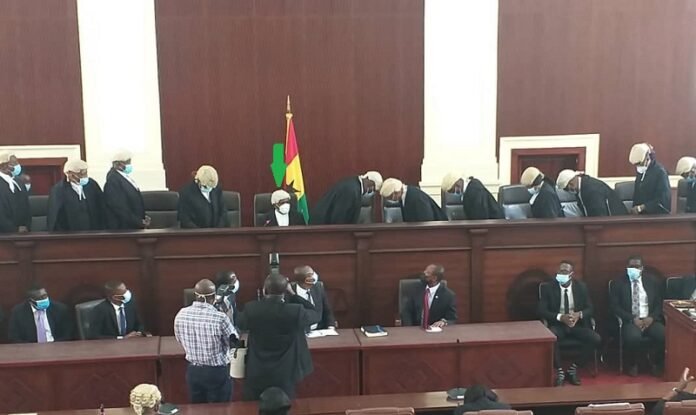
The New Patriotic Party (NPP) has asked the Supreme Court in Accra to declare that no person may serve more than two terms as President of Ghana, whether those terms run back-to-back or apart. The party filed its writ against the Attorney General on July 30, 2026, as Suit No. J1/27/2026.
The writ invokes the court’s original jurisdiction and seeks five declarations on how articles 58(2), 60, 63 and 66 of the Constitution fit together. It is the fifth suit before the court on presidential term limits, and the dispute turns on whether the two-term bar is a lifetime limit or applies only to uninterrupted service.
“a person shall not be elected more than two times to hold office as President”
NPP’s Writ
The writ commands the Attorney General to file a statement of defence within 14 days after the party’s statement of case is served, counting the day of service. The NPP gives its address as Asylum Down, Accra.
Its first relief goes to the wording of the Constitution itself. The party wants a declaration that “two terms,” the limit on how long a person may hold the presidency, means a maximum of two terms, whether a person serves them consecutively or not.

Four-Year Terms and an Eight-Year Ceiling
The third relief puts a number on the ceiling. “A person elected as President shall not hold office for more than two terms with each term consisting of four years (making a total of eight years), whether the two terms are consecutive or non-consecutive.”
The wording ties the limit to both the number of terms and their length, so a President could not exceed eight years in total, however the two terms are spread.
The writ also reaches beyond the basic cap. In its fourth relief, the NPP asks the court to declare that a Vice President who takes over as President for more than half of an unexpired term may contest for only one term.
That limit would apply whether the election is held before the end of the unexpired term or at a later date. The relief rests on articles 58(2), 60(7), 63(2) and 66(1) and (2).
The fifth relief addresses a person who has already held office as President for one term. The NPP asks for a declaration that such a person can serve only one more term, citing articles 58(2), 60(6) and 66(1), (2) and (3)(a). The wording after that point is cut off in the copy of the writ available to The Vaultz News.
Five Suits Now Before the Supreme Court
Deputy Attorney General Dr Justice Srem-Sai confirmed earlier that the number of cases against the Attorney General on presidential term limits had risen to five. The NPP’s suit is the latest.

Azubila E. Salam filed the first, J1/4/2026, on December 23, 2025. Kenneth K.A. Kuranchie followed with J1/20/2026 on June 30, 2026, and Ganiwu Alhassan filed J1/21/2026 on July 9. Eric Appiah filed J1/26/2026 on July 20, and the NPP’s J1/27/2026 came on July 30.
Collectively, the suits ask the Supreme Court to settle the meaning and scope of Article 66(2) of the 1992 Constitution. A ruling could set an important constitutional precedent.
Lifetime Limit or Uninterrupted Service
Article 66(2) states that a person shall not be elected to hold office as President for more than two terms. The legal dispute centres on how to read that restriction. One reading treats it as an absolute lifetime limit, while the other applies it only to two uninterrupted terms in office.
The five suits bring different plaintiffs and different wording to the same provision, and each wants an authoritative interpretation from the Supreme Court. The material available does not say when the court will hear the cases or whether it will take them together.
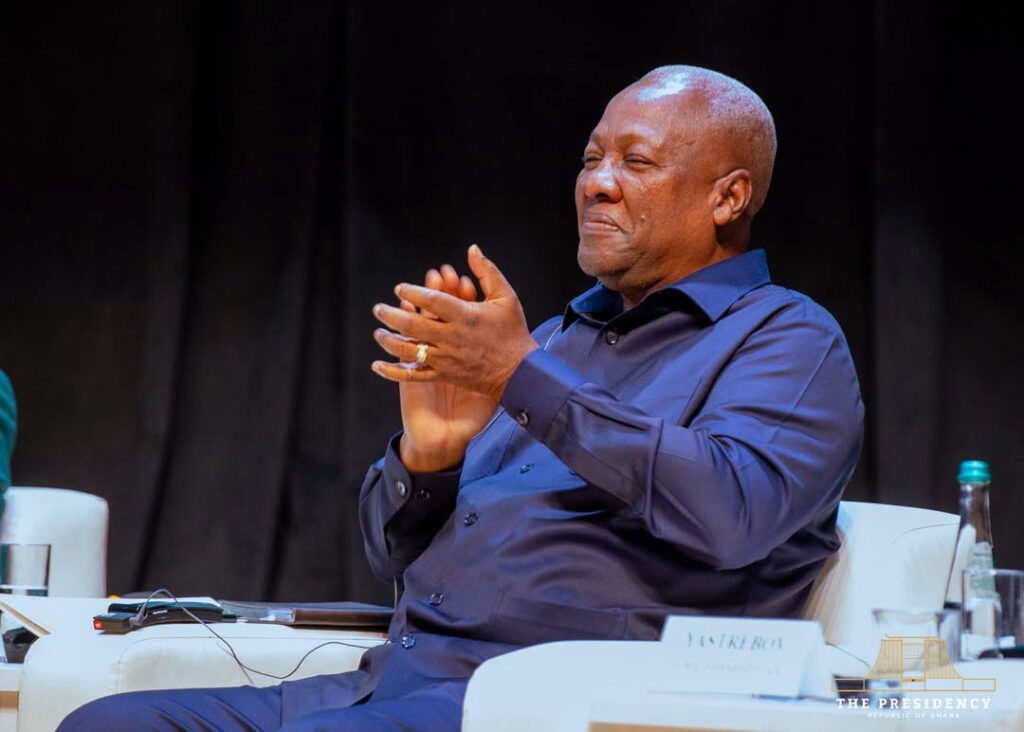
The question has featured in The Vaultz News coverage for almost a year. Dr John Osae-Kwapong, Political Scientist, CDD-Ghana Fellow and Director of the Democracy Project, made a strong appeal to Ghanaians to say no to a presidential third term in December 2025, and a denial from the Communications Minister the same week.
In July, President John Dramani Mahama pledged to honour a one-term mandate. However, NPP Director of Elections Evans Nimako later accused the NDC of third-term confusion. The Attorney General’s statement of defence, due within the period the writ sets, will give the first formal view of how the state reads Article 66(2).
READ ALSO: Mahama Signals Nuclear, Solar Cooperation With Russia