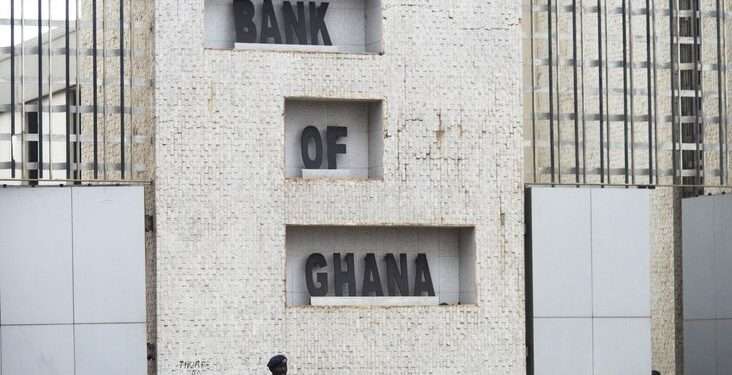
Franklin Cudjoe, President of IMANI Africa, has called on the Bank of Ghana to remain strictly independent in the face of mounting economic challenges and public misinterpretation of policy effects.
His comments come in response to the central bank’s Governor, Dr. Johnson Asiamah, who recently expressed concern that some Ghanaians are misreading the appreciation of the cedi, resulting in a 50% drop in remittance inflows.
Cudjoe described this trend as a predictable outcome of credible macroeconomic management, arguing that such developments are natural side effects of disciplined monetary and fiscal policies.
He offered strong advice to the Governor, underscoring the risks of allowing executive interference in monetary affairs.
“Just focus on your mandate and never become a puppet of the executive (government) to fund any extravagant expenses lest you become a good-looking man, but weak, impotent, and a rudderless central bank governor saddled with odious debt like the last one bequeathed to us.”
Franklin Cudjoe
Accordingly, Cudjoe strongly cautioned against repeating previous missteps that significantly undermined the institutional credibility, operational independence, and long-term stability of the Bank of Ghana.
He emphasized the importance of maintaining focus on the core responsibilities of the central bank: microprudential regulation, macroprudential oversight, and monetary policy.

According to him, these three pillars are essential to maintaining financial stability and public confidence.
Cudjoe further urged that the central bank’s autonomy must be defended, particularly when governments attempt to impose fiscal targets that do not align with prudent economic management.
In such cases, he noted, it is not the central bank but the government that should be held accountable by the public.
Transparency Demanded From Bank Of Ghana
In his detailed commentary, Franklin Cudjoe strongly advocated for enhanced transparency and accountability within the internal operations of the central bank.
He emphasized that openness in decision-making processes is essential for maintaining public trust and market confidence.
“To be well fortified in your job, how about having the Monetary Policy Committee’s decisions published, but in the interest of transparency and market confidence, publish minutes of its meetings, including what each of the committee members said in its meetings, unedited.”
Franklin Cudjoe

By opening up the MPC’s activities to public scrutiny, Cudjoe believes the Bank of Ghana would strengthen its legitimacy and reduce the likelihood of undue political influence.
This level of openness, he suggested, is vital for a credible and independent monetary authority in a democratic society.
Franklin Cudjoe underscored the vital role of civil society institutions such as IMANI Africa in serving as independent watchdogs committed to promoting transparency and accountability in Ghana’s economic governance.
He encouraged the Governor of the Bank of Ghana to remain steadfast in executing his constitutional mandate without intimidation or external interference.
At the same time, Cudjoe reaffirmed that IMANI and like-minded advocacy groups would persist in their efforts to uncover economic misinformation, scrutinize government actions, and challenge political narratives that attempt to mislead the public.
He emphasized that these groups are fully prepared to confront any attempts by political actors to obscure the truth or escape accountability through deceptive tactics and superficial rhetoric.

Cudjoe ended his commentary on a more personal note, offering words of encouragement and reflection to the BoG Governor. “Peace unto you. May God guide your steps. Have a great but reflective weekend and have some fun, for life is short not to do so,” he concluded.
Franklin Cudjoe’s remarks have reignited national conversations surrounding the independence, transparency, and accountability of Ghana’s central bank in managing monetary affairs.
His position reflects an increasingly widespread concern within civil society that undue political interference in the Bank of Ghana’s policy decisions could erode the institution’s credibility and severely undermine long-term macroeconomic stability.
As the country continues to navigate significant declines in foreign remittance inflows alongside persistent fiscal and structural challenges, the urgency for a principled, autonomous central banking system that prioritizes public interest over political convenience has become more pressing than ever.