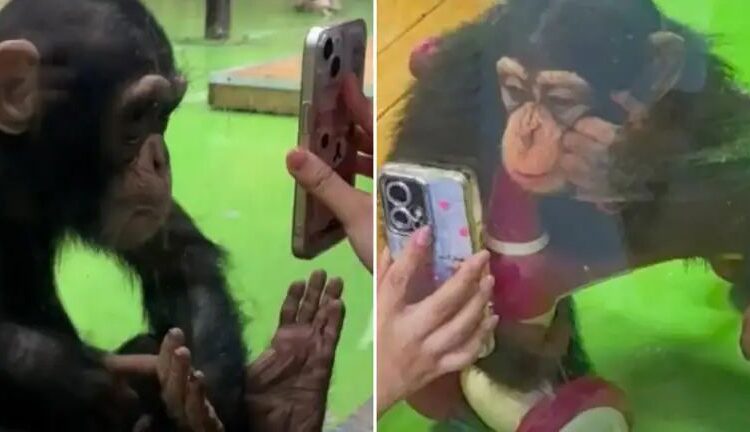
According to Chinese media, a popular little chimpanzee at the Shanghai Wildlife Park had developed a fondness for short phone videos shown to it by the local tourists.
In a development that raised curiosity, a zoo in eastern China banned its visitors from showing short videos to a famed baby chimpanzee living there.
According to a report by South China Morning Post (SCMP), the zoo authorities had to stop the act used by tourists to interact with the popular chimpanzee named ‘Ding Ding’, amid health concerns.
Only two years old, Ding Ding has quickly gained fame and become a crowd favourite at the Shanghai Wildlife Park. The interactive chimpanzee has a charming presence and attracts many tourists.
Viral clips of Ding Ding on the Chinese social media have the young primate drinking milk, stealing lotus flowers, and sitting cross-legged with a cute smile, much to the amusement of those watching.
Ding Ding Fond For Phone Clips
According to the South China Morning Post, this chimpanzee has also developed a fondness for short clips shown to the animal on phones.
In a viral clip on Chinese social media, a woman was found holding her phone against the glass of Ding Ding’s enclosure and showing the footage to it.
In response, the chimpanzee stared at the phone screen and even stretched its face towards the glass for the best view. Visitors have observed that Ding Ding especially engages with funny clips and short drama videos.
It is being suggested that these lively sounds and visuals are stimulating the animal.
Zoo Ban Confirmed

At the start of September, the zoo authorities had to impose a ban on visitors showing these videos to Ding Ding and place a special notice outside its enclosure. The notice featured the sketch of a chimpanzee interacting with the phone and a “No” written across its palm in bold red.
The zoo staff explained the rationale behind the decision and stressed that excess screen exposure could cause damage to Ding Ding’s eyesight and overall well-being. “If a chimpanzee cannot see clearly and cannot communicate with humans, it may become anxious, leading to health problems,” one zoo worker said.
No penalties have been set for visitors who break the rules. But all the tourists have been requested to follow the regulations and play their part in protecting the animal and safeguarding the health of the popular chimpanzee.
One viral clip from Douyin, China’s version of TikTok, showed a woman pressing her phone against the glass as music played while Ding Ding watched intently, occasionally scratching its face. Other visitors claimed the animal seemed especially drawn to comedic clips and short dramas.
The unusual ban sparked both laughter and support across Chinese social media. “Please respect the animals’ natural way of life,” one user wrote, while another joked: “My son is just as addicted to phone videos as Ding Ding, maybe the zoo should take him too.”
Although the zoo hasn’t set penalties for rule-breakers, staff urged visitors to follow the advice, noting that, unlike humans, Ding Ding “cannot wear glasses.”
This isn’t the first time a Chinese zoo has drawn attention for its visitor rules. Earlier this year, Liaoning Zoo warned guests after people were caught yanking tiger fur from a semi-open enclosure for “good luck.”
Meanwhile, Qinhu Bay Forest Animal Kingdom in Taizhou went viral after outrage over dogs being painted to look like tigers.
The Chinese zoo’s ban on visitors showing reels and short videos to a baby chimpanzee is a proactive step toward preserving the cognitive health and natural behavior of one of the world’s most intelligent animals.
It’s a reminder that not all human habits—especially those tied to digital culture—are suitable for interaction with wildlife. If zoos are to remain spaces of ethical education and conservation, both institutions and individuals must act responsibly.
Sometimes, the best way to love animals is to let them be animals—not screens for our amusement.
READ ALSO: Why Former President Akufo-Addo Failed and What President Mahama Must Do – Dr. Asiedu