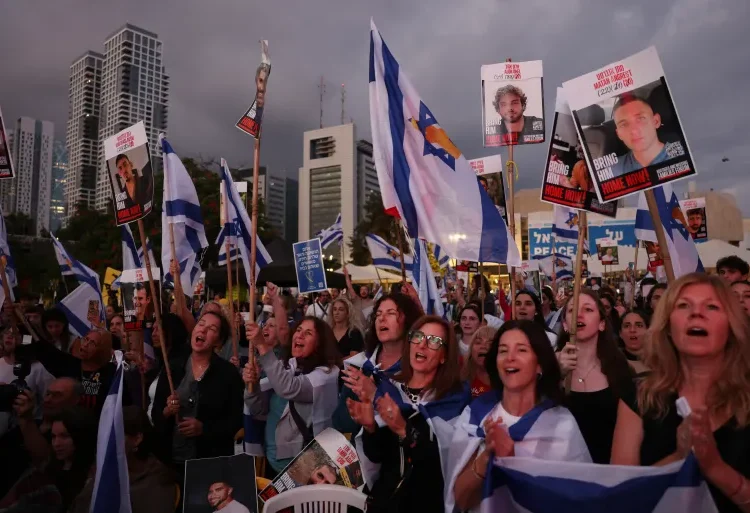
Israel has received the first seven captives released by Hamas under the new ceasefire deal.
The seven captives were handed over to the Israeli army via the International Committee of the Red Cross (ICRC).
The captives would be transferred to the Israeli military base of Re’im for medical checks, showers and clothing changes.
Families would be reunited with their loved ones before the captives were flown to hospitals for further treatment.
Later, thirteen more living captives were released. Under the deal, Hamas will release the 20 living Israeli captives in exchange for nearly 2,000 Palestinian prisoners held by Israel, many without charge.
The prisoners include 250 Palestinians serving life sentences. However, Israel has said that imprisoned Palestinian leader Marwan Barghouti, whose release Palestinians have long sought, will not be among them.
Some prisoners will be released in the occupied West Bank, where their relatives have been instructed by Israel not to hold celebrations or speak to the media.
The Red Cross is also overseeing the logistics of the prisoner exchange, including the transfer of Palestinian detainees to a designated medical point in Khan Younis, set up inside Nasser Hospital specifically for this day.

Doctors and nurses at the site say they are standing by to receive the prisoners, who will undergo medical checks before being reunited with their families.
Thousands of Palestinians have gathered outside the hospital, waiting to welcome the released detainees. Witnesses say the atmosphere is one of anticipation and relief, with families arriving from across Gaza in hopes of seeing their loved ones.
Medical staff say prisoners released in previous exchanges often arrive exhausted, weak and malnourished, after months in detention under harsh conditions. Many are also described as mentally drained from their time in custody.
Earlier, Hamas’ armed wing released a statement saying that it is committed to the ceasefire agreement and its timetables.
Analyst Points Out Uncertainties After Captive-Prisoner Swap

According to Political Scientist and former PLO Adviser, Xavier Abu Eid, the ceremonies in Gaza and Israel marking the exchange are a significant event for thousands of people, especially the family members.
However, he added that the latest development “leaves a lot of questions” and uncertainties after the deal is done. “We do not know what will happen next,” he told a news agency.
“We know that President Trump was very keen to get to where we are at now. But eventually, if the talks for a comprehensive peace are real, we need to include several elements that are not part of the deal.
“So far, the US has not been able to utter the term two-state solution or ending the Israeli occupation. Therefore, there are so many questions that are left open after this ceremony.”
Xavier Abu Eid
As part of the Trump-led ceasefire agreement, Israeli forces have withdrawn from parts of Gaza, including Gaza City and other northern areas, although they still control more than half of its territory.
Palestinians returning to the combat zones they were displaced from have found widespread devastation, or “wastelands” where their neighbourhoods once stood.
Humanitarian aid has begun to trickle into the enclave as part of the ceasefire, with dozens of trucks arriving on Sunday.
Despite the ceasefire progress, many details about the second phase of the deal, which is still to be negotiated, need to be ironed out, including the exact makeup of a post-war administration for Gaza and the fate of Hamas.
The second phase is expected to involve a phased Israeli withdrawal, Hamas’s disarmament, the establishment of new security and governance arrangements, and reconstruction.