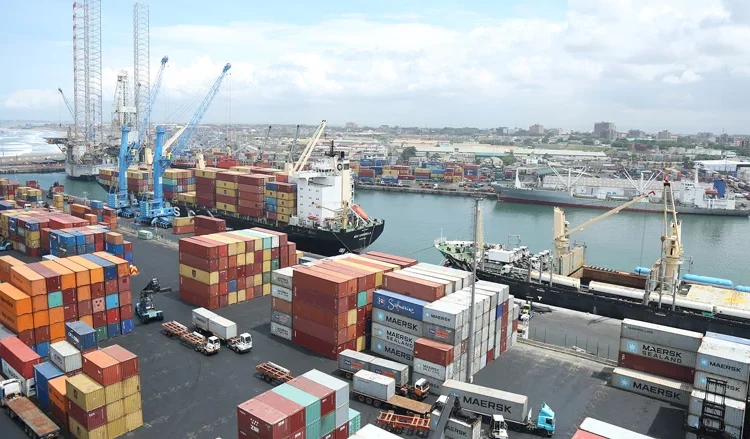
Ghana’s imports have seen an upward adjustment over the years, which has sparked discussions on whether the country’s increased imports are a drawback to the Ghanaian economy.
Annual increased imports are hailed elsewhere, whereas in Ghana and most other African countries, governments are called out due to increased imports.
The fundamental structure of the economy determines whether high imports become a strength or a harm to the economy. Though similar commodities might be imported by developed and developing countries, the purpose and use of the imports make all the difference.
Since 2011 till date, Ghana’s annual imports are valued above US$ 19.4 billion. Imports reached an all-time high of US$ 26.91 billion in 2019 and declined sharply in 2020 to 24.55 billion. Since then, imports have increased year-on-year, from US$ 25.97 billion in 2021, US$ 26.33 billion in 2022, and to US$ 26.73 billion in 2023.
Ghana’s major imports include fuel products, machinery, vehicles, plastics, electronic equipment, Iron and steel, chemical products, cereals, pharmaceutical products, fertilizers, animal products, and rubber. The main import partners of Ghana include China, United States, Belgium, United Kingdom, and France.
Compared to Other Countries
According to the World Trade Organization (WTO) report on Global Trade Outlook and Statistics, the world’s largest importers of goods in 2024 were the United States of America (USA), China, Germany, and the United Kingdom. The USA alone imported US$ 3.4 trillion in 2024, which is 13.6% of the world’s imported goods. The USA’s imports were mainly driven by inputs (like copper), machinery, and consumer goods. China imported about US$ 2.6 trillion of goods, making China the second highest importer globally.
Among the largest import industries in the USA are the pharmaceuticals and automotives. Mexico and Canada supplied 28.1% of USA imports, Europe supplied 18.5%, and China supplied 13.4%.
India was ranked 8th largest global importer with US$ 718 billion worth of imports, and an annual growth of 7% backed by a strong economic growth.
Imports of Vietnam increased by 17% in 2024, driven mainly by growing investment and diversification of supply chains.
However, with these high imports from these countries, they are described as “reflecting strong domestic demand and business activities.”
Among the top 30 importers in the world for 2024, no African country was included in the list. Nonetheless, the continent’s import status is a concern to many economists.

Ghana’s Economic Struggles
Ghana, like many other African countries, struggle with increasing year-on-year imports, which affects macroeconomic stability and job creation. The difference between rising imports in a developing country like Ghana and rising imports in developed country as listed in the top 30 importers in the world is the economic base on which the imports are made.
Ghana focuses on the imports of essential goods causing currency weaknesses, inflation, and retards local industrial development.
The USA’s imports are based on manufactured goods like machinery, electronics, vehicles, mineral fuels, pharmaceuticals, medical apparatus, precious metals, plastics, furniture, and organic chemicals. These are imported on a strong consumption base, internal industry needs, and a stable currency. These products account for over two-thirds (68.7%) of total USA import in 2024.
Ghana must import what the local industries need to achieve their productive targets and not raw materials for consumption. Ghana must make import purchases based on population capacity to drive diverse demand. Raw and intermediate materials to drive industrial and manufacturing productivity should be purchased. These must be backed by strong and stable currency to ensure the affordability of imports to prevent inflation.
Ghana’s reliance on imports creates significant economic vulnerabilities due to lack of industrial diversification, external shocks, import inflation, weak Cedi, and over-reliance of essentials like food stuffs. Since more than half of imports are meant for direct consumptions, it becomes a drawback for the Ghanaian economy.
Ghana’s consumption imports increase import inflation which affects the imports of local industries and their ability to create more jobs. The high import bills and low export earnings causes trade deficits, growing national debt, strain on government budget, and reduced international financing.
While imports enable consumption and industrial input in a strong, stable economy like the USA, they represent a structural weakness in Ghana and other African countries, where they contribute to a cycle of currency weakness, high inflation, and economic instability.
READ ALSO: NDC Urges NPP to Sacrifice Ofori-Atta Over SML Deal