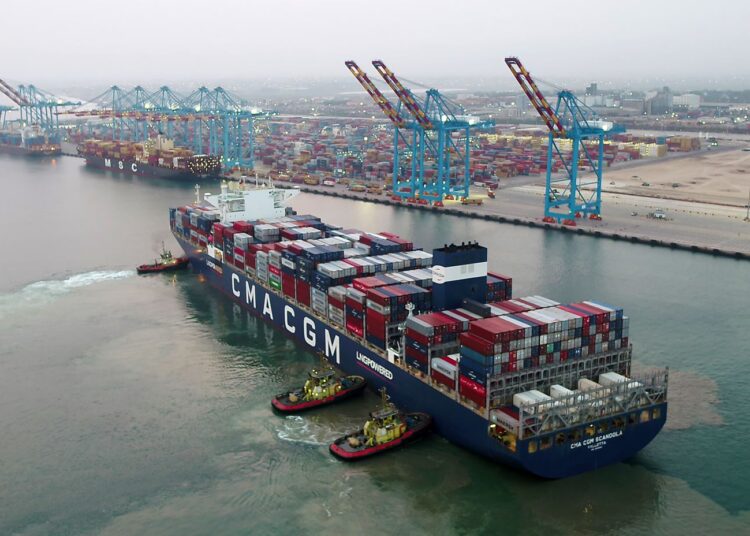
Ghana’s import unit values fell sharply in the first quarter of 2026, giving the economy external cost relief at a time when policymakers are trying to keep inflation contained without weakening growth. Ghana Statistical Service data show that import unit values declined 26.6 percent year-on-year and 3.2 percent quarter-on-quarter, while export unit values rose 5.0 percent from a year earlier and 8.5 percent from the previous quarter.
For an import-dependent economy, that divergence matters well beyond the trade tables. Ghana relies on imported fuel, machinery, industrial inputs, medicines and consumer goods. Lower average import unit values can reduce the cedi cost pressure confronting businesses and households, although the eventual benefit still depends on exchange-rate movements, freight charges, taxes, financing costs and distribution margins.
The latest consumer-price data already show that Ghana’s inflation pressure is increasingly domestic rather than imported. Imported inflation stood at 2.2 percent in August, compared with 6.1 percent for locally produced items, which accounted for 86.2 percent of headline inflation. The first-quarter trade-price data do not establish that they caused August’s CPI outcome, but they reinforce evidence that external price pressure has become less intense.
External Prices Improve Ghana’s Terms of Trade
The price configuration is unusually favourable. Ghana’s export Unit Value Index reached 392.6 in the first quarter, while the import index stood at 187.3, both measured against a Q1 2021 base of 100. Gold was central to the export side, with gold export unit values rising 24.7 percent year-on-year and 15.1 percent quarter-on-quarter.
Gold bullion generated GH¢63.7 billion, equivalent to 57.7 percent of merchandise exports during the quarter. Combined with lower import unit values, the stronger export-price environment helped Ghana record a nominal merchandise trade surplus of GH¢46.1 billion.
Economically, this points to an improvement in Ghana’s terms of trade: the average value received for important exports rose relative to the average value paid for imports. That can increase the economy’s purchasing power and support foreign-exchange earnings without requiring an equivalent rise in physical export volumes. However, GSS unit values are derived from customs values and quantities, so they can also reflect exchange-rate and product-composition changes rather than pure world-market prices alone.
At the macroeconomic level, a favourable terms-of-trade movement can raise real national income and ease external-payment pressure. The benefit is strongest when export receipts are repatriated through the formal system and when commodity gains are translated into investment rather than temporary consumption.
Lower Import Costs Can Ease Inflation, But Pass-Through Matters
Lower import unit values help only when the savings move through the domestic price chain. An importer facing a lower cedi cost for machinery or raw materials may still encounter higher freight charges, port costs, financing expenses or taxes. Retailers may also be selling inventories acquired earlier under less favourable conditions.
This explains why relief in trade prices does not automatically produce cheaper goods in Ghanaian shops. Sustained external cost moderation can nevertheless reduce pressure on importers and manufacturers. Together with the relatively low imported inflation recorded in August, that removes one source of pressure confronting monetary policy and shifts greater attention toward domestic drivers such as energy, transport, rent and other services.
Rising Real Imports Could Rebuild FX Demand
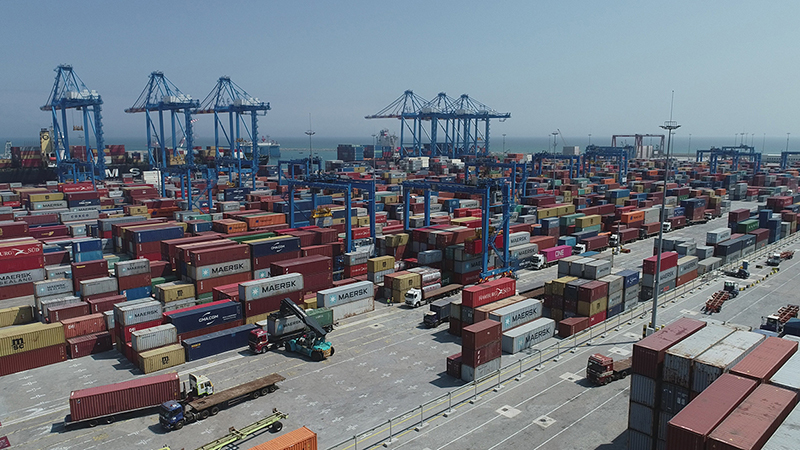
The same price relief carries a macroeconomic caution. After adjusting for price effects, Ghana imported more goods than it exported in the first quarter. Real imports were valued at GH¢34.3 billion against real exports of GH¢28.1 billion. Real imports rose 37.3 percent year-on-year, while real exports fell 10.8 percent.
Some of that import growth may be productive if it reflects machinery, equipment and intermediate inputs needed for investment and industrial expansion. But larger import volumes still require foreign exchange. If import demand accelerates faster than export volumes, the benefit from lower import unit values can eventually be offset by stronger demand for dollars, creating renewed pressure on the cedi and reserves.
Ghana Must Turn Price Relief Into Productive Capacity
The present external-price configuration is favourable, but it should be treated as an opportunity rather than a permanent feature of the economy. Gold prices can reverse, shipping costs can change and imported energy prices can rise quickly when geopolitical conditions deteriorate.
The stronger policy outcome would be to use cheaper capital and intermediate imports to expand productive capacity while increasing the volume and diversity of Ghanaian exports. That would allow the country to preserve near-term inflation relief while reducing the structural foreign-exchange vulnerability that repeatedly returns when external conditions become less favourable.
For Ghana, the real prize is not simply cheaper imports or expensive gold. It is converting a favourable external environment into higher productivity, stronger non-traditional exports and a more resilient economy before the terms of trade move again. That is the difference between temporary relief and durable macroeconomic resilience.
READ ALSO: COPEC Projects Marginal Rise In September Fuel Prices