
Global oil prices retreated on Monday as traders and analysts maintained a cautious outlook that surging supplies from major producers will outweigh demand in the coming months, even as new Western sanctions target Russia’s oil exports.
At the time of writing, Brent crude futures were down to $63.45 per barrel, while U.S. West Texas Intermediate (WTI) slipped to $59.54 per barrel. Both benchmarks extended their losses from last week, when crude prices fell roughly 2% for a second consecutive week.
The decline reflects broader market expectations that production increases from the Organization of the Petroleum Exporting Countries and its allies (OPEC+), combined with record output from the United States, could flood the market in the months ahead.
Analysts said that while sanctions on Russian oil producers could constrain some exports, the overall market balance still favors an oversupply scenario heading into 2026.
Energy analysts remain skeptical about the impact of Washington’s latest measures targeting Russian oil majors Rosneft and Lukoil, which were hit with direct sanctions aimed at restricting their global trade.
“Although the U.S. has stepped up direct sanctions on Russian oil producers Rosneft and Lukoil, it’s not clear how effective they will be in limiting Russian exports.”
Independent Energy Analyst Tim Evans
The sanctions, part of broader Western efforts to cut Russia’s energy revenues amid the ongoing geopolitical standoff, have created uncertainty in global energy markets.
However, traders note that Russia has continued to find alternative buyers, particularly in Asia, where countries such as China and India have remained key destinations for discounted Russian crude.
Evans added that despite the new restrictions, the underlying fundamentals of the market point to an extended period of excess supply rather than a sustained price recovery.
“Even with the prospect of reduced Russian supply and the 1Q26 freeze on OPEC+ production quotas, the global crude oil market may run a smaller supply/demand surplus rather than a more supportive deficit.”
Independent Energy Analyst Tim Evans
OPEC+ Output and Market Dynamics

OPEC+ earlier this month agreed to slightly increase output in December, a decision that some analysts believe could further pressure prices.
While the producer group signaled a temporary pause on additional hikes in the first quarter of 2026, that move may not be enough to offset the market glut.
The production policy reflects OPEC’s delicate balancing act between supporting prices and maintaining market share amid rising competition from U.S. shale producers.
Global crude output has steadily climbed, particularly in the U.S., where advances in shale technology have pushed production to record levels.
Another key factor weighing on prices is the steady build-up in crude oil inventories. Data from the U.S. Energy Information Administration (EIA) show stockpiles increasing for several consecutive weeks, signaling soft demand across major markets.
Meanwhile, the volume of oil stored aboard ships in Asian waters has doubled in recent weeks, according to industry trackers. This rise has been linked to tightening Western sanctions, which have made it harder for China and India to import Russian oil through traditional channels.
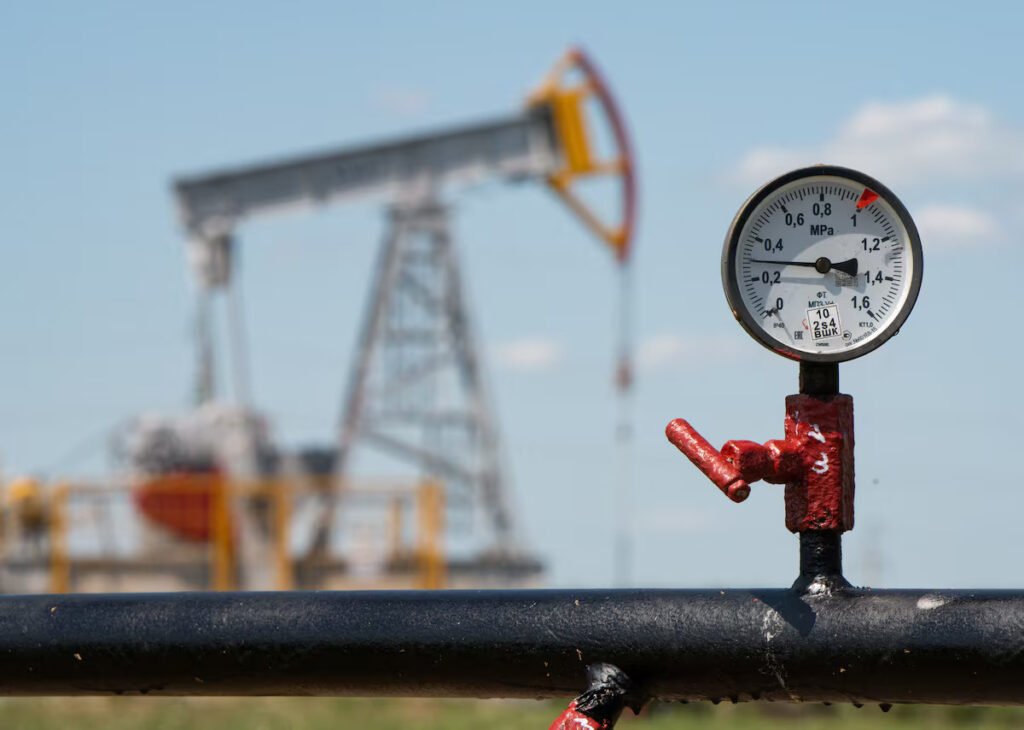
“The oil market is split between rising volumes of crude stored at sea weighing on oil prices and limited availability of Russian products sustaining fuel prices.”
PVM Oil Associates’ Varga
The development underscores the far-reaching implications of Western sanctions on Russia’s oil industry and the potential knock-on effects on global supply chains.
Market watchers say that despite ongoing geopolitical tensions and sporadic supply disruptions, the overall outlook for crude oil remains bearish.
The combination of high inventories, steady OPEC+ output, and questions over the real impact of sanctions has reinforced expectations that supply will continue to outpace demand in the near term.
As oil prices hover near multi-month lows, traders are now watching for fresh data on global demand trends and inventory levels that could shape market sentiment heading into 2026.